
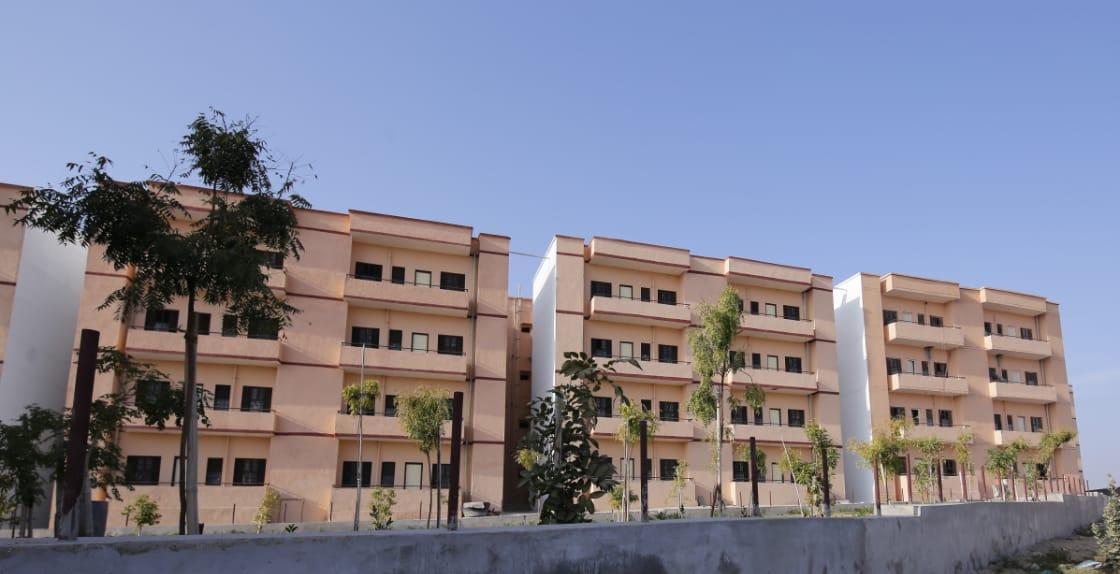
EWS housing gives affordable homes to households that earn a small annual income. EWS stands for Economically Weaker Section, an unreserved community inside the Indian population, so it covers families outside the SC ST OBC groups.
Most PMAY schemes draw the line at lakh a year, but some sources quote lakh, so the eligibility criteria of EWS housing schemes change from one scheme to another. Hindi speakers call this group the shehri ghareeb tabqa, the urban poor, and these schemes exist mainly for them.
In January 2019, the central government passed a 10% reservation for the EWS category in education and jobs. The Pradhan Mantri Awas Yojana started in 2015 under the Housing for All vision, and it helps lower income groups take a home loan at subsidised rates with a long tenure.
Its Credit Linked Subsidy Scheme interest subsidy, called a credit-linked subsidy, on loans up to lakh. Builders use eco-friendly materials to raise permanent homes, a female head or joint ownership stays mandatory, and the carpet area stays at 30 sq. m.
Delhi shows how big this effort can grow. The Delhi Development Authority (DDA) came into being under the Delhi Development Act of 1957, and ten years later it began housing activities in the national capital.
Since then it has built over a million houses across the metropolis, and it keeps about half allotments for the low-income group and weaker sections.
The DDA Housing Scheme 2020 linked to CLSS under Housing for All and in 2019 it offered approximately 18,000 flats, with 7,700 going to EWS and 8,300 to LIG.
This guide covers the DDA Housing Scheme 2026, the benefits, the application steps and the state schemes that matter to a family in need of a home.
What is EWS Housing?
EWS housing is a form of affordable housing that government schemes build for households with a small annual household income, usually below lakh.
These are government-supported projects, and planners price the homes below market rates so that even the lowest-income groups can afford them.
In India, people call a home a ghar, and for millions of low-income househofl ds this is the first secure homeownership they ever get.
The Government of India runs this effort through the Pradhan Mantri Awas Yojana, the flagship of its Housing for All vision, and through state-level schemes.
State agencies and state housing boards add their own government schemes, and the DDA does the same in Delhi. Under PMAY, an applicant can take a housing loan at a special rate of with a tenure of up to 20 years.
The plan runs for four years in three phases and covers 4,041 towns and urban areas, though the top 500 cities in Class 1 get first preference.
Contractors build EWS flats under BIS standards and the National Building Codes, and each unit has a carpet area of 30 sq. mt with basic amenities.
Planners want budget-friendly homes in planned residential areas, because they see inclusive urban development as part of wider urban development and a fairer urban society.
The Economically Weaker Section label points to the economically weakest sections of a city, families who cannot buy market-priced homes and who need permanent homes at subsidized rates.
Before you apply, learn the eligibility parameters and the PMAY definition of family. PMAY counts the applicant, parents, spouse, siblings and children under 18 as one family, and the applicant must be 18 years or older.
Eligibility Criteria
Eligibility starts with the income limit. Under PMAY, the annual household income must stay below lakh, but some sources quote ₹8 lakh, and the DDA scheme lets households earning up to lakh apply, so always read the scheme’s own notice.
Every applicant must be an Indian citizen, and the rules on citizenship, age and couple application come from the central level.
The applicant must be 18 years or older on the date of application. Nobody in the family may own a pucca house anywhere in India, and the DDA scheme goes a step further and bars any residential property, including flats and plots held by an immediate family member.
The single allotment rule allows one EWS house per family, and that keeps the allotment fair for everyone else in the queue. Property ownership checks apply to every family member.
Past help counts against you. The rules block previous scheme benefits, so a family that already received central government housing assistance drops out, and so does a family member who took PMAY CLSS through Private Lending Institutions.
Women get special weight: for a new purchase, the property needs a female owner or a co-owner, and a female head can hold it alone or through joint ownership. An extension does not need female ownership.
The carpet area of an EWS home can reach 30 sq. m, and the applicant must belong to the EWS category, which the EWS certificate proves.
Expect to show identity proof, address proof, income proof, salary slips, an affidavit and other certificates that confirm your EWS status. These criteria look long, but each one keeps the benefit with the right people.
State variations matter too. State governments can change items such as family income, agricultural land and residential area, though the central limits sit at under 5 acres of agricultural land, under 1000 sq ft of residential area, under 100 sq yds of plot in a notified municipal sector and under 200 sq yds outside it.
Many states adopted the 10% quota for the general category, including Bihar, Andhra Pradesh, Delhi, Chhattisgarh, Gujarat, Goa, Himachal Pradesh, Haryana, Karnataka, Jharkhand, Madhya Pradesh, Kerala, Uttar Pradesh, Rajasthan, West Bengal and Uttarakhand.
Two states changed their rules. A Kerala amendment from October 2021 lowers the family income limit to below lakh and sets land limits, and a Maharashtra amendment lets the Maratha community claim the quota along with the general category. Check your own state and the DDA scheme notice before you assume anything.
Benefits of EWS Housing
The biggest benefit is affordable ownership: low-income households buy homes at below market prices, and subsidised pricing keeps the cost within reach.
Government support brings transparency and legal safety, so buyers know their papers are clean. Under PMAY-CLSS, buyers got a 6.5% interest subsidy on a loan of up to lakh, with a maximum benefit of ₹2.67 lakh over 20 years.
Location helps as well. Most EWS units sit inside or near city limits, so families reach urban amenities and employment without a long commute.
Each home comes with basic amenities such as water supply, electricity and sanitation, which means better living conditions than informal settlements and slums offer.
Fair allocation matters just as much. Authorities pick winners through a draw system, a lottery, online applications or first come first served, so every eligible family gets a fair shot. Some states add state top-ups and additional subsidies on top of the central benefit.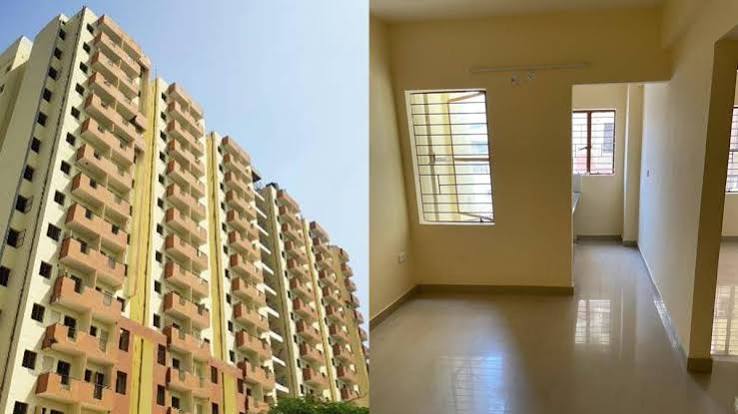 Housing for All reaches every needy family, and the goal is a higher living standard and less poverty. States such as Andhra Pradesh, Bihar and Chhattisgarh have already handed over completed homes. Under the DDA housing scheme 2026, the same idea supports social inclusion and inclusive urban development.
Women gain a lot through women empowerment. Any Indian woman aged 18 years or more can apply, and a man applies with his wife as owner or through joint ownership, which builds financial stability and makes women self-reliant. Families also build assets over time.
There are no barriers of caste applicants can all apply. The homes use eco-friendly materials, so they stay sustainable, weatherproof and top-tier quality, and slum rehabilitation replaces slums with pucca homes. These homes give long-term security and a better quality of life, so a ghar becomes far more than a roof.
Key Features of EWS Housing
The income category sets the tone: the annual household income stays at ₹3 lakh in PMAY, though another source lists ₹8 lakh, and strict income limits with defined income criteria make sure help reaches the needy. Homes come as compact flats, so smaller unit sizes cover essential living needs. The maximum carpet area is 30 sq. mt.
The loan side follows clear numbers. Home loans carry a 6.5% interest subsidy, the maximum permitted loan amount is ₹6 lakh, the longest loan tenure is 20 years, and the maximum CLSS subsidy is ₹2.67 lakh over a 20-year tenure. The government works this out at a discounted NPV rate of 9%, where NPV means Net Present Value.
Approved building designs are mandatory. Female ownership is mandatory for a new purchase, and either a female owner or a co-owner will do, so many buyers register the flat in joint names with a woman. An extension does not need it.
Every home offers basic amenities, including water supply, electricity, sanitation and internal roads. Authorities use a draw system, a lottery, online applications or First Come First Served as the allocation method, which gives transparent allotment and fair distribution.
Buyers also receive clear titles, legal ownership and official documentation, and the price stays low through subsidised pricing, central government funding, state government top-ups and PMAY support.
How to Apply
Applying takes four steps on one route and seven steps on another. Start with an eligibility check: confirm your annual income stays below ₹3 lakh and no one in the family owns a pucca house. Then choose scheme, either a central scheme or a state government scheme, and read its guidelines slowly.
For the PMAY-CLSS subsidy, visit a PMAY-empanelled Primary Lending Institution, which means a bank or a housing finance company, and every lending institution handles the papers.
For state schemes such as DDA or MHADA, use the official portal when the application window opens. For PMAY-Urban, log in to pmaymis.gov.in and complete the form there.
The offline application is simple. Buy the form for a nominal fee at your nearest Common Service Center (CSC), fill application form carefully and submit it. You need an EWS certificate and an Aadhaar card before you begin.
The online application works through your state website, such as AP MeeSeva in Andhra Pradesh or the UDHD portal in Jharkhand. Register, finish Aadhaar verification, enter your personal details, identity details, income details and family details, and upload documents as scanned copies. Keep your PAN, address proof and affidavits ready, since the portal asks for them.
Pay the registration fee or application fee through the payment gateway and keep the receipt. Note your application number, watch your notifications, and track status on the portal to see your allotment status. The housing authority will update it as the draw moves forward.
Documents Required
Keep your identity proof ready: Aadhaar, voter ID, PAN, passport or a driving licence all work. Proof of age must show you have crossed 18 years.
Address proof covers both your current address and permanent address, and you can use a rent agreement or a land registration deed.
Income proof depends on your job: a salary slip and Form 16 for family members, or an income certificate. Add bank statements for the last six months for all family members, plus bank account details for DBT of the subsidy.
An affidavit, called the non-ownership affidavit, states that no family member owns a pucca house. Share your loan details for any ongoing loans, a No Objection Certificate from the housing society, and an allotment letter or sale agreement. Pay the processing fee by cheque from a salaried account or business account.
For DDA housing, the EWS certificate and proof of EWS status matter most. Applicants from reserved categories may also need a caste certificate or a disability certificate.
Government Initiatives
PMAY is the flagship central government scheme, and the Pradhan Mantri Awas Yojana gives EWS applicants a 6.5% interest subsidy on loans up to ₹6 lakh through the Credit Linked Subsidy Scheme.
Together with state level programs and other central programs, these government affordable housing programs bring homeownership within reach of low-income families.
The Delhi Development Authority runs housing lotteries in Delhi from time to time, and it allots units through a draw system on its official portal.
MHADA, the Maharashtra Housing and Area Development Authority, holds annual lotteries for the Mumbai region, with about 1,000 units in each lottery cycle, including EWS category flats.
State government schemes fill the gaps: Tamil Nadu has TNHB, Rajasthan has RSHB, and other state housing boards work the same way.
Housing authorities offer subsidized land, lower construction costs and transparent allotment, and governments ask private projects to keep EWS reservations, which brings safe legal housing, affordable housing and inclusive urban development to more people.
PMAY Divisions, EWS Certificate and Subsidy Tools
PMAY has two divisions. PMAY Gramin serves the rural population, except in Delhi and Chandigarh, and the central government and state government share the budget, usually at in North East India, so budget sharing differs by region. PMAY Urban builds pucca homes for urban India in over towns and runs in three phases.
Phase 1 covered 100 cities and UTs Phase 2 covered 200 cities in 2017, and Phase 3 ran until March 2022, so check whether a given benefit is still live.
PMAY CLSS, the Credit Linked Subsidy, is a financial benefit for lower income groups and medium-income groups that cuts the monthly EMI.
The state pays the advance subsidy to the lender at disbursement, so the borrower sees lower EMIs, and the loan tenure and property size decide the subsidy amount.
You get the EWS certificate from issuing authorities such as a Sub-Divisional Officer (SDO), a Presidency Magistrate, a Chief Presidency Magistrate, an Additional Chief Presidency Magistrate or a Revenue Officer of at least Tehsildar rank.
A Collector, a District Magistrate, a Deputy Commissioner, an Additional District Magistrate, a Magistrate, a First Class Stipendiary, an Additional Deputy Commissioner, a Sub Divisional Magistrate, a Taluka Magistrate, an Executive Magistrate or an Extra Assistant Commissioner can also issue it. The certificate has a validity of one year from its issue date, though each state authority may vary.
The PMAY Beneficiary List shows who won. Visit pmaymis.gov.in, pick Beneficiary Wise Funds Released, choose Search Beneficiary and enter your registered mobile number. The page then shows your allotted house, village name, registration number, amount released and EMIs paid.
The PMAY Subsidy Calculator sits on pmayuclap.gov.in, the CLAP portal. Open the subsidy calculator, change the annual family income, loan amount and tenure, and watch the subsidy category and subsidy amount change. The highest figure is, which needs a ₹6 lakh loan for 20 years and an income below six lakh.
Frequently Asked Questions
Can you resell an EWS home?
Yes, you can sell, but you must have the entire loan repaid first, because loan repayment gives you full ownership. An EWS housing unit under PMAY also carries a minimum lock-in period, and a transfer before it ends may force you to return subsidy to the government.
Can an EWS applicant take a loan above ₹6 lakh?
Yes, an EWS applicant can borrow more. The PMAY CLSS subsidy applies only to the first ₹6 lakh of the loan amount, and the lender charges the lender’s standard interest rate on the additional amount without subsidy.
What is the main aim of EWS housing plans?
The main aim is Housing for All, meaning a house for every family in India under the Pradhan Mantri Awas Yojana. These EWS housing plans and PMAY schemes want to raise the standard of living for families and eradicate poverty, which leaves ghurbat behind for many households.
Do you need to live in Delhi to apply for a DDA EWS flat?
No, permanent residents of Delhi are not the only applicants. You must still meet the DDA EWS flat eligibility, including Indian citizenship and the income limits, and some DDA housing schemes may give a preference to Delhi residents.
What is the minimum age for an EWS flat?
The applicant must be at least 18 years old on the date of application, and the DDA scheme sets this minimum age for every EWS flat. The scheme usually has no upper age limit, so the other eligibility conditions decide the outcome.
Do women, senior citizens or disabled applicants get special preference?
Yes, the DDA usually gives special preference through reservation and priority in EWS allotments. Women, senior citizens and persons with disabilities can benefit, and the DDA may set aside flats for these reserved categories.
Which documents prove EWS eligibility?
Bring your income certificate, Aadhaar card, PAN card, proof of identity, proof of address and an affidavit on non-ownership of property. Applicants from reserved categories may also need a caste certificate or a disability certificate. Check the DDA housing notice, because the documents for EWS eligibility can vary.
Is Aadhaar mandatory for the EWS category?
Yes, Aadhaar is usually mandatory in DDA housing schemes for the EWS category. It works for identity verification, stops duplicate applications, and lets officers link applicant details with government records during the allotment process.