
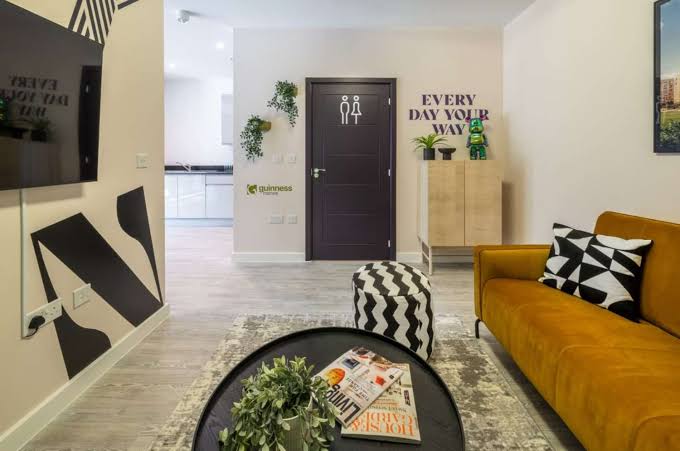
When someone starts flat-hunting, they often assume a one bed flat is the only real choice, but that is not true if your budget is tight or the area is pricey a studio flat, also called a studio apartment, can be a good fit instead.
I remember my own house hunt years ago, confused by every property type and room type, until I learned the pricing basics and Whats a studio flat a compact home was the right fit for me.
A studio flat packs a single open room the living area, sleeping area, and kitchen area into one space with only the bathroom separate, usually runs costs around cheaper than a bed, which is why so many renters love it for the location, low maintenance, and lower storage, even with a few honest tradeoffs on privacy.
What Is a Studio Flat?
In simple words, a studio flat is a self contained room where the living area, sleeping area, and kitchenshare one open space, and the only fully enclosed room is the bathroom there is no separate bedroom at all.
People in the UK call it a studio flat, while folks in the US call the same layout a studio apartment, so it is really just an international term for the same idea.
Owners often use furniture, partial walls, or a recessed nook to create cosy zones without actually cutting the room into pieces.
How Big Is a Studio Flat?
Sizes for a studio flat change a lot depending on the market and the building, and UK guidance sets the legal floor at 70 sq ft for one tenant and 110 sq ft for two tenants, with a typical studio near 250 sq ft and the largest unit (excluding lofts) reaching about 600 sq ft.
Over in the US, US figures show a typical range of 400 sq ft to 700 sq ft, though pricier cities like NYC and SF often squeeze into 300 sq ft, while mid-size cities happily offer more room, and micro-studios under 300 sq ft are becoming common too.
Looking at regional averages, the UK sits around 20 sqm to 35 sqm, the US runs 32 sqm to 55 sqm, Europe covers 22 sqm to 40 sqm, and Asia stays smaller at 15 sqm to 28 sqm.
Studio Flat Layout
The standard layout puts one main living space together with a kitchen or kitchenette along a wall or corner, while a fully separate bathroom sits behind its own interior door, and many renters split the open space further using bookcases, curtains, or sliding room dividers to feel like separate rooms.
There are a few popular layout variations: alcove studios offer a recessed nook for the bed, L-shaped studios use a branching layout to carve out a natural work area or sleeping area, and lofted studios add a raised sleeping platform, which works well in taller buildings. Whichever style you pick, the goal stays the same clear zones for rest, work, and cooking, all inside one flexible room.
Types of Studio Flats
A self-contained studio flat is a single unit that holds its own living area, kitchen, and bathroom with no shared facilities at all, which suits a couple or even a small family looking for full privacy. A semi-studio flat, by contrast, is smaller and may skip a private sink, toilet, or shower, so tenants sometimes deal with shared bathroom facilities instead. Other options include the alcove studio, tucked into a corner or against a wall with a recessed space for extra room, and the junior one-bedroom, where a wooden board acts as a partition to fake a separate bedroom without truly splitting the living space or sleeping area.
Advantages of a Studio Flat
A studio flat wins first on money: it comes with lower rent, sits 20-30% cheaper than a comparable one-bed, and often beats a similarly priced one-bed flat thanks to its smaller size and lower cost overall.
Because there is less floor to heat or cool, tenants enjoy lower utility bills, and there is simply less space to clean and maintain, which honestly gave me back my weekends when I lived in one.
Best of all, a studio flat feels like a self-contained space with full privacy no roommates or flatmates to argue with while still landing you in prime locations and central locations that are walkable locations, giving a more spacious feel, less clutter, and a calm minimalist lifestyle.
Disadvantages of a Studio Flat
Living in one room does bring real downsides, starting with limited storage space that makes it hard to organise belongings, plus no separation between your sleeping and living space, which can feel less restful and less structured than a proper bedroom.
No partition also means cooking smells drift everywhere, and with no separate room to escape to, working from home gets tough because you can never really clock out.
On top of that, hosting guests or entertaining becomes tricky with limited seating, and honestly, regular socialising at home can feel a bit restrictive once friends start showing up.
Studio Flat vs One-Bedroom Flat
The core difference between the two is simple: a studio flat has a single living space with the bedroom, living room, and kitchen combined, and only the bathroom separate, while a one-bed flat gives you a fully separate bedroom for more privacy and usually more storage.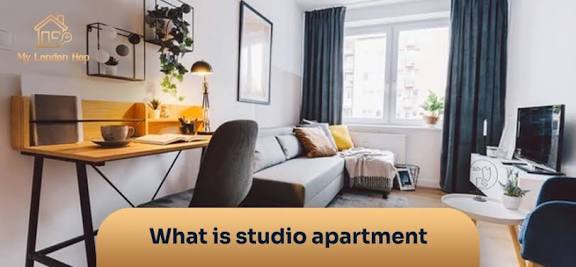 This split matters most for couples with different schedules, since one partner might need quiet while the other is up and about.
In most cases, studio rent runs 20-30% cheaper and the unit is smaller, though this is not fixed everywhere in the US, so it always pays to check local listings before deciding.
Advantages of a one bedroom flat
A one-bedroom home follows a more conventional floor plan, with the bedroom separated from the living space and kitchen space, giving more privacy to everyone inside. This setup suits couples who keep different work patterns, since one person can rest while the other stays active in another room. It also comes with more storage space, which is a small but welcome bonus for anyone with a lot of belongings.
Are all bills included with a studio flat?
Not every studio comes with all-inclusive rent, so bills like gas, electric, water, and council tax are not always covered. Some landlords do bundle everything into one monthly payment, while others charge separately for each utility. The safest move is to ask the letting agent directly before you sign anything.
Making the right choice for you
Every renter’s needs are different, so it helps to weigh your options honestly before committing to a small space. If you want to know more about studio flat availability near you, reaching out feels like a natural closing prompt to the whole search. Chatting with an agency’s team can save you time and point you straight to the right listing.
The Origin of Studio Apartments
The term studio actually traces back to a creative origin, since young artists in cities like New York and Paris needed affordable spaces that doubled as a workshop and a home. These live-work spaces were flexible spaces by necessity, letting painters and sculptors sleep just steps from their easel. That practical, adaptable idea is exactly what shaped the studio flats we rent today.
Studio Apartments vs Efficiency Apartments
Efficiency apartments are usually even smaller than a regular studio and swap the full kitchen for a partial kitchen or simple kitchenette. They focus on basic comfort rather than extra space, which is exactly why they tend to be the cheapest rental option around. If your budget is the main concern, an efficiency might beat a studio purely on price.
Studio Apartments vs Micro Apartments
Micro apartments push clever design even further than a standard studio, using rollaway beds, folding desks, and cubicle storage to squeeze the most out of every inch. Instead of a full kitchen, many rely on a simple worktop, and the bedroom and living areas combined into one tight but workable footprint. Most of these compact homes measure between 25.5 sqm and 28 sqm, proving that small can still be smart.
Where to Sleep in a Studio Apartment?
Even in an open layout, you can still create a defined sleeping zone for your bed, usually by tucking it into a corner or pushing it against a wall. Simple partitions, curtains, or dividers work wonders for adding a sense of privacy without any real construction. It is a small trick, but it makes the whole room feel far more organised.
Should I Live in a Studio Apartment?
This choice really comes down to your lifestyle people with active routines and outward-facing routines, who are rarely home, tend to enjoy a studio the most.
If your budget is tight or you are chasing a great location in high-demand cities, a studio often turns out to be the most affordable option on the table.
Thanks to stable pricing and generally accessible pricing, it remains one of the easiest ways to live centrally without overspending.
How to Make a Studio Apartment Feel Bigger?
To make a small room feel roomier, lean on vertical storage like tall shelving and wall-mounted units instead of bulky furniture on the floor.
Adding mirrors helps reflect light and create depth, while light colour palettes keep everything feeling open and airy. Finally, use rugs, curtains, or dividers to define zones for sleeping, working, and relaxing, all without adding a single wall.
What to Check Before Renting a Studio Apartment?
Before signing a lease, check the basics: good ventilation, plenty of natural light, and honest noise levels from neighbours or the street outside.
Next, look closely at the kitchen type is it a full kitchen or a simple kitchenette along with heating and AC efficiency, since these affect your comfort every single day.
Do not forget storage options, laundry access, internet quality, overall building safety, and the general building condition, because these small details decide whether daily life feels smooth or stressful.
Conclusion
In summary, a studio flat proves that compact living can still be cosy, practical, and even a little upscale depending on the building. It gives you a smart budget move without giving up a great location. For plenty of renters, that trade-off simply makes sense.
What’s Included in a Studio Apartment
Most studio flats come standard with a full kitchen (think fridge, stove, and oven), a full bathroom, basic climate control, and at least one closet for your things.
Nicer buildings often throw in upgrades like a stackable washer and dryers, private balconies, and modern finishes that make the space feel brand new.
On top of that, many communities add shared amenities such as gyms, rooftop decks, coworking lounges, and secure package rooms for deliveries.
When to Consider a Studio Apartment
A studio flat suits single occupants best, especially students, urban professionals, frequent travellers, and budget-conscious first-time renters who put location priority above extra square footage.
On the flip side, couples who crave personal space, full-time remote workers, and frequent hosts may find it too tight after a while. The same goes for anyone with space-hungry hobbies that simply need more room to breathe.
Tips for Making the Most of Your Studio Apartment
Smart furniture makes the biggest difference, so look for multi-functional furniture like storage beds, lift-top coffee tables, and drop-leaf tables that pull double duty. Pair that with open shelving and vertical storage to keep clutter off the floor, and use rugs, curtains, or dividers to mark out separate zones. A short daily reset routine each evening keeps everything tidy, so the space never feels chaotic the next morning.
FAQs About Whats a studio flat
What is a studio flat?
A studio flat is really just a British term for a studio apartment, and it is the international term used in many countries too. It follows the same layout everywhere: one open room for living, sleeping, and cooking, with a separate bathroom as the only closed-off space.
Is council tax cheaper for a studio apartment?
In most cases, council tax runs lower for a studio because smaller properties usually sit in a cheaper band. That said, the exact rate always depends on your local area, so it is worth double-checking before you budget.
Can two people live in a studio?
Yes, two people can comfortably share a studio with a bit of careful planning and respect for the shared space. The HUD guideline generally suggests two people per bedroom, which studios can technically meet since the whole room counts as one.
Can I turn a studio into a 1-bedroom apartment?
Yes, it is possible to make modifications that add a wall or divider for a proper bedroom. Just be sure to check local regulations first to stay in full compliance before you start building anything.
Why are studio apartments so popular?
Studio flats are popular because they offer a cost-effective and convenient way to live, especially for individuals or couples on a budget. A compact affordable space in the right neighbourhood is honestly hard to beat.
Are studios cheaper than 1-bedrooms?
Yes, studios usually come with 20-30% less rent than a comparable one-bed, plus lower utility costs because there is simply less space to heat or cool. That combination makes a real difference on a monthly budget.
Do studio apartments have a bedroom?
Not in the traditional sense there is usually no separate bedroom in a studio. Instead, the living area, sleeping area, and kitchen area share one open room, though some units add an alcove or cosy nook just for the bed.
Is a studio apartment a good first apartment?
Absolutely studios are affordable, low-maintenance, and perfect for first-time renters still learning the ropes. They also tend to sit in convenient locations close to work and transit, which makes daily life a lot easier.