
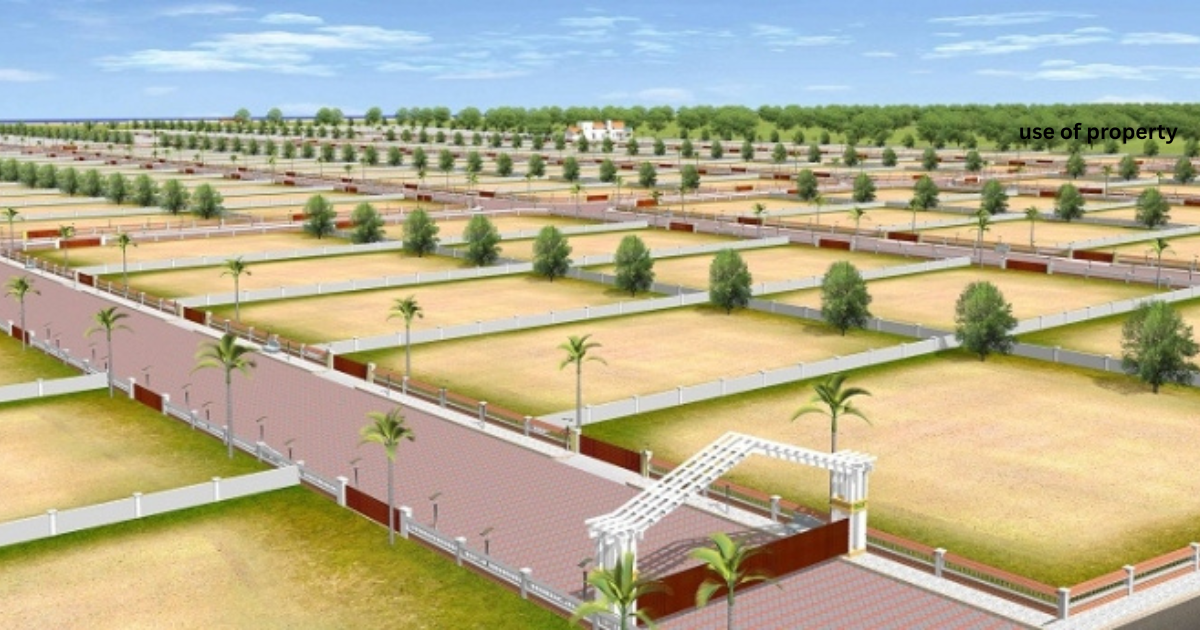
When people talk about the use of property, they simply mean how a piece of land or built structure gets legally designated for a specific purpose, whether that’s a family settling into a residential flat, a farmer working agricultural land, or a company running a commercial office.
Ownership isn’t just about holding paper; it carries the right to use property, the right to use it as you see fit, possess it, enjoy it, and even dispose of it when the time comes.
This right to use property traces back to the Transfer of Property Act of 1882, and today it stands as a constitutional legal right under Article 300A of the Constitution, rather than a fundamental right as it once was.
For most Indian families, understanding this distinction matters because it shapes how confidently they can build, lease, or pass on a home.
In short, how land gets utilised always ties back to what the owner is legally allowed to do with it, and that legal boundary rarely gets explained clearly to first-time buyers.
Types of Property Based on Use
India’s real estate splits into distinct categories based on how each plot gets used. Residential use covers apartments, villas, independent houses, and flats, giving families a place to call home.
 While commercial use brings shopping complexes, retail shops, showrooms, offices, hotels, and government offices to life under commercial property rules built for solid rental yields.
Industrial use takes shape through factories, warehousing, and logistics hubs, split between heavy industry and light industry depending on the scale of manufacturing and large-scale production, and these usually need clearance tied to State Pollution Control Boards.
Agricultural use revolves around farming, cultivation, and other rural activities on agricultural land and industrial land, and switching that land to business purposes demands a proper conversion approval and zoning approvals first.
Mixed use developments, like integrated townships and live-work spaces, blend several categories together, while institutional use and recreational use cover schools, hospitals, and parks as public-purpose structures.
All of this gets guided by urban planning and master development plans, which decide what processing or construction each zone can support, and buyers who check this early save themselves a lot of trouble later.
Legal Right to Use Property
The right to use property in India didn’t always look the way it does now. Back before it stood as a fundamental right protected under Article of the Constitution, but the 44th Constitutional Amendment.
Act shifted it into a constitutional legal right under Article meaning the government can only touch someone’s property through authority of law and a proper lawful process.
Ownership still bundles together the right to possess, the right to enjoy income, and the right to transfer, alongside the power to dispose of property through succession or sale, though taxation and registration laws still apply.
Even in cases of land acquisition, the owner is entitled to fair compensation before the state can step in, which gives Indian property owners a real, enforceable safeguard even though the right no longer sits at the fundamental level.
Restrictions on Use of Property
Owning property doesn’t mean anyone can do whatever they want with it. Local development authorities enforce zoning regulations and building bylaws that control floor space index, or FSI, along.
 With setbacks and use-of-property in India and breaking those rules on commercial developments or industrial developments can bring penalties and even demolition notices.
Running a business out of residential land without approval, or building beyond what agricultural land permits, creates the same problem, and environmental regulations add another layer for larger projects.
State-specific ownership caps also limit how much land a person can hold, while encumbrances like mortgages, leases, and easements restrict how freely someone can use or sell the asset, which can complicate loans and threaten a clear title down the road.
Change of Land Use
Anyone wanting to shift land from one usage to another, say turning agricultural land into commercial land or residential plots, needs to go through the change of land use process, often shortened to CLU.
This starts with checking the current land use classification through revenue records or online land record portals, followed by submitting a conversion application along with proper title documents to the revenue authority or town planning department.
Approval from the director of town planning, or the relevant state authority, along with payment of conversion fees and stamp duty, is what finally grants the conversion approval needed before construction can begin.
 Skipping this step makes it harder to register the property, secure a mortgage against it, or resell it down the line, and many buyers in India learn this the hard way after purchasing land that was never legally converted.
FAQS About Use of Property in India
What does “use of property” mean, and what are its main types in India?
In plain terms, the use of property describes the purpose for which a piece of land or built structure gets occupied or operated, whether that’s residential, commercial, industrial, or agricultural use. India recognizes these along with mixed-use, institutional use, and recreational use, each shaped by state-level zoning laws that decide what can legally be built where.
Is the right to use property still a fundamental right in India?
Not anymore. It was a fundamental right until when the Constitutional Amendment Act turned it into a constitutional legal right under Article instead. Owners still retain strong legal protection, but any government action against their property must follow due legal process and, where applicable, fair compensation.
Can agricultural land be converted for residential or commercial use, and what happens if zoning rules are ignored?
Yes, but only after securing a change of land use, commonly called CLU, through local town planning or the revenue authority; using it without this conversion approval isn’t legally valid. Ignoring zoning rules can trigger penalties demolition notices, trouble getting loans, and a shaky clear title that makes future resale difficult.