
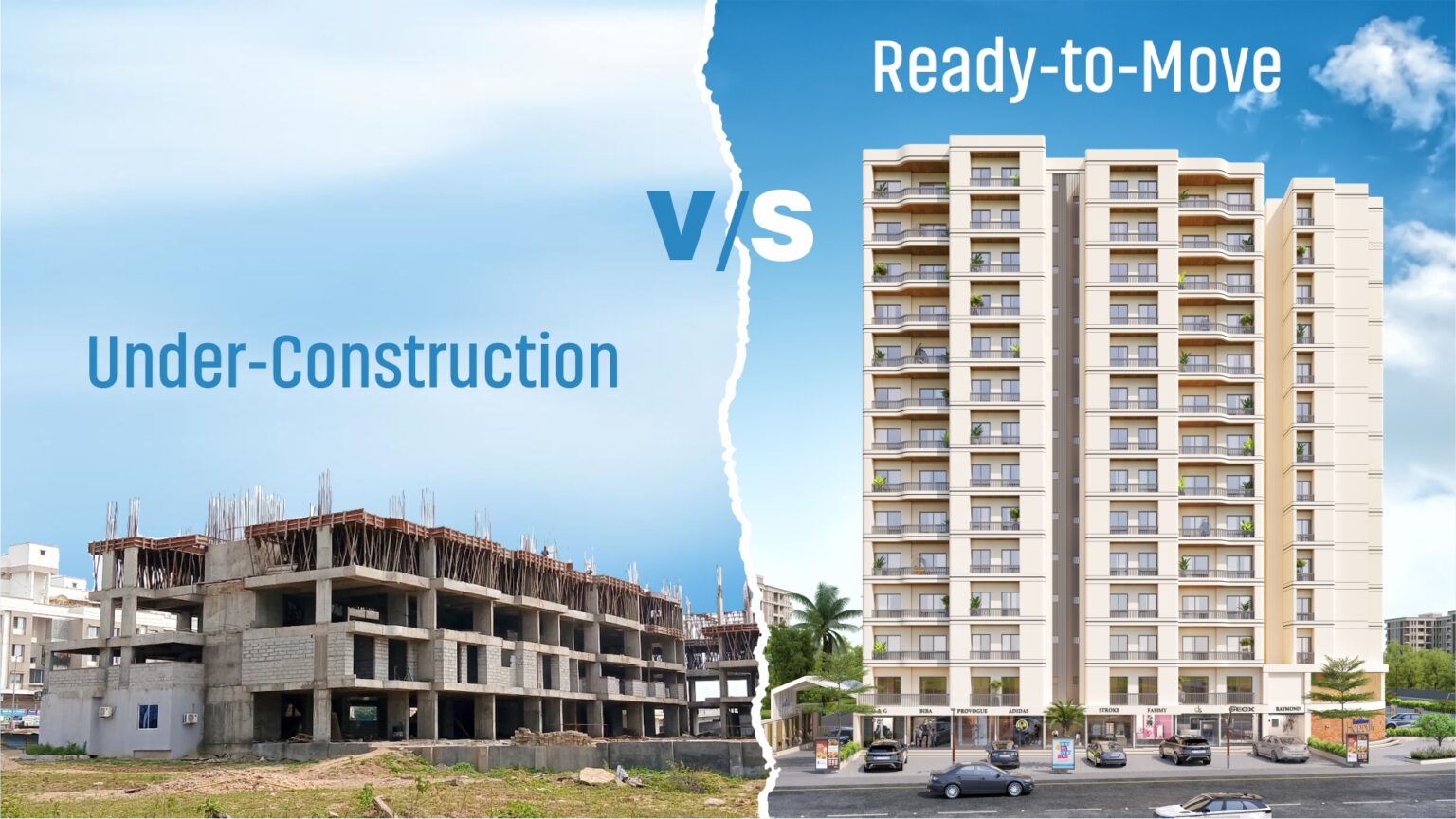
Is it better to buy a ready to move or under construction flat? It depends on your timeline, budget and comfort with risk, and sensible homebuyers choose both. Ready to move vs under construction This home buying guide helps a first-time homebuyer or end-user pick the right path to a dream home.
What is a ready to move flat?
A ready to move flat is a finished home you can occupy now, also called a ready-to-occupy flat or one of many ready-to-move apartments. It counts as a completed property once the builder gets the papers in order. Most ready to move property listings carry an occupancy certificate and a completion certificate.
I’d ask for both papers before a second visit, because a flat without them stays risky. Sellers with clean legal documents answer within a day. Also confirm legal approvals and required permissions on the same call.
What is an under construction flat?
An under construction flat is a home the builder is still building, so you buy from drawings and receive it later. Buyers also call these under construction apartments, and the under construction property may sit at foundation or finishing level. Ask for the current construction stage before booking.
I’d check construction progress with my own eyes, not a brochure. The builder should share construction status photos and a realistic construction timeline in writing. A project at 20 percent looks very different from one at 90 percent.
Which is better: ready to move or under construction?
Neither wins for everyone, and ready-to-move vs under-construction flats comes down to your situation. Pick ready if you need immediate possession, and pick under construction if you accept a waiting period for a lower price. Your risk appetite matters more than any headline.
Ready flats give you certainty, while unfinished projects bring uncertainty about dates and quality. I’d ask every buyer about risk tolerance before talking money. Someone who loses sleep over delays should skip a three-year build.
How much cheaper is an under construction flat?
Under construction homes often cost 10 to 20 percent less than similar finished ones nearby. That price difference gives you a lower entry price, while ready flats carry a price premium. The price gap shrinks as the building nears completion.
Pre-launch offers attract budget-conscious buyers, but a discount means little without value for money. Run a cost comparison on the same floor, size and facing. Affordable housing units can also cut your upfront cost.
What is the real total cost of each flat?
The total cost is what leaves your bank, not the advertised price on a hoarding. Ask for a complete cost sheet and an all-inclusive cost sheet listing every line. Then compare your total financial outflow over three years.
A quoted price often hides extras, so I’d split the base price from hidden charges line by line. That habit helps financial planning more than any calculator. Then test the result against your monthly budget and fixed budget.
Which extra charges do buyers forget?
Buyers most often forget stamp duty, registration charges, parking charges and maintenance charges when they set a budget. Many societies also collect a corpus fund, a one-time deposit, at possession. Add moving and furnishing expenses too, since they can reach several lakh rupees.
Rates differ by state, so check yours before you finalize. Use these numbers in price negotiation, because some builders trim parking or club fees. Get every figure in writing.
How does GST change the price of a flat?
GST on under construction flats is 5% GST for most units and 1% GST for affordable housing priced up to ₹45 lakh, both with no input tax credit. A finished flat with its papers cleared is generally GST-exempt. This rule alone can change your final bill.
GST on a ₹70 lakh flat at 5 percent adds ₹3.5 lakh. Some builders describe the GST exemption loosely, so confirm the tax treatment for your exact unit. Ask which applicable taxes and taxes and registration items sit inside the quote.
Can I save income tax on an under construction flat?
Yes, but the savings start later. Tax benefits under Section 24(b) allow an interest deduction on your loan, and the Income Tax Act lets you claim pre-possession interest in five equal instalments. Your first claim begins in the year construction ends.
I wouldn’t count on this saving during the build. Ask a chartered accountant to confirm your limits, because rules change with each budget. Ready flats start the claim sooner, since possession and repayment begin together.
How do home loans work for each type?
A home loan for an unfinished flat arrives in parts, so you pay pre-EMI first and full EMI after the last release. A ready flat gets one loan disbursement, and your EMI starts at registration. That makes home loan EMI planning simpler for finished homes.
Banks and housing finance companies release money through staged disbursement tied to construction. Compare the interest rate and loan tenure across lenders. Run numbers on an EMI calculator before you book.
Will I pay rent and EMI together?
Often yes, and that rent and EMI overlap hurts under construction buyers most, because the loan starts before the keys arrive. Ready flats avoid it because your loan payment replaces your rent from day one. Count rent during construction as a real expense.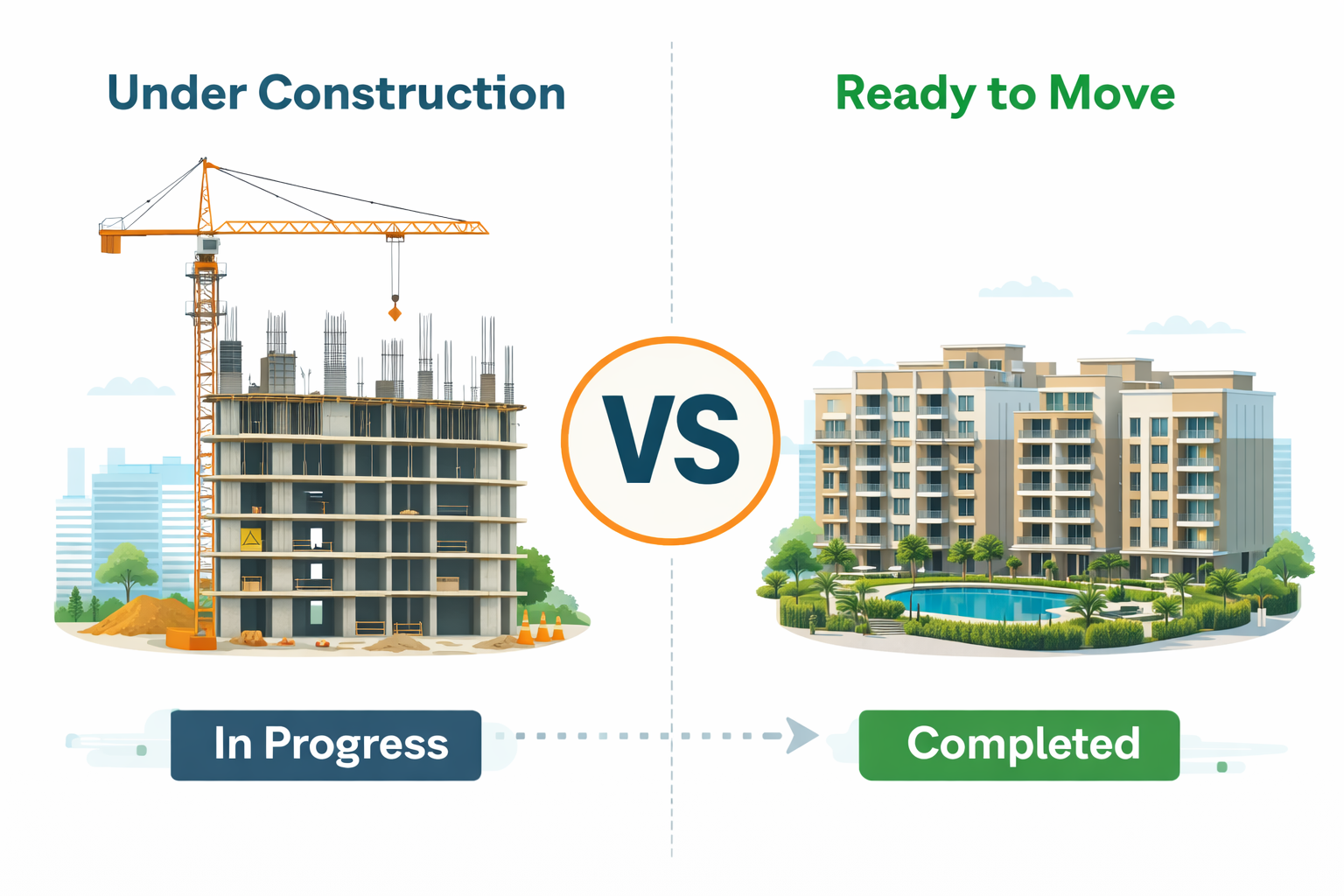
A tenant paying ₹20,000 monthly for 30 months spends ₹6 lakh before getting keys. I’d add that figure to the cost of waiting before calling any flat cheap. Loan payments during the build, on top of rent, can strain a healthy salary.
How do payment plans differ?
Under construction flats usually follow a construction-linked payment plan, so you pay in slabs as work advances. Ready flats ask for a lump sum payment or a short window. Both begin with a booking amount and a down payment.
Ask for the payment schedule in writing and match each slab to a visible milestone. Staggered payments and flexible payment plans ease cash flow but never cut the price. Spreading instalments over two years feels light, yet the total stays fixed.
Is it safe to buy an under construction flat?
It is safe when the project holds a valid RERA number and the builder has a clean delivery history. Verify the RERA registration on your state portal and read the RERA disclosures line by line. The Real Estate (Regulation and Development) Act, 2016 also requires an escrow account for project funds.
Construction risk and delivery risk still exist, especially after funding gaps, labour shortages, weak material supply or pending approvals. Those problems create stalled projects and sometimes quality shortfalls. Research the builder’s past before you sign.
How do I verify the legal paperwork?
Hire a property lawyer for title verification and ask whether the land has a clear title. Review the legal documentation chain from the original owner to the builder. Confirm no pending litigation touches the land.
Collect all project approvals and the project disclosures the builder filed. Compare them with the sanctioned plan, because mismatches signal trouble. Keep copies of every page you receive.
How do I check a builder before booking?
Start with builder reputation and the builder’s track record, then judge developer credibility through previous projects you can visit. Read customer reviews from real owners. Look for on-time delivery and a clear delivery record.
Good developers show transparency and accept builder accountability. Read the sale agreement for the promised delivery date, delay compensation, agreement terms and cancellation provisions. Anything vague deserves a lawyer’s second look.
What happens if possession gets delayed?
Delays push your possession date back while you keep paying rent and interest. Buyers can seek compensation for unreasonable construction delays under state housing law. Check the possession timeline and delivery timeline clauses in your agreement.
Even after the building looks done, handover takes weeks for the final inspection and snagging fixes. Wait for the keys handover before planning your move-in. Confirm society occupancy rules too.
What should I check inside a ready flat?
A physical inspection tells you more than any brochure. Plan a site visit at two times of day and check natural light, ventilation and finishing quality. Measure room sizes and match the carpet area to the agreement.
Compare the specifications with what you see, and test fittings like taps and switches. Walk the common areas, press for lift access, and check parking arrangements. Listen for road noise levels too.
How do I judge a flat I cannot see yet?
Study the floor plan and visit the sample flat, but treat both as promises, not proof. A model home can differ from the delivered one in tiles, fixtures and interiors. Ask for finish details in writing.
List which amenities work today and which modern amenities, like landscaped gardens, remain promises. Ask about balconies and apartment orientation. Check whether the layout is Vastu-compliant, since each affects daily comfort.
Can I customise an under construction flat?
Often yes, if you book early. Customisation can cover layout changes, floor selection and interior finishes, though structural edits need approval. Ready flats rarely allow any of this.
Early buyers also enjoy more choice of units and better unit availability, which matters for corner or park-facing homes. Developers often launch with newer specifications than older stock. Hire interior designers early so their plan fits the electrical points.
Do under construction flats give better returns?
They often can, because appreciation potential is higher when you enter early. An investor who buys at launch may collect capital appreciation as roads and metro lines arrive, though nobody can guarantee it. Match your investment horizon to the build time.
Early-stage buyers often see value growth as the project and area mature. For property investment aimed at long-term returns and long-term wealth, patience pays. Returns still depend on location and a timely finish.
Is a ready flat better for rental income?
Yes, if you want cash flow now. A ready flat earns rental income from the first month, and you can list it right after possession. That gives you immediate rental income without a multi-year wait.
Check rental demand and rental yield nearby before buying, and compare them across any real estate investment you consider. Good resale value and steady resale demand protect your exit. The current property value shows what similar homes sell for.
How much does location matter?
Location often matters more than whether the flat is ready. Strong connectivity and steady infrastructure development lift comfort and resale. Walk the neighbourhood at rush hour before you commit.
Ready flats show an established community, with schools and hospitals already in view. For unfinished projects, check public transportation, metro connectivity, employment hubs, shopping centres and planned development, because they drive future growth potential. Also count competing residential supply, and remember a gated community needs time to become a real community.
So, which one should you pick?
Pick a ready flat when you need peace of mind and a home you can inspect today. Pick an unfinished one when you have time, a verified builder and room in your budget. Do the math, read the paperwork and visit the site before you pay a rupee.
Quick answers to common questions
Do finished flats always cost more?
Usually yes, but not always by much. Once you add the tax on unfinished homes and months of rent, the gap can shrink a lot. Always compare final bills, not sticker prices.
Does the law guarantee my flat arrives on schedule?
No law can guarantee a date, but registration forces builders to disclose timelines and ring-fence most project money. It also lets buyers claim interest on delays. Your own homework still matters most.
Is it worth it to wait for an unfinished flat?
It is worth it when the builder is proven, your rent is manageable and your plans allow two to three years. It is not worth it when your lease ends soon. Match the wait to your life, not to a discount.