
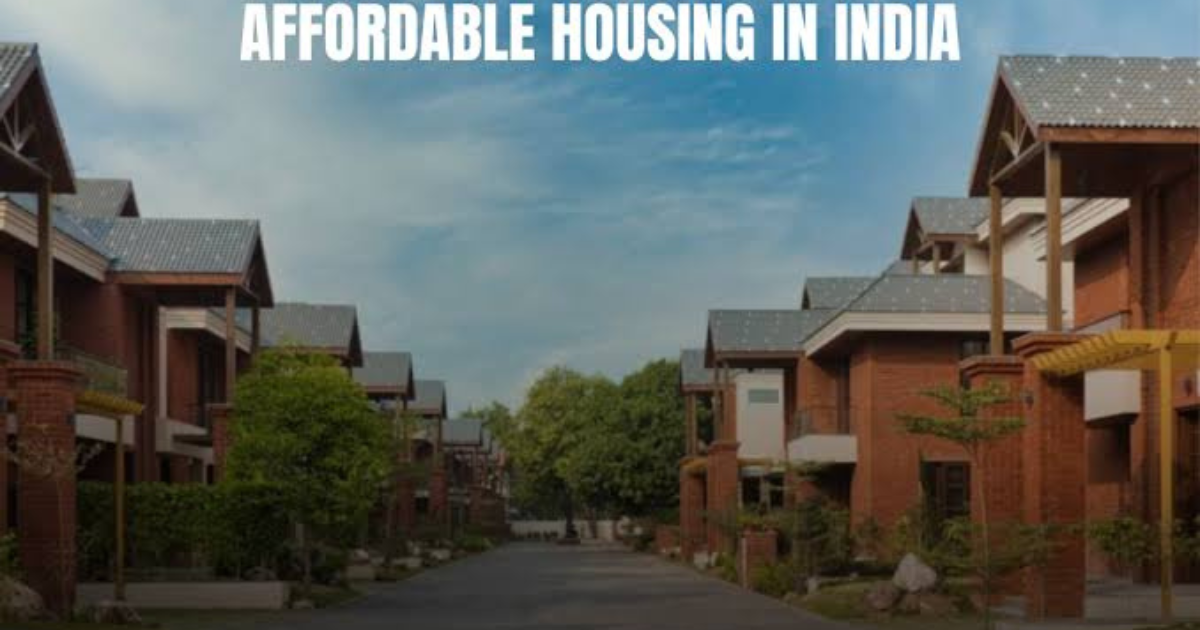
Owning a house feels like a distant dream for a lot of Indian families, and honestly, I have watched close relatives struggle for years just to save enough for a down payment.
This is exactly where a government housing loan scheme steps in. It works as a homeownership initiative launched by the Central Government and every State Government, and its whole purpose is to make housing affordable for regular citizens like you and me.
These schemes usually give interest subsidies, reduce the EMI burden, and relax the eligibility criteria so more people can actually qualify.
The housing loan schemes in India mainly target Economically Weaker Sections, Low-Income Groups, Middle-Income Groups, and first-time homebuyers, and the most well-known one remains the Pradhan Mantri Awas Yojana, built around the idea of Housing for All.
Banks and housing finance companies both offer these home loans, so eligible applicants have more than one door to knock on.
At the same time, these government-backed housing schemes are also solving a bigger affordability gap through planned development.
A central govt housing scheme usually focuses on nationwide priorities like safe housing, basic civic amenities, and formal credit access, while state-led programmes respond to local demand, land availability, and city planning needs closer to home.
Together, rural households and urban households benefit from construction support, subsidised homes, and transparent allotment frameworks that make the whole system fairer for everyone in India.
Popular Types of Government Housing Schemes in India
When people think of a housing scheme, the Pradhan Mantri Awas Yojana, or PMAY, is usually the first name that comes up, and for good reason.
Launched back in 2015 with the aim of achieving Housing for All by 2022, PMAY offers interest subsidies on home loans for EWS, LIG, and MIG categories, and it genuinely helped many first-time homebuyers I know finally sign their own loan papers.
You can apply through the PMAY website or visit Common Service Centers, submit your personal details and income proof, and later check your name on the Pradhan Mantri Awas Yojna list, which gets released yearly.
Alongside PMAY, there is the Rajiv Awas Yojana, aimed at slum redevelopment and giving basic housing facilities to the urban poor, and the Credit-Linked Subsidy Scheme, or CLSS, which trims down the home loan interest burden through upfront subsidies. The Indira Awas Yojana, now renamed Pradhan Mantri Gramin Awas Yojana or PMGAY, was built for the rural poor, including Scheduled Castes, Scheduled Tribes, and freed bonded labourers, and it funds new houses and the upgradation of existing houses using sustainable and disaster-resilient technologies.
Various state housing schemes also add their own flavour, offering lower stamp duty and special incentives for women and economically weaker sections.
More recently, the central government housing schemes have evolved into a bigger framework called Pradhan Mantri Awas Yojana Urban 2.0, or PMAY-U 2.0, which supports urban beneficiaries through several verticals such as beneficiary-led construction, affordable rental housing, and an interest subsidy route linked to home loans.
Its rural counterpart, PMAY-G, focuses on construction of pucca homes through proper beneficiary identification and monitoring.
There is also a scheme called Affordable Rental Housing Complexes, or ARHC, a sub-initiative under PMAY-Urban built specifically for migrant workers and urban labourers who need rental housing near their workplaces, and government schemes for house construction that support households who already own land but need financial assistance to actually build on it.
State-Specific Housing Schemes
Beyond the central schemes, every state runs its own housing schemes for residents, especially economically weaker sections of society, and this is where things get genuinely interesting depending on where you live.
In Maharashtra, the Maharashtra Housing and Area Development Authority, or MHADA, offers affordable housing options through low-cost housing for low-income groups. You simply need a valid income certificate, register on the MHADA website, and wait for the lottery system to allocate houses fairly.
Delhi runs its own version through the Delhi Development Authority, known widely as the DDA Housing Scheme, allocating flats across EWS, LIG, MIG, and HIG categories through a computerised draw of lots.
Prospective buyers register online, submit required documents, and pay a registration fee before the allotments happen, and the whole process leans heavily on transparency.
Down south, the Tamil Nadu Housing Board, or TNHB Scheme, offers flats, plots, and houses across different income groups at genuinely affordable prices, again relying on a lottery system to give every eligible applicant an equal opportunity.
Other state housing bodies, including the Gujarat Housing Board and West Bengal Housing Board, publish their own projects, tenders, and lottery results through official websites, with allotments, first-come first-served sales, or e-auction listings depending on notified conditions.
Delhi’s DDA Housing Scheme runs through its eServices portal and covers areas like Dwarka and Narela, with special reservations for war widows, ex-servicemen, and persons with disabilities.
Whether you are a native of Tamil Nadu above 21 years of age or an Indian citizen above 18 applying in Delhi, each authority tailors its housing schemes to local housing demand and city planning needs, so checking your specific state portal really does matter.
Eligibility Criteria for Government Housing Schemes
Every housing scheme comes with its own distinct eligibility conditions, and understanding these early on saves you a lot of frustration later.
To become a beneficiary under the housing for all scheme, your family income generally needs to sit within Rs. 3 lakh, Rs. 6 lakh, or Rs. 9 lakh, matching the EWS, LIG, or MIG category you fall under.
You also should not already own a pucca house anywhere in the country, and you should not have received central assistance under any other central or state government housing subsidy programme.
Most schemes assess eligibility using a fairly consistent logic built around income category, household ownership status, location rules, and KYC compliance.
For instance, EWS covers annual household income up to ₹3 lakh with a carpet area limit around 30 sq. m., LIG stretches from ₹3 lakh to ₹6 lakh with a 60 sq. m. limit, and MIG generally runs from ₹6 lakh to ₹9 lakh depending on the scheme notification.
Applicants belonging to Economically Weaker Section, Scheduled Tribe, or Scheduled Caste groups often get additional consideration, and a woman applicant living near metro cities across Tier I, Tier II, or Tier III towns can also apply.
A genuinely important detail many people miss is the definition of a first-time home buyer, someone who has never individually or jointly owned a permanent residential property in India.
Aadhaar-linked verification and PAN details are commonly required to avoid duplication, and depending on your state, you may also need residency proof, domicile certificates, or documents tied to city-specific cut-off dates.
Female co-ownership is genuinely encouraged across many schemes too, since properties registered in a woman’s name or held through joint ownership often receive priority consideration along with extra state-level benefits such as reduced stamp duty.
Documents Required for the Housing Application
Getting your documents right the first time genuinely speeds things up, and I have seen applications get delayed for months over a single missing paper.
At a basic level, you typically need the application form, an authority letter, a customer request form, a disbursement request form, a cheque submission form, and a terms and conditions form, along with official documents like your Aadhaar card for identification purposes.
Depending on the exact portal, requirements differ slightly, but keeping a complete file set genuinely helps you avoid delays during verification.
Expect to submit identity proof through your Aadhaar card and PAN card, address proof through a utility bill, passport, or registered rent agreement, and income proof through salary slips, Form 16, an Income Tax Return, or an income certificate from a competent authority.
Banking proof through recent bank statements showing income credits and repayment capacity is also commonly asked for.
If your application involves property, be ready to attach property documents such as an allotment letter, agreement to sell, or builder papers where the scheme requires them. State housing board applications, particularly in Maharashtra and Tamil Nadu, often ask for a domicile certificate, and reserved category applicants may additionally need a caste certificate.
Keeping digital copies of everything ready before you start genuinely makes the entire housing application process far smoother.
How to Apply for Government Housing Schemes
There are honestly a few different ways to apply for affordable housing schemes through banks, NBFCs, and government portals, and picking the right method Housing Application in India comfort with technology.
The most hassle-free method remains applying online, where you visit the website of a trusted lender or the official scheme portal, fill out the application, and reach out for help if any queries pop up along the way.
If online isn’t your thing, telephone support works too, letting you call the customer care number and ask a representative to walk you through the steps.
For anyone who prefers a face-to-face conversation, visiting the branch of your chosen financial institution lets you speak directly with lending experts, and you can easily locate a branch near you through customer care or a quick online search.
Be ready to answer a few questions about your financial profile during this process, since lenders typically approve the home loan only after a careful assessment.
For central schemes specifically, the journey is now mostly digital regardless of whether you choose a central programme or a state authority allotment.
Step one involves choosing the right scheme and confirming your income category and location match the notification, followed by registering on the official portal using your KYC details.
From there, you fill the application form carefully with household and income declarations, upload the required documents in the specified format, and submit the application.
After that, you track verification updates, respond quickly to any document re-upload request, and simply wait for allotment, subsidy processing, or loan-stage action as per the scheme rules.
For PMAY-U 2.0 specifically, demand registration and full guidance sit on the official PMAY Urban portal at pmay-urban.gov.in.
A Few Extra Things Worth Knowing
Government home loan schemes come with real financial upside beyond just easier approval. You get subsidized interest rates that cut down your overall loan cost and monthly EMIs, which genuinely lowers the financial burden for low-income families and middle-income families managing tight repayments.
First-time buyers also enjoy tax benefits, since you can claim tax deductions on both the principal and interest payments as per income tax rules, and all of this builds toward wider, more inclusive housing access and quality homes for everyone.
On the urban side, schemes like the Rajiv Awas Yojana push a slum-free city approach through redevelopment of existing slums and new affordable housing units built on community participation and sustainable development.
The Atal Mission for Rejuvenation and Urban Transformation, or AMRUT, complements this by improving urban infrastructure such as water supply, sewerage, and transport through a public-private partnership model.
On the rural front, PMGAY builds a pucca house with basic amenities for every rural family, often bundling in toilets and LPG connections, while the Rural Housing Fund, or RHF, channels loans and subsidies to rural households who otherwise lack access to formal banking services.
There are also special schemes worth knowing, like ARHC for migrants and industrial workers, and CLSS, which still offers home loan interest rate subsidies for EWS and LIG households, though the benefit for MIG-I and MIG-II categories was discontinued back in 2022.
The Interest Subsidy Scheme under PMAY-U 2.0 can give eligible EWS and LIG households up to ₹1.80 lakh, credited straight into the borrower’s loan account through the nodal agency, which could be the National Housing Bank or HUDCO, usually taking three to six months after loan disbursement.
States like Andhra Pradesh run their own version too, called the NTR Housing Scheme, targeting economically weaker sections through municipal surveys and applications submitted via the PMAY portal.
Before you apply, it genuinely helps to avoid a few common mistakes, like skipping the latest scheme guidelines, choosing a property beyond the maximum carpet area or value limits, submitting incomplete documentation, or trusting unverified intermediaries instead of authorised portals.
Once you have applied, checking your application status is simple too, just log in using your registered mobile number or user ID, enter your application number, and read whether the outcome is provisional or final.
And beyond the scheme itself, first-time buyers can often claim additional stamp duty concessions and tax deductions on home loan interest under the Income Tax Act, so it’s always worth asking a qualified tax adviser about your specific eligibility.
FAQs About Housing Application in India
What is a government housing loan scheme?
A government housing loan scheme is an initiative run by the Central Government and State Government to make homeownership more affordable. It usually offers interest subsidies, a lower EMI burden, and easier loan access for eligible citizens, especially economically weaker sections, low-income groups, middle-income groups, and first-time buyers.
Who is eligible for schemes like PMAY?
EWS, LIG, and MIG households with annual income within the prescribed limits can apply for the PMAY housing scheme. First-time homeowners qualify too, as long as applicants and their family members don’t already own a pucca house anywhere in India, and they meet the property criteria.
What documents are needed for the housing application?
You typically need your Aadhaar card, PAN card, income proof, bank statements, property documents, a loan sanction letter, and an affidavit confirming first-time homeownership. Some schemes may also ask for caste certificates or domicile certificates depending on the eligibility conditions.
How can I apply for the Pradhan Mantri Awas Yojana?
You can apply for the Pradhan Mantri Awas Yojana either online through the official portal or offline via authorized banks, housing finance companies, or common service centers. Once your details and documents are verified, the loan gets disbursed.
Are there tax benefits on these schemes?
Yes, most government housing loan schemes offer tax benefits on principal repayment under Section 80C and on interest paid under Section 24(b) of the Income Tax Act. There are extra tax benefits for first-time homebuyers too, so it helps to check the prevailing tax laws for your exact eligibility.
What is the subsidy under PMAY?
The interest subsidy given to eligible beneficiaries under PMAY ranges from 3% to 6.5% on home loans, depending on your income category. This genuinely reduces your effective loan interest and eases the overall EMI burden.
How do I check my application status?
Simply log in to the portal using your registered mobile number or user ID, then head to the application status or allotment result section. Enter your application number, and you’ll see whether the outcome is provisional, final, or still under further verification.