
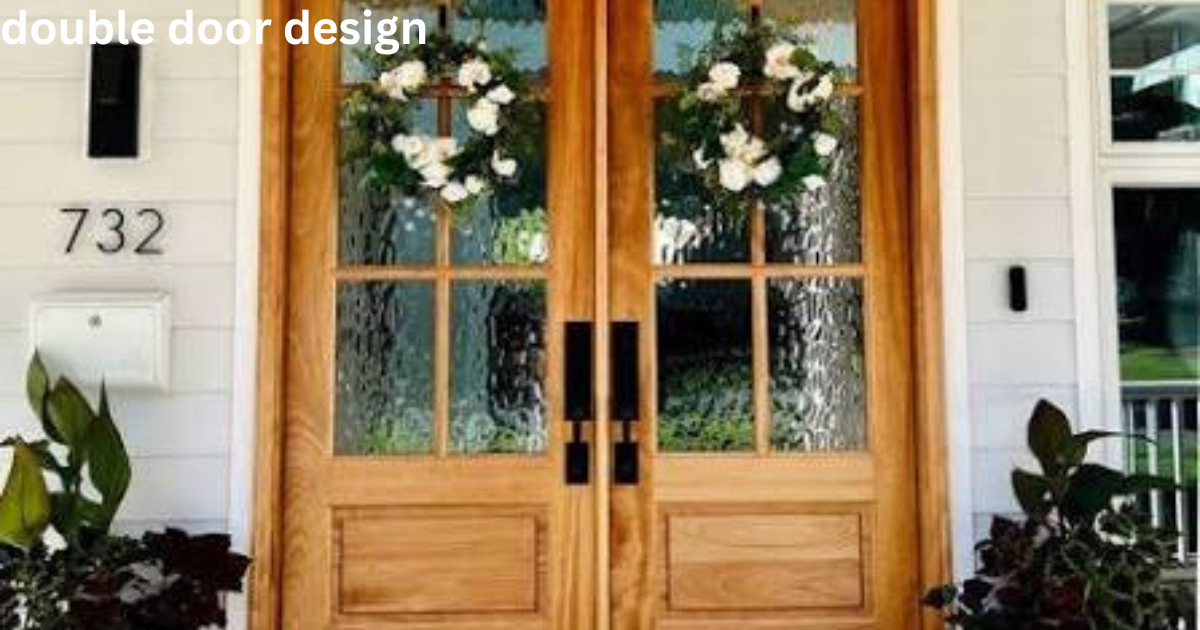
A double door does more than look nice. It turns a plain entryway into a grand entrance that feels roomy and welcoming the moment you step in.
Open both shutters and you get a wide space that makes moving large furniture, a sofa, or even a refrigerator, a breeze instead of a two-person wrestling match.
This is one reason villas, independent houses, and premium apartments almost always choose two shutters over one.
Beyond the practical side, a double door carries a culturally significant, welcoming spirit in Indian homes, where it is often seen as a symbol of prosperity.
The benefits stack up further when you look at daily comfort and long-term value. Improved ventilation comes naturally with one shutter open, letting fresh airflow move through the main hall, while doors with glass elements invite in natural light and lift the visual impact of the whole facade.
Many owners also like that advanced security potential is easy to add multi-point locks and smart locks fit neatly into a double door design. Compared with a single door, this choice creates a far more memorable entrance.
Property experts also point out that a well-chosen double door design boosts property value, and it is genuinely one of the highest-return exterior improvements you can make to a home.
It suits many floor plans, aligns comfortably with Vastu compliance, and gives your home that grand visual impression buyers remember long after they leave.
Standard Dimensions
Getting the correct size right matters more than people expect. In most Indian homes, a Standard Double Door measures around 7 feet in height and 4 feet in width, which is roughly meters by meters, enough for comfortable entry without overwhelming a normal hall size.
If you want something with a little more presence, a Premium Double Door typically runs feet tall and 5-6 feet wide, a proportion that suits bungalows and larger villas comfortably.
For truly statement-making entries, a Grand Entrance can stretch to 8-10 feet in height and 6-8 feet in width, a scale usually reserved for luxury homes and farmhouses with tall ceilings.
On the other end, an Apartment Double Door is often kept closer to the standard 7 feet by 4 feet mark to suit premium flats with tighter layouts.
Whatever category you fall into, always measure accurately before ordering. A door that looks perfect in a catalogue photo can feel wrong once it is fitted, so match the dimensions to your architectural styles and your home’s actual architectural requirements, since every design can be customized to fit your space properly.
Materials for Double Doors
Material choice decides how long your door survives Indian weather. Teak remains the undisputed gold standard because it resists moisture, warping, and termites far better than most alternatives, making it ideal for humid climates and coastal humidity.
Within the teak family, Burma Teak sits at the premium end, while Indian Teak (CP Teak) offers excellent value for most homes.
If you want something tougher on a budget, Sal Wood is prized for being one of the heaviest, strongest woods used in doors and frames, and it also resists white ants and fungus.
Sheesham is the carpenter’s favourite for carved designs, while Mahogany and Oak suit indoor applications and budget premium projects, and Mango wood appears often in Rajasthani carved pieces.
Not everyone wants solid wood, and modern alternatives have closed the gap nicely. HDHMR boards handle high-moisture areas well and accept laminate finishes easily.
Block Board with Veneer is a cost-effective choice for interior-facing main doors, while WPC is fully waterproof and termite-proof.
For maximum security with a modern edge, Steel with Wood Cladding, Mild Steel (MS), wrought iron, galvanised steel, and stainless steel frames are increasingly common, sometimes paired with aluminium or fibre composite panels for a sleek, engineered wood finish.
Glass adds a whole different mood to a double door design. Tempered glass, frosted glass, tinted glass, etched glass, and clear tempered glass panels bring grandeur and warmth together, letting contemporary appeal shine through wrought iron accents or stainless steel frames while keeping your durability, maintenance, security, and overall appearance in good balance.
Double Door Design Ideas
The sheer variety here is what makes this search so much fu On the traditional side, a Classic Teak Carved Double Door, a Haveli-Style Antique Double Door, and a Temple-Inspired Jali Pattern Door all lean on India’s haveli architecture, drawing from Jaipur, Jodhpur, and Udaipur, and often featuring peacock motif, lotus motif, jali pattern, sacred geometry, mythology, and nature motifs like Ganesh and Om.
A Rajasthani Fort-Inspired Door brings iron studs and an arched top design reminiscent of royal palaces, while a South Indian Panel Door Design and Kerala-Style Wooden Door reflect South Indian homes in Tamil Nadu, Kerala, and Karnataka, often finished with antique brass fittings and brass studs.
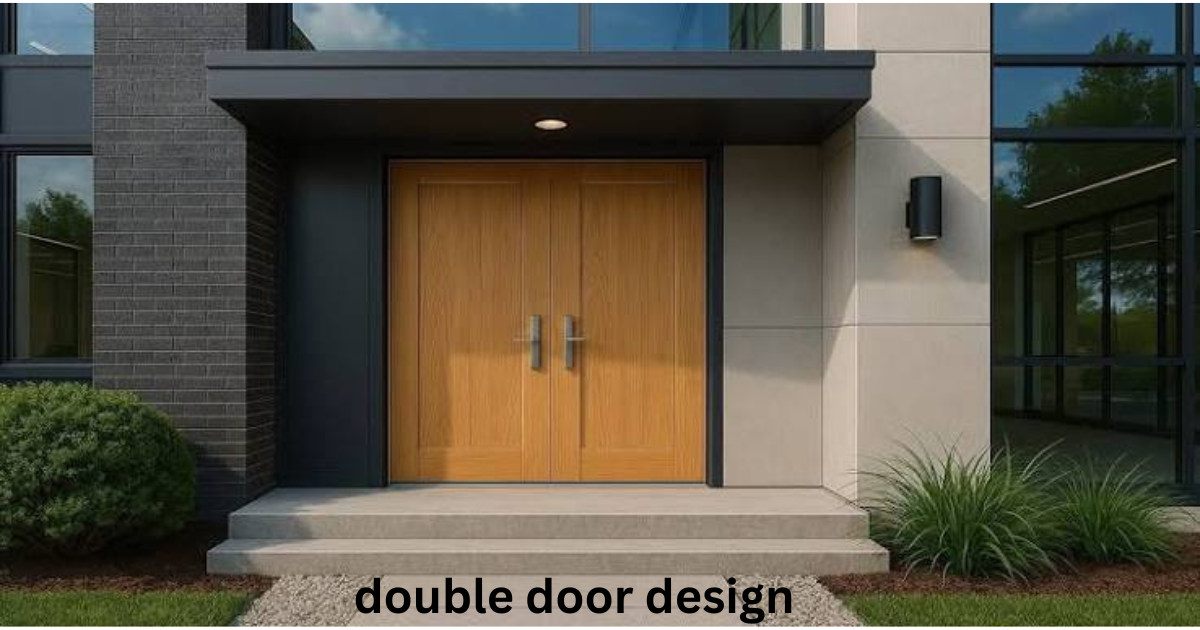
If your taste leans modern, a Minimalist Flush Double Door, Geometric Pattern Door, Black Matte Swinging Door, and Wood-Glass Combination Door suit urban apartments and contemporary homes beautifully, often using CNC-carved patterns, a matte black finish, or tempered frosted glass.
A Long Handle Designer Door with vertical metal handles, a Dual-Tone Contemporary Door mixing oak and walnut, a Pivot Double Door Design built on a floor-mounted pivot system, and a Vertical Groove Pattern Door all suit luxury apartments and design-forward homes.
Fusion lovers can explore Traditional Carving with Glass Inserts, a Modern Frame with Antique Panel, a Metal Grid with Wood Panel Door, a Moroccan-Inspired Arched Door, or an Art Deco Inspired Double Door, perfect for eclectic homes and transitional interiors.
At the top end sit the Solid Burma Teak Masterpiece, Designer Metal-Wood Combination, Smart Electronic Double Door, and Custom CNC Designer Door, made for luxury villas and high-end residences.
Other favourites include the Wood and Glass Fusion with fixed glass panes and sidelights, the Double Door with Grill Gate offering a layered architectural look, and Arched Top Double Doors that suit resort villas and give an overall Mughal-meets-modern feel, plus Mixed-Material Modern Designs blending stone, metal, and mirrors for a bold, experimental impression.
Vastu Guidelines for Double Doors
An entrance is treated as more than a physical gap in Indian homes; it is seen as an energy portal.
According to Vastu, the most auspicious directions for a main door are Northeast, North, and East, each linked to spiritual growth, wealth, prosperity, and positive energy, while West is considered neutral with corrections and South needs remedies for fame and recognition.
Colour matters too light blue, cream, blue, black, green, and natural wood tones support Northeast and North entries, while red, maroon, or orange are recommended for South-facing doors.
There is a genuine debate on door opening direction: some guidance says the door should swing inward and move clockwise to welcome energy flow and prosperity, while other sources recommend swinging outward.
Either way, keep the threshold, or clean and intact, avoid a T-junction facing the entrance, and never let the main door align with another home’s door.
A wooden main door is generally preferred, since it symbolises strength, security, and prosperity, and adding sacred motifs like Ganesh, Om, Swastika, or lotus near the entrance is considered highly beneficial.
Remember the golden rule too: the entrance door should always be larger than every other door inside, because a smaller door is believed to restrict opportunity.
Budget of Double Doors
Budgeting for a double door means adding up more than just the shutters. A realistic total includes Door Shutters, the Door Frame, Hardware such as locks, hinges, and handles, Installation, and Finishing or Polish.
On the basic end, expect a Budget Range of roughly a Premium Range climbs to about and a full Luxury Range can reach depending on location, dealer, and customization requirements.
A basic steel door can start as low as while a luxury pivot or fully custom carved option can cross Rs. 3,00,000+, so always confirm your total budget covers frame, hardware, and installation together, not just the door panel.
Design Considerations for Indian Homes
India’s weather is not the same everywhere, so material choice should follow your region. Coastal cities like Mumbai, Chennai, and Kochi deal with high humidity and salt air, which calls for Burma teak, treated wood, or stainless steel, along with marine-grade finishes and avoiding plain iron fittings.
North India, including Delhi and Jaipur, faces extreme temperature variation, so teak, sal, or engineered wood with proper expansion gaps and quality sealants work best.
 South India, such as Bangalore and Hyderabad, deals with moderate humidity and termites, making teak and rosewood with anti-termite treatment essential, while Northeast and monsoon-prone areas with heavy rainfall and high moisture benefit from WPC doors, an elevated threshold, and solid weather stripping.
Since your main door is the first line of defense, invest in real security features: multi-point locking systems, heavy-duty hinges or concealed hinges, a door thickness of to 40-45mm, reinforced frames, and quality locks such as mortise locks with a deadbolt. A peephole and video doorbell round out proper visitor verification.
Installation Guidelines for Double Doors
Good installation starts long before the door is hung. Begin with frame preparation, checking that it is perfectly plumb and level, then apply moisture proofing at the frame base.
Keep a clearance verification of about 8-10mm gap at the bottom for smooth swing, plan hardware placement with hinge positions around 150mm from the top, the mid-point, and 150mm from the bottom, and allow proper acclimatization of 48-72 hours for wooden door design ideas.
Given that solid double doors can weigh per shutter, professional installation is almost always safer than DIY installation; it protects alignment, operation, and your warranty requirements with the door manufacturers.Expect installation cost between for standard jobs and for premium installations or heavily customized installations.
Maintenance Tips for Long-Lasting Double Doors
A little daily care goes a long way. Dust with a soft dry cloth twice weekly, wipe handles and hardware with a damp cloth, and fix any sticking or rough smooth operation right away, keeping door tracks clean if you have sliding-type double doors.
Add furniture polish to wooden surfaces and lubricate hinges and lock mechanisms every month, while checking weather stripping for wear and watching for early water damage or termite activity.
Once a year, give the door proper annual professional care, refresh it with natural oils, consider re-coating with a PU finish or melamine finish, do a full hardware inspection with replacement where needed, and repeat anti-termite treatment on solid wood doors to protect their longevity.
Common Mistakes to Avoid
The most common trap is picking aesthetics over durability instead of matching material selection to your climate suitability first.
A close second is ignoring frame quality; a poor frame ruins even the best shutters followed by skimping on hardware, since low-quality hinges and low-quality locks compromise security fast.
Wrong size selection leaves doors looking disproportionate, forgetting about ventilation or skipping ventilators hurts airflow, and neglecting maintenance always leads to costly repairs later.
Attempting DIY installation without professional expertise, and ignoring Vastu completely, are two more mistakes worth avoiding for lasting household harmony.
Quick Comparison House Double Door Design at a Glance
Comparing styles side by side helps most buyers decide faster. Classic Wooden doors bring a Warm and Classic look with high durability lasting 50+ years; Modern Minimalist styles are Sleek and Bold with very high durability, fitting urban homes and luxury homes perfectly.
Wood Glass feels Elegant and Light, ideal for light-filled entrances; Traditional Indian designs are Artistic and Royal, suited to heritage haveli style homes; Steel Security is purely Functional for ground floor properties needing extra security; and a Pivot Door delivers an Ultra-Premium finish for luxury villas, while Rajasthani Carved pieces carry genuine Heritage Art, and a Sliding Door offers a Clean and Modern look for space-constrained homes.
Double Door vs Single Door Which One Should You Choose?
The comparison usually settles quickly once you see it laid out. A double door gives a real grand entrance feel with an impressive street view, while a single door has a more limited impact.
For space for movement, the wide opening of a double door easily handles large items, whereas a single door stays restricted.
Ventilation improves greatly when both panels open, compared to the merely standard ventilation of one panel, and on Vastu value and cultural value, a double door is far more auspicious than the simply acceptable single option.
Property-wise, a double door brings a noticeable positive impact on property resale value, while a single door offers only minimal impact.
Before finalizing your purchase with door manufacturers, always ensure the wood quality and structural density comply with official Bureau of Indian Standards (BIS) guidelines to secure genuine product reliability
Best Colours for a Double Door
Colour choice can transform a door without touching its shape. A natural wood finish stays timeless and warm, suiting almost any home.
Matte black feels bold and modern, especially against light walls, while a deep navy blue looks genuinely elegant and is trending in premium homes.
Forest or olive green brings an earthy, calming, Vastu-friendly presence, and terracotta or burnt orange suits traditional, Rajasthani-style homes beautifully.
For a brighter, space-enhancing feel, choose off-white or cream, and for something rich and classic, burgundy or wine red remains a culturally popular pick among current colour trends.
Things to Check Before You Buy a House Double Door Design
Before you sign the order, run through a few basics. Measure accurately, confirming the correct size usually matches home style so the door suits your architecture.
Consider climate, choosing materials that handle heat, dust, and rain in your area, and plan a full budget to include frame, hardware, and installation cost together.
Always check warranty, ideally warranty, insist on professional installation to avoid fitting issues and long-term damage, and finally confirm quality certification through ISI or BIS standards for genuine reliability.
FAQs About Double Door Design
What is the standard size of a double door for the main hall in India?
Most double doors used for main entrances and larger rooms follow a standard size of height and 4 ft width, giving a wider opening that makes furniture movement and shifting larger items far easier.
Which wood is best for main door double doors in India?
Teak wins this contest almost every time because of its natural moisture resistance and strong stand against warping and termites, even in humid climates. Sal wood offers impressive strength and affordability, Sheesham is loved for detailed carved designs, and Mahogany suits budget-premium projects.
How much does a main hall double door cost in India?
Main hall double door costs shift with material, design complexity, and location. Basic engineered wood double doors start around solid teak doors move between premium carved doors or custom-designed doors can touch Add roughly for frame, hardware, and installation, and always compare quotes across a few vendors to confirm material quality first.
What direction should the main door face as per Vastu?
The most Vastu-approved direction is generally east, alongside Northeast for its exposure to the morning sun, and North, tied to high energy levels and fortune. East also suits homes seeking power and luck.
Can I use glass in the main hall double doors?
Yes frosted glass or patterned glass lets natural light brighten the hall while still holding onto privacy. Glass inserts are common in modern double door designs, but always choose tempered safety glass of at least 8mm thickness for real protection.