
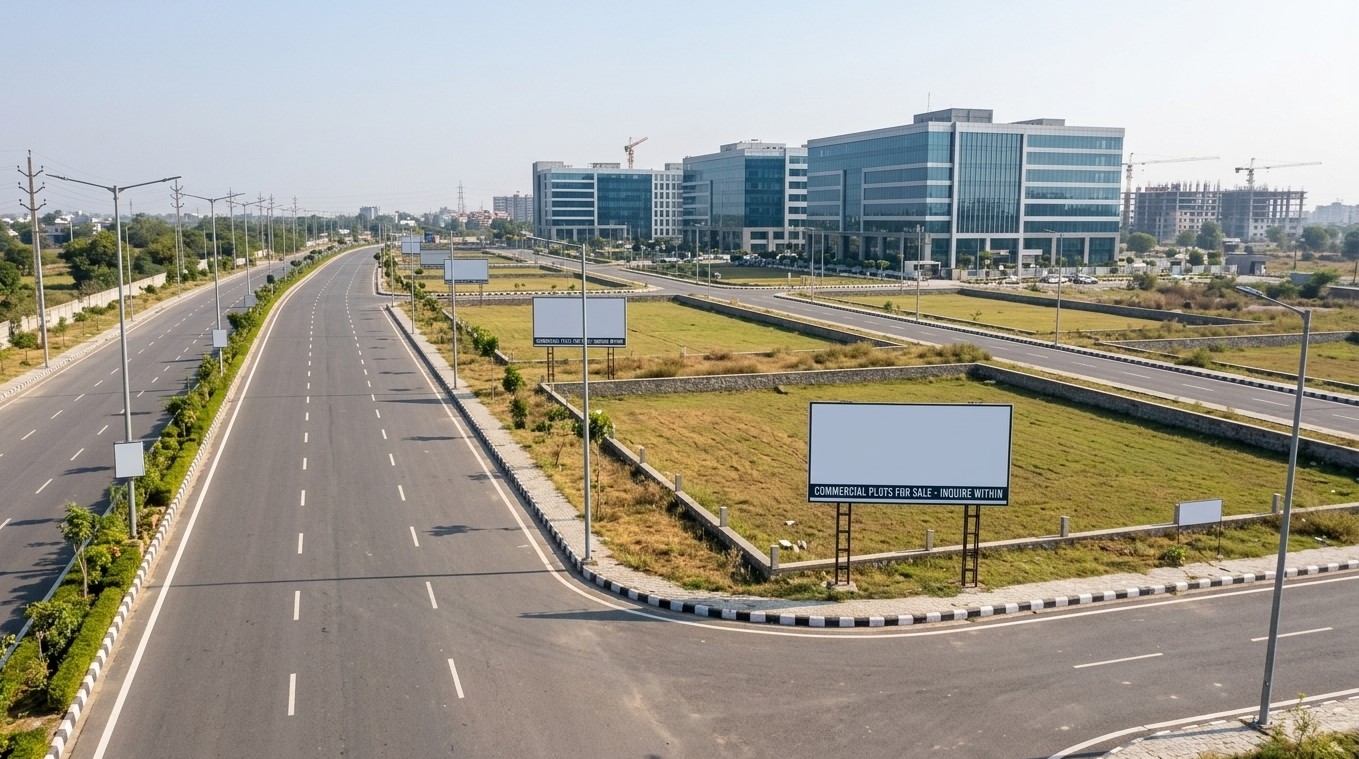
Commercial lots for sale near me in Green Bay range from a corner commercial plot on a busy street to a semi-developed plot waiting for utilities. Brown County buyers compare commercial land by access, zoning, and visibility before anything else. This guide shows what to check first.
Green Bay sits on the Fox River, near Lambeau Field and Austin Straubel International Airport, so retail and service buyers watch this market. A lot beside the downtown business district behaves differently from one at an Interstate 41 interchange. The sections below walk through types, uses, location, features, size, legal checks, and money.
What Counts as a Commercial Lot, and How Does It Differ From Other Land?
A commercial lot is a parcel that local zoning allows you to use for business, such as shops, offices, or service buildings. It differs from agricultural land, a residential plot, or industrial land because each category carries its own permitted uses. Confirm the zoning district with City of Green Bay planning staff before you make an offer.
Portals sort commercial plots by type and list a commercial building, a commercial plaza, a warehouse, a factory, a hall, and office space beside bare land. Some markets also sell a plot file, a booking document for an unallotted plot, and a farm house on the city’s edge. Green Bay buyers face a similar mix, so decide early whether you want empty land or an existing structure.
Who Buys Commercial Lots, and What Do They Build?
Franchises, restaurants, banks, clinics, and corporate offices buy most small commercial lots, and each wants different frontage and parking. Developers also assemble sites for retail outlets, shops and retail strips, and showrooms and large-format retail stores. Pick the tenant type you want to attract before you pick a parcel.
Larger projects serve hospitals, healthcare facilities, universities and colleges, and multinational companies that need corporate headquarters.
Smaller plans cover medical and consulting space, coworking spaces, and hotel and leisure property near travel routes. Healthcare, packaging, and logistics employers all operate around Green Bay, so business development and commercial development often follow their hiring. A few buyers pursue a business for sale instead, and others scout commercial farming and rural land at the county edge. High-rise commercials stay rare in Green Bay, so most plans use low buildings with ample parking. Each path changes the loan, the permits, and the timeline.
What Makes a Prime Commercial Location in Green Bay?
A prime commercial location combines steady traffic, easy turns, and excellent visibility from the road. Lots near Interstate 41 give you motorway access, and sites near the airport add airport proximity for business travelers. Request traffic counts from the Wisconsin Department of Transportation first.
Frontage matters as much as the address. A main road, a main double road, or a main service road each moves a different customer volume, and a wide main road with a median can block left turns. Drive past on a weekday at 8 AM and again at 5 PM, because road-facing, boulevard-facing, and park-facing lots behave differently at rush hour.
How Do Neighborhood and City Plans Change a Lot’s Value?
Surrounding plans shape demand as much as the lot itself. A business district draws daytime customers, a master-planned community creates built-in demand, and a smart city concept signals new infrastructure. Study the city’s land-use map to see which one affects your parcel.
Developers abroad often sell inside a housing society and label parcels by sector and block, while Wisconsin sellers use plat maps and lot numbers. Visit the developer’s estate office, or in Green Bay the planning office, to learn about the next phase. Bypass routes such as Highway 172 work like a ring road, and Interstate 41 links Green Bay to Appleton, Milwaukee, and other major cities.
Which Features and Utilities Should a Commercial Lot Offer?
A ready lot offers water and electricity, sewer access, and a driveway permit from the road authority. Check the infrastructure at the property line, because bringing utilities in can cost more than the land. Ask the city engineer which roads and boulevards the city plans to rebuild nearby.
Plan the building’s features early. Developers advertise 24/7 security, CCTV surveillance, central HVAC, dedicated elevators, service elevators, backup generators, and maintenance services in every multi-storey building they pitch. Think about the covered area, the number of floors, a ground floor entrance, a basement, a lower ground floor, and a rooftop for equipment.
Outdoor space counts too. Ample parking, green spaces, landscaping, a lawn, large halls, and open spaces help customers and neighbors accept your project. Green Bay’s winters make snow storage and drainage part of that plan.
How Do You Measure and Compare Lot Sizes?
Compare lots by area unit, and convert everything to square feet or acres before you judge a price. A plot size of 43,560 square feet equals one acre, which gives you a firm benchmark. Ask for the plot dimensions too, because a narrow lot wastes area.
Most U.S. listings quote lot size in square feet or acres, so compare prices per square foot or per acre. Some surveys also list frontage and depth in feet, which shows how much of the lot faces the road. Corner sites sometimes include extra land, so verify that land on the survey.
What Legal Checks Should Come Before You Buy?
Start with clear title, a recent survey, and complete documentation from the seller. Brown County’s Register of Deeds records deeds, so search the chain of ownership there or hire a title company. Order a Phase I environmental assessment on any former gas station or factory site.
Ask for an approved building plan, or at least the zoning rules that will govern one, such as a basement plus ground floor plus upper floors layout. Wisconsin charges a real estate transfer fee of $3 per $1,000 of value, so budget for property transfer costs. Wisconsin buyers should read the city’s master plan, review local zoning and tax rules, and rely only on verified listings.
Is a Commercial Lot a Good Investment?
Commercial real estate rewards patience, and a lot works as a long-term investment only if you can hold it. Property investment in land earns nothing until you build, lease, or sell, while taxes and insurance continue. Run holding costs before you treat any parcel as an investment opportunity.
A smart investor compares rental income from similar buildings, studies real estate trends, and counts existing rental income only when signed leases prove it.
A high-ROI property usually sits on a strong corridor, and an income-generating property needs tenants who pay on time. Read any investment guide skeptically, because plot to profit stories skip vacancy, and generational wealth takes patience.
How Do You Pay for a Commercial Lot?
Most buyers pay with a commercial land loan, cash, or seller financing. Lenders often ask for a larger down payment on raw land than on a built home. Use a loan calculator to test rates, and do not rely on a home loan, because lenders price commercial risk differently.
Wisconsin sellers usually work with a standard purchase offer, earnest money, and a closing date. Use a buyer’s checklist for each purchase, and confirm the closing and possession dates in writing.
How Do You Choose a Trustworthy Agent or Seller?
Several Pakistan-based brands show how a property portal organizes commercial listings, and each brand offers the services listed on its own website.
None of them list Green Bay lots, so use them as examples of structure, not as sellers. Visit each site to confirm what it currently offers.
Markaz.pk lists commercial property for sale or rent, runs a find-agencies directory, and covers business for sale, franchises, and coworking spaces.
Jaageer operates a real estate marketplace that connects realtors with buyers, sellers, and tenants, and its site includes a registry calculator, stamp vendors, and a mobile app with property alerts. Lamudi.pk offers buy and rent searches, a loan calculator, and browse-by-city pages for commercial plots.
Faisalabad Realtors lists commercial plots, industrial land, and office space, publishes property catalogs, and writes about laws and taxes.
Abdullah City presents a commercial project with a payment plan, a virtual tour, project updates, and a live construction walkthrough. Its site also shows a master plan and records each possession handover.
How Do You Choose a Trustworthy Agent or Seller?
Choose a licensed Wisconsin real estate broker who handles commercial property every month, not only homes. Ask for recent closings, references, and the names of the title company and surveyor they trust. Verify the license through the Wisconsin Department of Safety and Professional Services.
Portals group providers into real estate agencies, commercial agencies, authorized agencies, and registered realtors. Some name a property advisor or a real estate consultant, and Markaz.pk points buyers toward property experts through its commercial agency search. Use that same sorting to compare Green Bay brokers, and ask how the agent connect step works, by direct call or by form.
Ask each broker which builders and developers they trust for construction, and request a recent commercial project as proof. A housing project record helps on mixed-use sites. Beware of exclusive properties that only one broker can show, since they narrow your comparison.
Why Is This Website the Easiest Place to Start Your Search?
This website collects the checks in this guide, so you can compare commercial opportunities without opening ten tabs. Run each smart property search the same way: filter by size, zoning, and road frontage, then compare property listings side by side. Save the lots that pass, and drop the rest.
Look for property for sale and property for rent filters, plus clear labels on featured properties and premium projects. A site that covers buy, sell and rent in one place saves time when your plans change. Set property alerts, and review new matches weekly.
FAQS
How much does a commercial lot cost in Green Bay?
Price depends on size, zoning, road frontage, and utilities, so no single figure fits every parcel. Check recent sales at the Brown County Register of Deeds and ask a local broker for comparable lots. Compare the price per square foot, not the total.
Do I need a survey before I buy?
Yes, order a boundary survey before you close, and choose a licensed Wisconsin surveyor. It shows exact lot lines, easements, and any neighbor’s encroachment onto your parcel. Your lender and title company will probably ask for it anyway, so ordering early avoids delays at closing.
Who approves a new commercial building in Green Bay?
The city’s planning and zoning staff review site plans, and the building inspection office reviews construction plans. State agencies, including the Wisconsin Department of Natural Resources, may also review wetlands or stormwater. Meet staff early, because their feedback shapes your design and your timeline.
Can I use a home loan to buy a commercial lot?
Usually no, because lenders treat commercial land as a different risk. Ask banks for a commercial land loan and compare terms from at least three lenders. Bring a business plan and a site sketch, since lenders ask what you intend to build.
How long does a purchase take?
A cash deal on a clean lot can close in a few weeks, because no lender review slows it down. Financed deals with surveys, appraisals, and environmental checks often take two to three months. Build extra time into your schedule for zoning questions and utility confirmations.