

Griha Pravesh is more than a simple house move; it is a spiritual moment rooted in Hindu tradition and marked by real positive energy.
Families across Gurgaon and the wider Delhi NCR region treat this first formal entry into a new home as a true first step toward lasting happiness.
In Sanskrit, the word itself signals a fresh entry, and this Griha Pravesh Muhurat in 2026 traditional Hindu housewarming ceremony also called Graha Pravesh carries the same weight whether the house is a newly built house or a renovated house.
Choosing the right muhurat timing is not guesswork; it follows planetary alignments, planetary movement, and planetary influence that Vedic astrologers track with real care.
The goal of the Shubh Griha Pravesh Muhurat is to align a family’s auspicious start with cosmic energy and favourable cosmic energy, so the house feels calm from day one. Buyers in today’s real estate markets now research this Vedic ritual almost as carefully as they research the property paperwork itself.
A proper muhurat is believed to purify and cleanse the space, driving out negative energy and correcting Vastu doshas that may have settled during construction.
Alongside that, the ceremony is meant to invite positive vibrations, blessings, peace, and prosperity into the home. This housewarming ritual protects the wellbeing of every one of the residents, from the eldest grandparent to the newest baby.
2026 brings its own calendar of dates worth tracking closely, because entering a home during this new life phase on the correct day is said to bring lasting harmony. Every family wants that opening chapter to begin well, and a mindful Nakshatra and Tithi check helps make that happen.
What Is Griha Pravesh
Hindu astrology treats every moment of entry into a home as important, and this idea grows out of a much older set of cosmic rhythms found in Vedic tradition.
A muhurat is simply a window of time that this branch of astrology marks as favourable, and it depends heavily on the lunar day, known as Tithi.
Experts look closely at the Nakshatra, or constellation, active on a given date, because certain skies are said to carry more positive energy than others.
Some auspicious dates repeat a pattern of good Tithi choices, such as Dwadashi, Trayodashi, Panchami, and Dashami, all of which are said to support stability and abundance for residents.
On the Nakshatra side, Rohini, Uttara Ashadha, Anuradha, and Revati are named again and again as strong picks that keep health and happiness close to home.
Vastu Shastra experts explain that a house can absorb energy the moment a family steps inside, which is exactly why this timing matters so much.
Beyond the date itself, the day of the week plays its own role, since weekdays each fall under different planetary rulers. Monday, Wednesday, and Thursday are usually flagged as the safest time windows for this ceremony, offering favourable planetary positions that suit a fresh start.
Types of Griha Pravesh
Apoorva Griha Pravesh applies to the first entry into a newly constructed home, and families usually treat it as the most elaborate ceremony of the three types.
It calls for the house to reach construction complete status, meaning doors, windows, electrical fittings, plumbing, flooring, and fresh painting are all in place before anyone steps through the door.
Before the date, priests confirm the water connection and electricity connection are active, the kitchen functional, and the bathrooms operational, so the ceremony rests on solid ground.
Sapoorva Griha Pravesh suits re-entering a house after major renovation, reconstruction, or repairs, and its main job is to purify renovated space that recent repair work may have disturbed.
This applies after room additions, extensions, roof reconstruction, wall demolition, wall construction, kitchen renovation, bathroom renovation, flooring replacement, electrical work, or plumbing work.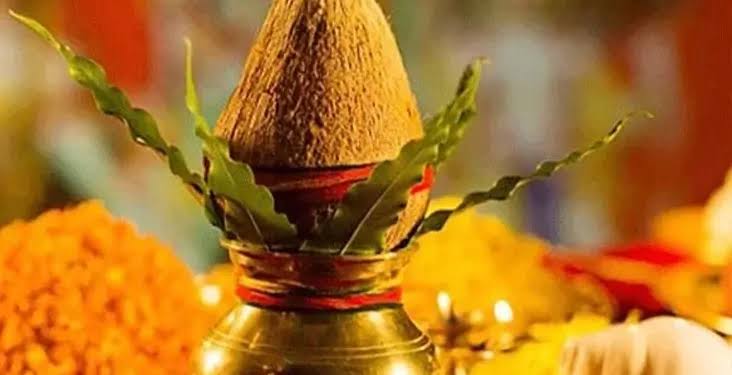 It carries fewer rituals than the first type but still leans on proper Vastu Puja and Navagraha Puja to reset the home’s energy.
Dwandwah Griha Pravesh covers re-entering after a long journey, pilgrimage, extended absence, or even a natural calamity, and it stays refreshingly simple.
Families mark the entrance with a lighting lamp, offering prayers, sprinkling holy water, and breaking coconut at the threshold, often finished off with a short Havan as a simple puja.
Griha Pravesh Muhurat Dates 2026
January 2026 opens the year quietly, and Panchang readers should always double-check location-specific timing before booking a hall for any date that early.
February 2026 wakes things up properly, with Feb 6, Feb 11, Feb 19, Feb 20, Feb 21, Feb 25, and Feb 26 all carrying workable muhurat timing windows.
Across these dates, Nakshatra names like Chitra, Hasta, Jyeshtha, Anuradha, Uttara Bhadrapada, Revati, and Mrigashira show up alongside Tithi values such as Shashthi, Panchami, Dashami, Navami, and Tritiya.
March 2026 stays busy too, offering Mar 4, Mar 5, Mar 6, Mar 9, Mar 13, and Mar 14, with Nakshatra options spanning Rohini, Uttara Phalguni, Punarvasu, and Uttara Ashadha.
Apr 20 stands out as the lone solid pick in April 2026, landing on a Wednesday by most Panchang readings once double-checked. Every single entry here still needs a fact-check and verification against a live source, since small date conflicts appear across different Panchang publishers.
May 2026 brings May 4, May 8, and May 13 into play, while June 2026 adds June 24, June 26, and June 27 to the shortlist. July 2026 rounds things out with July 1, July 2, and July 6, giving families a real run of choices across three back-to-back months.
Tithi picks in this stretch include Dwitiya, Saptami, Ekadashi, Dwadashi, Trayodashi, and Pratipada, paired with Nakshatra names like Swati, Pushya, and Uttarashadha.
August 2026 and September 2026 go quiet, largely because of Shravan Maas and the wider Chaturmas window that most priests avoid outright. October 2026 wakes the calendar back up with Oct 22, Oct 23, and Oct 28, each landing well outside that restricted stretch.
Ashwini appears as one nakshatra worth noting in the surrounding weeks, alongside repeat mentions of AM and PM timing splits that matter for exact muhurat timing.
November 2026 turns out to be the strongest month of the year, packing in Nov 2, Nov 6, Nov 11, Nov 14, Nov 20, Nov 21, Nov 25, and Nov 26.
December 2026 stays close behind with Dec 2, Dec 3, Dec 4, Dec 5, Dec 11, Dec 12, Dec 18, Dec 19, and Dec 30, though timings differ across sources yet again.
Weekday coverage across the full year touches Monday, Tuesday, Wednesday, Thursday, Friday, Saturday, and Sunday, so no single day dominates the shortlist.
Anyone cross-checking these dates should lean on a trusted Panchang, and Drik Panchang remains one of the most cited tools for this exact purpose.
Sunrise timing shifts the whole calculation from city to city, which is why a date that works in Delhi might shift slightly elsewhere.
Griha Pravesh Puja Vidhi
Pre-ceremony preparation starts one or two days early, when the family finishes any leftover construction work, handles final repairs, seals stray leaks, and rechecks the electrical fittings and water supply room by room.
A full deep-clean follows, covering walls, floors, bathrooms, and the kitchen, with leftover debris swept out and fresh whitewash or paint applied wherever needed.
Entrance decoration finishes this stage, adding rangoli, a mango-leaf toran, fresh flowers, and a new nameplate by the doors and windows.
Ganesh Puja opens the actual ceremony, clearing obstacles through idol cleaning, flowers, durva grass, turmeric, kumkum, a modak offering, and a closing aarti. The family also keeps a small Ganesha idol close by throughout, since it anchors the entire opening sequence.
Kalash Sthapana follows next, where a copper pot or brass pot filled with water, Gangajal, a coin, and rice becomes a small deity on its own, topped with mango leaves and a coconut.
Vastu Puja honours the Vastu Purush along with the eight directional deities Indra, Agni, Yama, Nirrti, Varuna, Vayu, Kubera, and Ishana each linked to a specific direction of the plot.
Navagraha Puja then turns attention to the nine planets through targeted offerings, before the Lakshmi Narayan Puja calls in wealth and protection for the household.
The fire ritual, or Havan, takes place in the southeast corner, where Agni Dev is invoked with ghee, sesame, and Vedic mantras chanted throughout.
The boiling milk ritual comes next inside the kitchen, and the overflow of milk into kheer or payasam is treated as a sign of abundance on its own.
Formal entry puts the head of household at the front, stepping in with the right foot, crossing the threshold after a coconut is broken and a lamp is lit at the entrance.
Lighting lamps continues room by room from the northeast corner outward, staying lit for at least 3 hours, and sometimes for 11 days or 21 days depending on family custom.
The day closes with feeding priests and guests, followed by distributing prasad to everyone present, and every plate of prasad carries its own small blessing.
Puja Samagri
A ready Kalash sits at the centre of most checklists, paired with mango leaves, a coconut, and a splash of Gangajal or plain holy water. Around it, families gather a ghee diya or oil lamp, some incense, turmeric, kumkum, fresh flowers, and ripe fruits for offering.
Rice, wheat, and other grains round out the base layer, since these staples represent a well-stocked home from the very first day.
Havan samagri covers everything the fire ritual needs, while a small stock of milk and sugar waits ready for the kitchen ritual later in the day.
Sweets and prasad go out to guests once the puja wraps up, and many families still keep holy books like the Bhagavad Gita or Ramayana somewhere in the room.
A few coins, some money, and small silver items or gold items are often placed near the Kalash too, standing in for the wealth the family hopes to welcome.
Conclusion
Picking the correct date for Griha Pravesh muhurat 2026 is never just about ticking a box; it lines up favourable stars with real timing that a family can feel. Proper rituals, carried out inside the right space between the walls of a new home, set a positive tone that seems to linger for years. This single foundation moment shapes the household ahead, quietly nudging daily life toward good fortune.
A peaceful life, a stable life, and a genuinely prosperous life all trace back, in part, to how thoughtfully that first day inside the home was planned.
Importance of Griha Pravesh stretches across several layers of a family’s life, starting with Spiritual Significance and Religious Significance tied to deities such as Ganesha, Lakshmi, Vishnu, Vastu Purush, and the Navagrahas, guided by Agni Dev himself.
Vastu Purification and Dosha Removal clear out residual energy left behind by construction materials, balancing the five elements, or Pancha Mahabhuta Prithvi, Jal, and Vayu among them.
Health Benefits and Wellbeing Benefits sit alongside Financial Prosperity, Success, Family Harmony, and real Protection from Evil, rounding out why this single ceremony still matters so much today.
Best Nakshatras worth chasing include several familiar names, while a separate list of Nakshatras to Avoid carries real weight too Bharani, Krittika, Ardra, Magha, Purva Phalguni, Vishakha, Jyeshtha, Moola, Purva Ashadha, Purva Bhadrapada, Dhanishta, and Shatabhisha all fall on the side priests usually steer families away from.
Ashwini and Shravana, along with Uttara Ashadha, show up on the favourable side instead, giving families a fuller picture before they lock in a date.
Tips Vastu Shanti Muhurat guidance leans on avoiding Rahu Kaal, checked through a full Rahu Kaal timing table, along with Yamagandh, Gulika Kaal, eclipses, and Amavasya.
Graha Shanti Puja, closely tied to Navagraha influence, pays special attention to Jupiter, Mercury, and Mars, three planets astrologers watch most closely. How Muhurat Calculated truly comes down to planetary strength, Lagna, ascendant, sunset, and a full birth chart reading, not a single factor alone.
Things to Avoid cover a long list Kharmas, Malmas, Panchak, Bhadra Kaal, Pitru Paksha, and other inauspicious periods in general each one flagged for a different astrological reason.
Choghadiya breaks each day into segments named Shubh, Labh, Amrit, Chal, Udveg, Kal, and Rog, and only the first three earn real trust from priests. Inauspicious times shrink fast once both layers, Choghadiya and the main Panchang, get checked together.
Personalised Muhurat planning pulls in a full Kundli reading rather than relying on a generic date list, matching a family’s own birth chart against the calendar.
Auspicious Tithis and the Best Days of Week work as a shortcut for families short on time, giving quick guardrails even before a full Kundli check happens. Choosing right muhurat always comes back to this same blend of tithi, nakshatra, and weekday.
Auspicious Festivals 2026 line up nicely with Basant Panchami, Akshaya Tritiya, Dussehra, Dhanteras, and Diwali, days many families treat as safe by default.
Holi and Raksha Bandhan, on the other hand, sit firmly on the list to skip. Auspicious Lagna guidance splits ascendants into Fixed Signs Taurus, Leo, Scorpio, Aquarius and Dual Signs Gemini, Virgo, Sagittarius, Pisces with the fixed group generally favoured for long-term stability.
Rented House entries call for a Simplified ritual rather than the full ceremony, since buying or shifting into a rented flat rarely demands the elaborate version. Boiling Milk Timing works best in the early morning, right after the main muhurat window opens for the day.
Remedies Inauspicious Muhurat situations usually involve Vastu Yantra placement, an extra Ganesh Puja first, and a supporting Havan to smooth over any timing that could not be shifted.
Vastu Guidelines After Puja point toward furniture placement on the southwest side for heavy pieces, with plant placement favouring Tulsi near the entrance.
Traditional Context traces back to the Grihya Sutras and Vedic origins, while milk-boiling symbolism and newer eco-friendly practices, including virtual priests, show how the ritual keeps adapting.
Regional Traditions Across India stretch from Punjab, Uttar Pradesh, Bihar, and Rajasthan in the north, through Maharashtra and Gujarat in the west, down to Tamil Nadu, Karnataka, Andhra Pradesh, Telangana, and Kerala in the south, across to West Bengal, Assam, and Odisha in the east, and through Madhya Pradesh, Chhattisgarh, Himachal Pradesh, and Uttarakhand in the centre and hills.
Dos for Griha Pravesh Ceremony favour cleansing house spaces, decorating with flowers, holy items kept close, oil lamps lit early, and family members present for the full ceremony.
Don’ts for Griha Pravesh Ceremony flag moving furniture too early, entering without puja, leaving the property through a vacant house stretch, allowing arguments or negative words, welcoming uninvited guests, or serving non-vegetarian food and alcohol on the day.
Auspicious Things To Do repeat some of this ground, stressing entering with items in hand, avoiding inauspicious timing, and avoiding negativity throughout.
Monthly Insights across the 2026-27 window, alongside a dedicated 2027 date table, help explain the month-by-month commentary on which weeks carry the strongest favourable dates.
Practical tips include a cow dung solution wash, a proper Satyanarayana Puja, coconut at entrance, a supporting Vastu Shanti Havan, Kalash at entrance placement, and marigold flowers strung across the doorway.
Common Mistakes to Avoid include ignoring Vastu timing, incomplete rituals, poor planning, and consulting pandit only at the last minute instead of early on.
When Why It Is Done boils down to three moments a fresh newly constructed home, buying or shifting into another property, or wrapping up a major renovation.
Benefits Shubh Muhurat timing include the chance to see removes negative energy at work, along with health harmony, Vastu balance, and a genuinely spiritually positive beginning for the whole household.
Cooking something sweet on the very first morning still tops many family checklists, alongside a full stop to heavy decorations that might clash with the ceremony’s calm tone.
Negativity in any form, along with Protection from Evil, stays high on every priest’s mind, which is exactly why limiting guest list size and keeping the mood gentle matters so much.
FAQs About Griha Pravesh Muhurat in 2026
What is the best nakshatra for Griha Pravesh in 2026?
The strongest nakshatra picks for 2026 stay fairly consistent: Rohini, Pushya, Uttara Phalguni, Uttara Ashadha, and Uttara Bhadrapada all carry real weight. Priests treat Rohini as especially auspicious, since it favours growth and stability, while Pushya leans more toward nourishment and abundance. Both sit under benefic planets, which is exactly why families notice such favourable positive effects once the date is locked in.
Which month is good for Griha Pravesh in 2026?
November stands out as the best month across all of 2026, offering roughly 8 dates and lining up nicely with Diwali. February follows close behind with 7 dates, March brings 5 dates, and December adds 4 dates before Kharmas shuts things down again. August offers no dates at all, sitting right inside Chaturmas, the long stretch from mid-July to mid-November that most priests treat as off-limits across these months.
Can we do Griha Pravesh on Saturday or Tuesday?
Saturday and Tuesday rarely make the shortlist, since Saturday falls under Saturn, known for delays and obstacles, while Tuesday answers to Mars, linked with aggression and conflict. Monday, Wednesday, Thursday, Friday, and Sunday count as the preferred days instead, and most families stick to that pattern without question. A trained astrologer can still make rare exceptions if the nakshatra and tithi line up strongly enough to outweigh the weekday.
Is Griha Pravesh mandatory for a rented house?
No, it isn’t mandatory for a rented house, though most families still find a simplified version worth doing. A short Ganesh Puja, some lamp lighting, a splash of holy water, and a simple coconut-breaking go a long way toward purifying the space. The full elaborate ceremony usually stays reserved for newly built homes or freshly purchased homes.
What is the difference between Griha Pravesh and Vastu Shanti?
Griha Pravesh covers the first entry into a new home and works as a proper housewarming ceremony, usually performed just once. Vastu Shanti handles a different job, correcting Vastu doshas that show up later, and this ritual can run independently or alongside Griha Pravesh whenever it is needed. Because it targets ongoing issues, Vastu Shanti can also be repeated as many times as the home requires.
How much does a Griha Pravesh ceremony cost?
Cost depends entirely on scale: a minimal ceremony with around 3 priests usually runs ₹5,000 to ₹10,000. A standard ceremony with 5-7 priests climbs to ₹15,000–₹30,000, while an elaborate ceremony can reach ₹50,000 to ₹1,00,000, and a full grand event goes even higher. That figure covers priest dakshina, puja materials, food, decoration, and any charity offered on the day.
Can we do Griha Pravesh without a priest?
It’s entirely possible to manage without priest help, running through basic rituals and simple mantras like Om Gan Ganapataye Namah and Om Vastu Purushaya Namah with genuine sincerity. A knowledgeable priest still helps keep the full Vedic sequence accurate, but devotion matters more than perfect execution.
What items should we carry while entering the new house?
Walking in for the first time, the head of family usually carries a Kalash filled with water, plus a Ganesha idol or picture and a Lakshmi idol close behind. Everyone else follows with holy books, silver items, gold items, grains, sweets, fruits, coins, and a lit lamp, each item standing in for a different kind of blessing.
Is Akshaya Tritiya good for Griha Pravesh?
Akshaya Tritiya, falling on April 19 2026 (Sunday), ranks among the most auspicious day picks on the whole Hindu calendar. It’s considered so strong that no muhurat needed applies here, since the entire day favourable status covers every hour equally.