
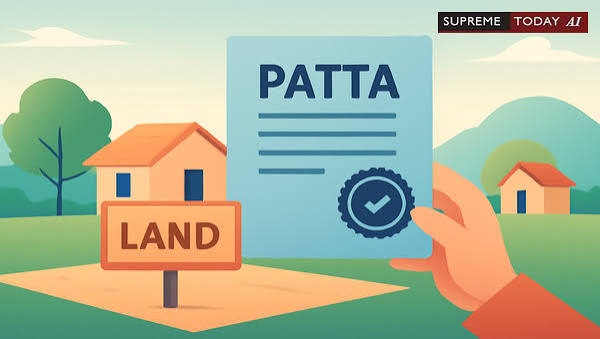
Owning a home in Jaipur has always felt like the ultimate dream of homeownership, yet today many buyers stand confused about what a society patta actually means.
For years, an affordable shortcut to buying property on Jaipur’s Society Patta Exposed outskirts looked like the smartest shortcut toward future development, backed by nothing more than a simple society-issued document and a promise of a better tomorrow.
This low price and quick access to a plot fueled a real estate boom, driven by high demand and weak enforcement, but it also raised common questions and confusing terms that every buyer needs to ask before signing anything.
Understanding these rules matters because Rajasthan has made a recent move to restrict registration of unconverted plots, meaning many society-patta plots without JDA approval are no longer safe.
Location plays a huge role, since plots tied to gram panchayats or lacking statutory recognition often turn into a legal dead end.
From what I’ve seen buyers go through, the advice is always the same: check whether the plot is registered, confirm the 90A land conversion and converted land status, and treat any informal document with caution buying without JDA approval is rarely reliable, no matter how tempting the price looks today.
What Is a Society Patta?
A society patta is a document handed out internally by a cooperative housing society historically, these societies simply bought agricultural land, divided it up, and allotted their own pattas to members without ever applying for real layout approval.
Many of these private societies and developers marketed their society patta plots as residential, but the plot rarely came with genuine legal clearance, leaving the legal status unclear for the person holding it.
Because the paperwork is issued properly only on the surface, it stays an informal ownership document with no real statutory recognition not from JDA, and not from local gram panchayats either.
Without 90A conversion or government layout approval, a housing society patta remains a cooperative, private arrangement rather than a government title, which is exactly why it’s often lacking the one thing that matters most: proof that the land is truly yours.
Is Society Patta Legal?
Here’s the honest answer: a society patta is not fully legal on its own. Without a full 90A approval, layout sanction, and NOC from the relevant authority, the plot cannot be registered, cannot be financed, and cannot be mutated into your name even after the full plot is technically approved by the society itself.
This is why its legality is always questionable, and why it carries a much higher risk than JDA-approved plots, which offer a far safer comparison for anyone hoping to avoid future legal issues.
Over the years, courts have acted on repeated litigation, and audits have flagged irregularities again and again, simply because the government never gave these plots real statutory backing.
So if a plot cannot be loaned against by a bank, that alone tells you the 90A conversion was probably never finished and no title, however nicely printed, changes that.
Government Crackdown
Rajasthan has now strictly barred sub-registrars from registering any sale deeds tied to society-issued pattas, and there are no exceptions.
Sellers must now disclose the conversion status of every plot, and unapproved colonies are under real scrutiny, especially those that grew without proper planning norms or 90A approval.
This move is widely seen as a long-overdue correction, and it directly affects the society-patta plots that mushroomed along Kalwar Road, Ajmer Road, Sikar Road, Tonk Road outskirts, and the Jagatpura extension all affected belts where unauthorised colonies grew fastest under the old, looser registry system.
Why the Government Is Enforcing This
Illegal colonies didn’t appear overnight the warning signs were there for years, through buyer complaints, court litigation, and repeated audit red flags that kept getting ignored until now. The result was unsafe construction, real disputes, and steady revenue loss for the state, even as these pattas were quietly and informally legitimised through routine registration.
By finally enforcing the 90A rule properly, the government aims to cut down on fraud, stop unauthorized construction, and genuinely protect buyers while pushing toward planned development and better infrastructure for everyone involved, not just the lucky few.
Risk to Buyers of Unconverted
The lasting damage here is very real many families genuinely believed they owned legal property, only to discover there was no registry, no home loans available, and no construction approval in sight.
With uncertain land like this, there’s often no water, no drainage, and no electricity approval, which is a bit like owning a car without keys technically yours, practically useless.
Banks largely reject financing for Gram Panchayat land in this condition, and loan refusal, registry rejection, and even demolition notices become real possibilities. Resale turns difficult, buyers get stuck between legal battles and broken dreams, and possible action against illegal colonies can put the entire investment at risk.
Society Patta vs. Other Approved Categories
A converted plot, once it has full legal 90A approval, comes with full government permissions, proper usage rights, and complete land conversion putting it in a different league from a society-patta land deal, even though it’s usually pricier.
Meanwhile, a genuine JDA-approved plot carries both land conversion and layout approval, something most society patta deals simply lack, whereas Nagar Nigam land may miss full layout planning, and Gram Panchayat land, being more rural and close to village life, often sits on agricultural or abadi land that’s genuinely risky for urban use.
RERA registration is a different story again it focuses on buyer protection, transparency, and project delivery, neither of which guarantees land legality, mutation, or clean registry.
The safest choice, from what I’ve noticed project after project, is a plot that ticks RERA-registered, JDA approval, and eligible construction boxes all together anything less leaves a gap typically filled by risk.
How to Verify Before Buying
Before you spend a rupee, ask the seller for the actual 90A conversion certificate, and double-check the plot number, khasra number, land type, and approval date written on it. Then, visiting the JDA office or checking the approved layout map in person confirms whether the scheme name, zone, or developer details actually match what’s promised.
Online verification through Apna Khata, e-governance portals, or official JDA websites offers a faster route, and confirming approvals from JDA, Nagar Nigam, or Panchayat, as applicable, is non-negotiable. My honest rule of thumb: never pay anything before verification an hour of offline verification can save you years of regret.
90-A Conversion Process
Under Section 90A of the Rajasthan Land Revenue Act, agricultural land legally converts into non-agricultural, residential, commercial, or industrial use this single legal step is what makes a plot truly eligible for construction, registry, and resale. Without it, no sale deed can move forward under the new regime.
The process itself pulls in the revenue department, town planning officials, and the JDA, who jointly verify land-use conversion, layout approval, and road-width rules against master-plan compliance.
Only once everything checks out does the Stamps and Registration Department allow the deed to be signed, making this the real gateway from risky land to a genuine 90-A conversion.
A truly JDA-approved plot brings full legal security, easier transfer, and higher resale value, along with faster appreciation that most individual buyers simply can’t get from unconverted land this is exactly why major banks approve loans easily for it while Gram Panchayat land often faces rejection.
Areas like Vaishali Nagar Extension, Jagatpura, Ajmer Road, Sikar Road, and Tonk Road are seeing rising demand as buyers shift toward RERA-registered projects and away from society-patta deals, because these come with real loan-eligible status, bank financing eligibility, and smoother loans.
Compare that to builder floors or flats in sanctioned projects, where legal strength varies depending on local municipal approval and documents the legal validity simply isn’t the same. Buying regardless of price without checking repeated buyer complaints, court litigation, or audit findings is a mistake I’ve watched too many people make.
Since JDA approval is not legally mandatory but practically risky to skip, my honest suggestion is this: avoid land where ineligible status, flagged irregularities, or an unapproved 90A certificate hint that money changes hands before the foundation of legality is even set.
Choosing verified listings with approved infrastructure, clear titles, and full construction permission offers real peace of mind, shifts responsibility onto institutions rather than buyers, and signals that developers must follow rules or exit the market, protecting everyone’s long-term investment safety because land stays agricultural, and therefore worthless on paper, until that 90A approval is properly tightened and confirmed.
FAQs ABOUT Society Patta Exposed
What is a society patta?
A society patta is an informal ownership document handed out by private cooperative housing societies, issued without genuine statutory approval from the government.
Why did the government stop patta-based registrations?
The move exists to curb unauthorised colonies, protect buyers, and finally enforce proper land-use planning across the state.
What is 90-A conversion?
It’s the legal process ensuring genuine land-use approval, layout clearance, and full development-plan compliance before land can be sold.
Which areas were most affected by illegal pattas?
Jaipur’s peripheral zones, especially Kalwar Road and Ajmer Road, saw the heaviest growth of these risky plots.
Is this good for property buyers?
Yes it genuinely reduces fraud, ensures legal ownership, and guarantees civic amenity access that many buyers never had before.
Is society patta legal or illegal?
It’s not fully legal without proper 90A conversion, layout sanction, and NOC in place.
Is JDA approval mandatory to buy property in Jaipur?
It’s not legally mandatory, but it’s strongly advised for real registry, loan, and resale safety.