
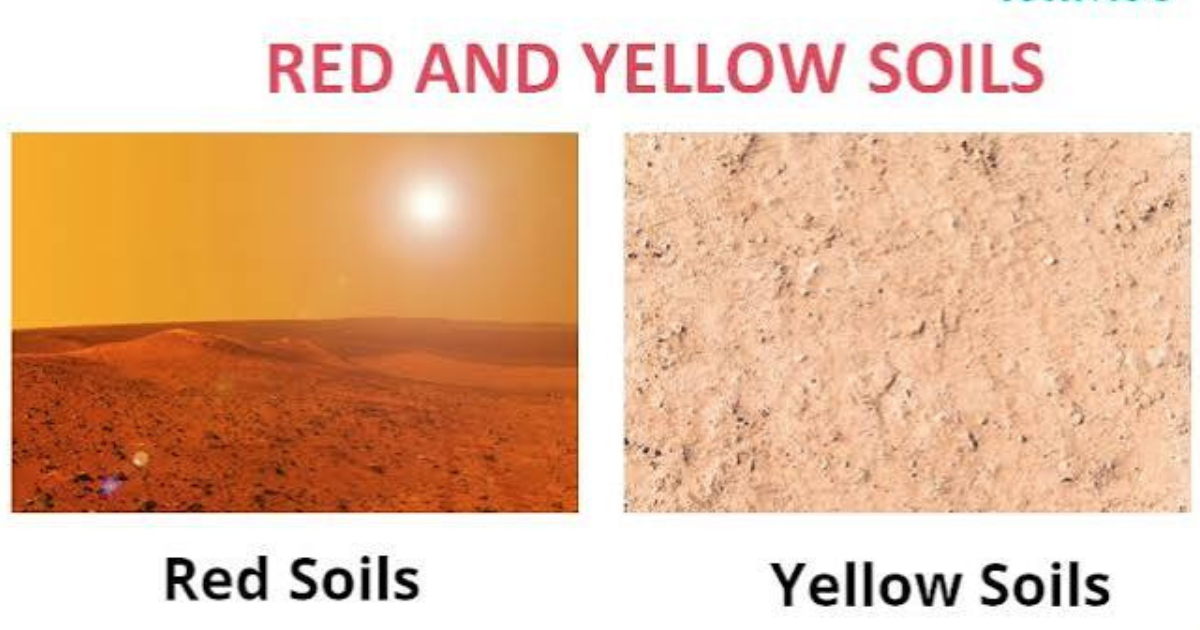
When I first studied Indian soils in detail, red and yellow soil genuinely surprised me not because it is rare, but because it covers so much of India yet gets far less attention than it deserves.
This soil group dominates large tropical and subtropical regions across the world, and India alone holds massive stretches of it, making it deeply important for agriculture, farming, and rural livelihoods.
The iron compounds locked inside this soil do something fascinating; they shift the colour from a bold red to a softer yellow simply depending on whether the iron stays oxidised or becomes hydrated.
Understanding this soil matters a great deal because it directly shapes vegetation, land use, and crop production patterns across entire states.
The Indian Council of Agricultural Research (ICAR) and the National Bureau of Soil Survey and Land Use Planning (NBSS&LUP), based in Nagpur, formally recognise it as one of the major soil orders in India.
These bodies developed the sevenfold and eightfold ICAR scheme for classifying Indian soils, and within that framework, red and yellow soil ranks second in aerial coverage only after alluvial soils, covering roughly 18.5 per cent of India’s total land surface.
The Archaean and Precambrian shield that forms the backbone of peninsular India built from granites, gneisses, schists, and quartzites serves as the parent rock for this entire soil group.
The ferric oxide within it creates the red tint when it sits in anhydrous form within the upper horizons, and flips to yellow deeper down where moisture keeps it in a hydrated state.
What I find remarkable is that the chemical state, not the raw iron content, drives the colour from surface to depth through the entire profile. In ancient times, Indian soils were broadly sorted into just two groups Urvara (meaning fertile) and Usara (meaning sterile) long before.
Vasily Dokuchaev introduced the first scientific classification of soils to the world. Today, ICAR splits Indian soils into 8 categories:
Alluvial, Black Cotton, Red and Yellow, Laterite, Mountainous Forest, Arid Desert, Saline Alkaline, and Peaty Marshy and the red and yellow group, also nicknamed the omnibus group, claim 18.5% of the total land area of the country.
Definition and Meaning
Red and yellow soil carries a straightforward identity: it is an iron-rich Indian soil group built from the weathering of ancient crystalline and metamorphic rocks but that simplicity hides layers of interesting science.
The red colour always points to iron oxide sitting in its oxidised form, while the yellow colour tells you that the same iron oxide has become hydrated, absorbing water into its structure.
The most common parent rocks feeding this soil are granite and gneiss, and their breakdown produces a soil texture that runs anywhere from sandy to loamy depending on location and degree of weathering.
What makes this soil particularly interesting from a ferric oxide chemistry standpoint is that the shift between anhydrous and hydrated states happens naturally across the same field; even the same profile can grade from deep red at the top to pale yellow at the bottom.
The crystalline structure of the parent rocks controls how quickly minerals break down, and the resulting soil tends to retain a distinctly sandy to loamy feel in most upland locations. Understanding the definition of this soil group rooted in iron oxide chemistry and metamorphic rock origins forms the foundation for everything else we discuss about it.
Formation and How It Works
The red and yellow soil formation story begins with weathering specifically, the slow breakdown of igneous and metamorphic rocks under warm climatic conditions driven by heat and rainfall over thousands of years.
As rocks crack and crumble, chemical reactions transform their composition entirely, releasing iron that immediately begins reacting with oxygen through oxidation, coating soil particles in iron oxide and producing that characteristic red colour we recognise.
In areas where moisture stays higher, that same iron oxide undergoes hydration, and the soil shifts visibly toward a yellow colour that signals wetter microenvironments.
Leaching plays an equally powerful role in this process: heavy rainfall strips away soluble minerals, carrying bases like calcium, potassium, and magnesium out of the profile and pushing the soil toward acidic and neutral chemistry with very little left for plant nutrients.
This intense in-situ weathering of acidic igneous and metamorphic parent material under a tropical climate with sharp alternating wet and dry seasons is what drives the whole genesis of these soils.
The primary silicate minerals inside the parent rock break apart, iron gets released and quickly oxidised, and the resulting iron oxides spread through the matrix in a process of mild lateralisation, a stage short of full laterite formation.
Because the parent rock stays relatively hard and rainfall remains moderate across most of these zones, the soils end up shallow to medium in depth, distinctly porous and friable with a sandy to loamy texture in the uplands.
They run chronically low in nitrogen, phosphorus, humus, and lime, though they do hold moderate reserves of potash and iron.
The colour deepens where iron content is highest and lightens toward yellowish-brown or even chocolate tones where the iron is fully hydrated or the soil mixes with limestone deposits nearby, a detail I always point out when helping students distinguish between different soil variants in the field.
Types and Classification
Red and yellow soils do not come in one uniform variety; they split into several meaningful types based on colour, texture, fertility, and topographic position that any serious student of Indian geography needs to understand.
Pure red soil shows a deep red colour, drains well, but runs chronically poor in nitrogen and phosphorus, while yellow soil carries its recognisable yellowish tint and appears most commonly in wetter areas with higher ambient moisture.
Sandy red soil presents a light texture and sits at the less fertile end of the spectrum, whereas loamy red soil offers better water retention and proves far more suitable for crops.
The textural and topographic variants of this soil group tell a rich story about landscape and land use.
On uplands and steeper slopes, the soils appear thin, gravelly, and light-coloured genuinely infertile and difficult to farm without intervention. But drop down into valleys, depressions, and lower catenas, and you find deeper, darker, more fertile loams with impressive water-holding capacity that support more productive agriculture.
A sharper subdivision separates red loams most characteristic of the Nilgiris, and sections of the Eastern Ghats from the red sandy soils that cover drier upland zones.
Where iron hydration dominates, particularly in higher-rainfall pockets of Odisha and the northeastern states, the yellow phase takes over the landscape entirely. In the USDA Soil.
Taxonomy system, these soils correlate broadly with Alfisols and Ultisols depending on base saturation and the degree of leaching with fine-grained variants being genuinely fertile and coarse-grained types remaining stubbornly less fertile regardless of management inputs.
Location and Distribution
Red and yellow soil spreads across a wide band of tropical and subtropical regions, but its heartland sits firmly within India across Tamil Nadu, Karnataka, Andhra Pradesh, Odisha, Chhattisgarh, parts of Maharashtra, and the famous.
Chota Nagpur Plateau. Beyond India, you find it in parts of Sri Lanka and Southeast Asia, in Africa across zones underlain by crystalline rocks, and in pockets of South America especially parts of Brazil where the geology and climate mirror peninsular India’s conditions.
Within India, the Deccan Plateau and the broad eastern peninsular region host the largest and most agriculturally significant stretches of this soil.
In contemporary agricultural geography terms, the peninsula relies heavily on this soil for its farming identity.
States like Telangana, southern and eastern Madhya Pradesh, the Chota Nagpur plateau of Jharkhand, and the Bundelkhand region of Uttar Pradesh all sit on extensive red and yellow soil belts, with yellow phases appearing increasingly in the northeastern hill states where rainfall stays higher.
State agriculture departments across India, working alongside the Soil Health Card scheme launched by the Government of India in 2015, regularly map and report the persistent nitrogen and phosphorus deficiencies that define this soil wherever it occurs.
In terms of low rainfall zones, the eastern and southern parts of the Deccan Plateau show the thickest concentrations of red and yellow soil, while the piedmont zone of the Western Ghats carries a distinct belt of red loamy soil running along its base.
The soil also appears in parts of Odisha and Chhattisgarh, and in the southern parts of the Middle Ganga Plain where geological conditions allow it to establish.
I have personally seen how dramatically the landscape colour shifts as you drive from black soil country in Maharashtra into the red soil zones of Karnataka the change is visually striking and geologically meaningful.
Physical Features and Characteristics
The physical identity of red and yellow soil flows directly from its iron content; the colour swings between red and yellow purely based on how that iron sits chemically, whether in oxidised or hydrated form inside crystalline and metamorphic rocks.
The texture ranges from sandy to clayey depending on parent material and weathering intensity, while porosity stays consistently high these soils remain porous and well drained almost everywhere they occur, which affects how water and nutrients behave within the profile.
The nutrient content tells a less flattering story: chronic deficiencies in nitrogen, phosphorus, and humus hold back natural fertility, though the soils do carry workable iron oxide levels and moderate potash reserves.
The pH sits at slightly acidic levels across most of the range, a direct result of leaching removing base cations over long periods of weathering.
The Soil Health Card scheme run by the Government of India since 2015 has systematically documented the nitrogen and phosphorus deficiencies in these soils across every affected state, giving farmers actionable data for the first time at scale.
These documented deficiencies explain why productivity on untreated red and yellow soil stays low without deliberate potash and fertilizer management the natural iron reserves simply cannot compensate for what the soil lacks in plant-available nutrients.
Climate and Environment
Red and yellow soil forms and functions within a very specific climatic envelope, a warm climate that runs through the year without extended cold periods, combined with moderate rainfall sitting between 75 cm and 150 cm annually.
The temperature regime stays firmly in the tropical to subtropical band, with sharp alternating wet and dry seasons that drive the chemical cycling of iron between its oxidised and hydrated states repeatedly over time.
The natural vegetation that grows on this soil reflects these conditions precisely deciduous forests and scrub vegetation dominate the landscape wherever red and yellow soil sits undisturbed.
Importance and Uses
The practical importance of red and yellow soil in agriculture centers on a set of crops that genuinely thrive in its porous, free-draining structure: millets, pulses, groundnut, cotton, and tobacco all perform well here without needing excessive management inputs.
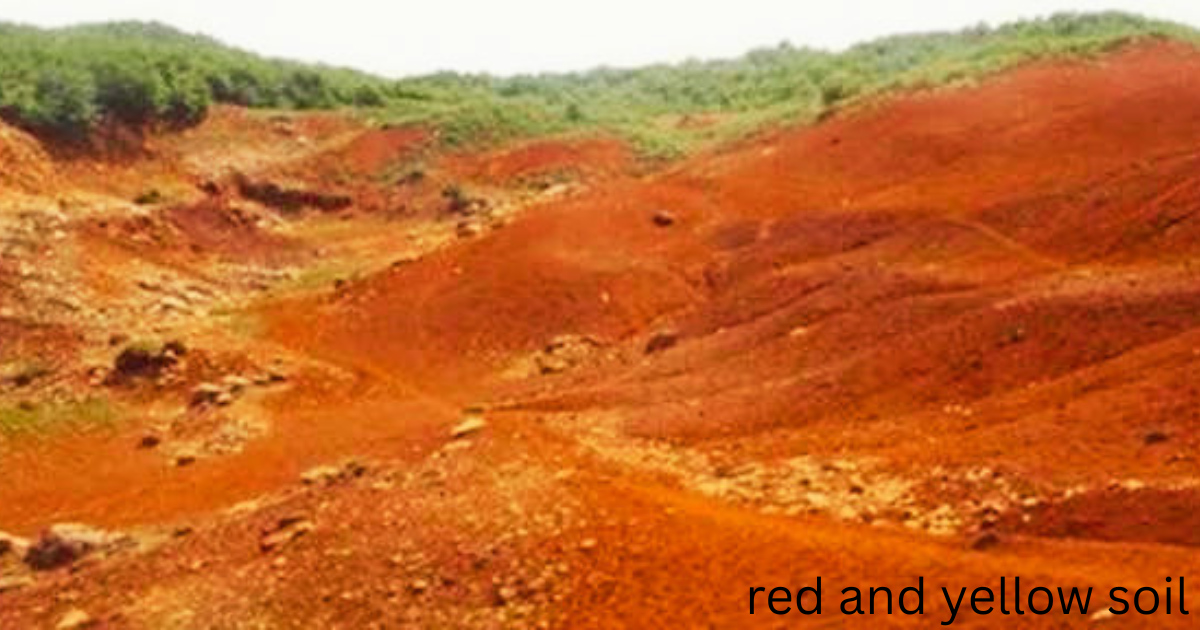 Push the system further with irrigation and fertilizers, and the soil opens up to plantation crops like coffee and a wide range of fruit cultivation options that add real commercial value to farming in peninsular India.
The rural economy of the southern and central peninsula depends significantly on this soil, and it also underpins the health of deciduous forests that provide forestry resources across the region.
Dig into the specifics of what agriculture looks like on this soil, and the crop list expands considerably with proper inputs. Groundnut, millets including jowar, bajra, and ragi along with pulses, potato, oilseeds, and tobacco all appear regularly in the cropping calendars of farmers working these soils.
The deeper valley variants of red and yellow soil, where profiles accumulate and fertility improves naturally, support even rice, wheat, cotton, and sugarcane making those lower landscape positions genuinely productive without the same level of external inputs needed on the commercial crops grown across the thinner upland soils.
Impact on Human Life
The way red and yellow soil shapes human life operates through several interconnected pathways, starting with crop selection farmers here cannot simply choose any crop, because soil fertility and available rainfall directly constrain what will grow profitably.
Irrigation becomes non-negotiable for improving productivity on these soils, because the natural drainage and low moisture retention mean rain-fed farming stays unreliable in many zones.
The widespread use of fertilizers allows farmers to push yield above what low natural fertility would otherwise allow, but that comes with cost burdens that shape rural economics across the entire soil erosion prone peninsular landscape.
Understanding the colour terminology around this soil matters practically, not just academically; the red colour that most people instinctively associate with high iron levels actually signals anhydrous ferric oxide diffused through the profile.
While the shift to yellow simply means hydration has occurred rather than any fundamental change in mineral composition. Land degradation represents the most serious threat these soils face today erosion runs hard on the deforested uplands.
Chota Nagpur and Eastern Ghats, stripping away the thin productive layer faster than natural processes can rebuild it.
Without organic replenishment, these soils acidify steadily under continuous cropping, and watershed-development programmes combined with leguminous cover crops form the main toolkit that ICAR institutions recommend to reverse that decline.
Interesting Facts About Red and Yellow Soil
One of the most striking things about red and yellow soil is how the colour Red and yellow soil based on the level of iron oxidation.
The same parent material produces red in dry conditions and yellow where moisture lingers, making this one of the most visually dynamic soils you can study in the field.
It ranks among the most widespread soil types across peninsular India, yet its porous structure means it holds onto water poorly, which explains why farmers here invest heavily in irrigation to unlock the potential for commercial crops.
The soil establishes itself almost exclusively over ancient crystalline rocks, and you can reliably predict its presence by reading the underlying geology fertility improves meaningfully with regular applications of organic manure, which transforms its productivity without fundamentally changing its mineral character.
A single soil profile in this group can shift from red at the surface to distinctly yellow at depth, a visual gradient that tells the complete story of moisture distribution within that ground.
The 18.5% share of India’s total land area covered by this soil makes it the second largest soil group in the country by extent, a fact that carries enormous implications for national food security and agricultural planning.
Red and Yellow Soil vs Black Soil, Red and Yellow Soil vs Laterite Soil, Soil Profile, Soil Erosion, Soil Conservation, Classification of Soil in India as per USDA
Red and yellow soil and black soil (regur) represent two fundamentally different geological worlds: red and yellow soil derives from acidic crystalline rock and sits coarser, more porous, and free-draining, while black soil comes from the basaltic lava flows.
Deccan Trap and behaves as clay-rich, moisture-retentive, and self-plugs through repeated cycles of swelling and cracking.
These two soil types meet along a sharp transition zone running through central and western India, where the underlying geology switches from crystalline basement to volcanic trap, a boundary clearly visible in landscape colour and farming systems simultaneously.
Separating red and yellow soil from laterite soil requires equal clarity: laterite represents the end product of complete leaching under heavy monsoon rainfall, locked under hard iron and aluminium crust.
Whereas red soil sits at an earlier, less weathered stage where bases are only partially removed, a fundamentally different point on the weathering continuum.
Every soil, including red and yellow, develops through a recognisable soil profile a vertical cross-section of layers running parallel to the surface, each with distinct horizon characteristics and texture differences.
Horizon A (the topsoil) integrates organic materials with mineral matter, nutrients, and water, the zone that supports plant growth most directly.
Horizon B (the subsoil) carries greater minerals content with smaller amounts of humus, acting as a transition layer between A and the Horizon C beneath it, which consists of loose parent rock material in the earliest stage of soil formation all of it sitting above the solid bedrock that geologists call the parent rock.
Soil erosion the removal of topsoil disrupts the natural balance between formation and erosional processes that normally keeps these soils stable.
In zones of heavy rainfall, water acts as the primary agent of erosion through sheet erosion on level lands after a heavy shower and gully erosion on steep slopes that cuts agricultural lands into unusable fragments.
The badland topography of the Chambal Valley in Madhya Pradesh stands as India’s most cited example of extreme gully erosion, while coastal areas facing the Arabian Sea and Bay of Bengal in Kerala.
Tamil Nadu, Odisha, West Bengal, and Gujarat suffer persistent sea-wave erosion that strips productive land from the shore. Deforestation amplifies soil erosion dramatically across hilly terrain, and the combined pressure of waterlogging and soil salinity from chemical-heavy.
Farming has pushed half of India’s land into some degree of degradation, a legacy the Green Revolution left behind alongside its yield gains.
Soil conservation addresses this challenge through a combination of farming operations and management strategies designed to interrupt soil particle detachment before erosion begins.
Contour bunding, contour terracing, controlled grazing, regulated forestry, cover cropping, mixed farming, and crop rotation each tackle erosion from a different angle and work best in combination across a watershed.
Afforestation planting trees at scale reduces surface runoff and rebuilds soil structure, while water storage during the rainy season and river interlinking projects like the Ganga-Kaveri Link Canal Project offer larger hydrological solutions.
In northeast India and the Western and Eastern Ghats, shifting cultivation (locally called Jhumming or slash and burn) drives serious erosion that authorities now address by transitioning farmers toward terraced farming and stable sedentary farming systems under dedicated rehabilitation schemes.
The USDA Soil Taxonomy classification used by ICAR places Indian soils into orders with distinct percentage coverage Inceptisols at 39.74, Entisols at 28.08, Alfisols at 13.55, Vertisols at 8.52, Aridisols at 4.28, Ultisols at 2.51, Mollisols at 0.40 with the Indian Council of Agricultural Research maintaining this classification as the authoritative national standard.
FAQs About Red and Yellow Soi
What is Red and Yellow Soil?
Red and yellow soil is a type of Indian soil built from weathered crystalline rocks primarily igneous and metamorphic types and it carries its distinctive red or yellow color entirely based on the iron content and its chemical state within the profile.
Why is Red and Yellow Soil red or yellow in color?
The red colour emerges when iron oxide locks into its oxidised, anhydrous form inside the soil matrix and many people carry the misconception that the deeper the red, the higher the iron content, but that reading misses the point entirely.
Where is Red and Yellow Soil found in India?
Red and yellow soil covers a vast swathe of peninsular India, running across Tamil Nadu, Karnataka, Andhra Pradesh, Telangana, Odisha, Chhattisgarh, and Jharkhand particularly across the iconic Chota Nagpur Plateau that geographers use as a reference zone for this soil type.
What are the main characteristics of Red and Yellow Soil?
The defining characteristics of red and yellow soil start with colour swinging between red and yellow based on iron content and its chemical state and extend through a texture that ranges from sandy to clayey depending on weathering intensity and parent material.
How is Red and Yellow Soil formed?
Red and yellow soil forms through the weathering of igneous and metamorphic rocks particularly granites, gneisses, and schists under warm tropical climatic conditions that alternate between sharp wet and dry seasons year after year.
Which crops are grown in Red and Yellow Soil?
Red and yellow soil supports a strong portfolio of dryland crops with the right management wheat, cotton, oilseeds, millets including jowar, bajra, and ragi, along with tobacco, pulses, and groundnut all feature regularly in the cropping systems of farmers working these soils.