
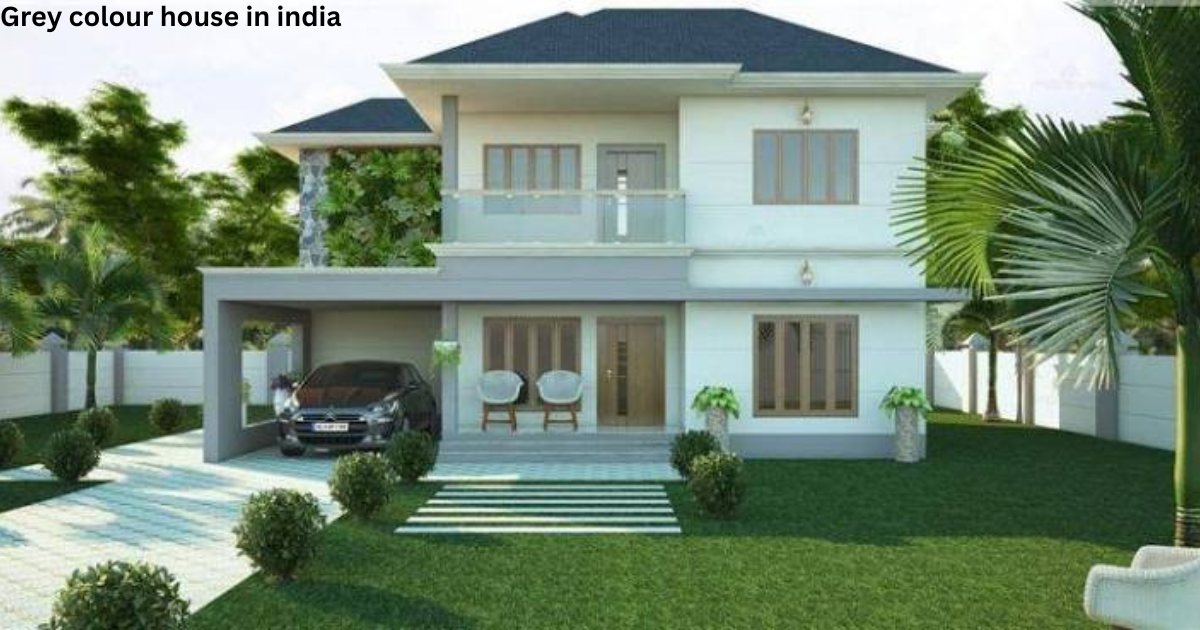
A grey colour exterior does something quietly powerful: it makes a house look like it has always belonged exactly where it stands.
Grey carries timelessness, a kind of quiet confidence that most trend-chasing colours simply cannot match, and that is precisely why India’s best architects keep returning to it.
The rawness it brings to a facade, the way it adds personality and genuine character to a structure these are qualities that neither age nor weather can take away from a well-designed home.
What most homeowners do not realise early enough is that choosing the right exterior colour combinations for an Indian house goes far deeper than picking a shade that looks good in photographs.
Walls, textures, and finishes collectively define the very first tone a home sets for every visitor before they even reach the front door, making that first impression something worth investing serious thought into.
Intense summers, heavy monsoons, and the country’s varying regional styles mean that colours and materials need to work harder in India than almost anywhere else; they must look beautiful and survive punishment at the same time.
The good news is that grey paint colours have proven themselves across every climate zone and architectural style this country throws at them, and top interior design experts simply cannot get enough of what grey wall paint does to both modern homes and traditionally rooted spaces.
Whether you are exploring the brutalist beauty of concrete-heavy exteriors or simply looking for suitable options that balance visual appeal with long-term durability, grey consistently delivers results that feel both intentional and deeply human.
Outdoor tiles, premium surface solutions, and the right shade of grey working together create exteriors that feel welcoming, resilient, and genuinely timeless, the kind that make you stop and look twice every time you pull into the driveway.
Why Exterior Colours Matter for Indian Homes
The exterior colour you choose for your home in India carries far more weight than most people assign to it. It directly shapes your home’s identity and long-term value in ways that a fresh coat of paint cannot always recover once a wrong decision is made.
India’s notorious intense heat, persistent dust, seasonal rain, and constant pollution all chip away at the service life of exterior house paint, which means the colour you pick needs to be as practical as it is beautiful.
Lighter shades that reflect heat and textured finishes that quietly hide dust marks are not just aesthetic choices, they are smart, climate-conscious decisions that save you money and effort over years of ownership.
What makes colour selection in India particularly layered is that it must also navigate cultural preferences and deeply held Vastu principles that guide colour choices across many regions and communities.
Beyond tradition, the chosen shade must sit harmoniously alongside architectural elements like balconies, pillars, and tile cladding because a colour that clashes with these structural features will fight the eye rather than rest it.
A home whose exterior has been planned with all these factors in mind consistently shows stronger curb appeal, commands better resale value, and demands far less long-term maintenance than one where colour was chosen on impulse.
Pairing the right paint with durable outdoor tile finishes is the combination that separates homes that merely look good on handover day from those that still turn heads a decade later.
The tile’s texture, finish, and tone need to reinforce the paint’s character rather than compete with it; this is where many homeowners make costly mistakes by treating paint and tile as separate decisions rather than one unified design call.
When you get this combination right, the result is an exterior that earns its keep every single day delivering consistent beauty and real-world performance through every Indian season.
Grey Colour Exterior Homes in India
One of the most compelling grey homes you will find anywhere in India is a 10,000 square feet bungalow in Gujarat, designed by AD100 architect Samira Rathod for three generations of a single family.
Built in a striking box-like form using tones of grey and black, the house was shaped entirely by the region’s dry climate and harsh summers.
Siporex blocks handle structural construction and actively insulate the home from relentless heat.
The facade takes an unconventional turn with black paint on a section of its surface.
Rathod explains that since black absorbs heat, the warm air rises naturally, creating a low-pressure zone that pulls cooler air in from below, turning a design choice into a passive cooling system.
The 7,780 square feet Vadodara bungalow by Narendra Joshi and Pritesh Patel of KN Associates takes a different approach here, tones of grey run generously across floors, walls, ceilings, and even upholstery, creating a total immersion in the colour.
The facade presents three staggered levels that give the structure a dynamic quality, while exposed RCC slabs and Gwalior mint stone cladding add genuine texture and allow the structural elements that define the home’s framing and volumes to speak honestly.
This is architecture that does not hide behind decoration; it wears its exposed concrete identity with confidence and earns respect for it.
Over in Hosur, a community centre inspired by Indian temple architecture draws its raw grey tone from a deliberately chosen combination of stone and brick echoing the way temples of the South have stood for centuries.
Samira Rathod Design Atelier shaped the building around a central hall and open outdoor area for community activities, with a design philosophy that treats architecture as a gradually unfolding experience rich in interstitial spaces and sensory richness.
Every stone came from local quarries and was individually placed with rods passed through drilled holes; the plaster itself is brick mixed with cement, giving the entire structure a handcrafted honesty that no manufactured cladding could replicate.
Studio Context designed a grey tropical villa in Chennai for a multigenerational family that had lived abroad for over three decades, and the design philosophy is quietly brilliant in its restraint.
The exterior walls are deliberately plain and high, broken only by an antique door architect Raghuveer Ramesh and his partner Sharanya Srinivasan built the home around the idea of revealing itself gradually, creating moments of surprise as residents and guests move through its spaces.
Landscape architect Malli Saravanan of MAWI Design softened the severity of the grey colour palette with lush green plants that reference the tropical plants surrounding the property turning what could have been a harsh exterior into a genuinely breezy oasis.
Khushnu Panthaki Hoof and Sönke Hoof of Studio Sangath designed a remarkably serene farmhouse 40 kilometres outside Ahmedabad for Sameer and Hemangini Sinha and the result is one of the most honest uses of exposed concrete and glass you will find anywhere in the country.
The structure’s defining feature is a singular, expansive roof that appears to float mid-air above the sloped landscape, held up by slender steel columns and reinforced concrete walls that make you look twice to believe it stays up.
Sameer wanted a completely bare-shell finish with no marble, no tiles, no cladding, just raw concrete with rivet marks left visible in the wall, which makes the home feel genuinely raw in the most considered way possible.
In Gandhinagar, Gujarat, a five-bedroom villa spread across 4,500 square feet designed by Projects3.14 and Modo Designs takes a different but equally powerful approach to grey here, the primary goal was to blend in rather than stand out.
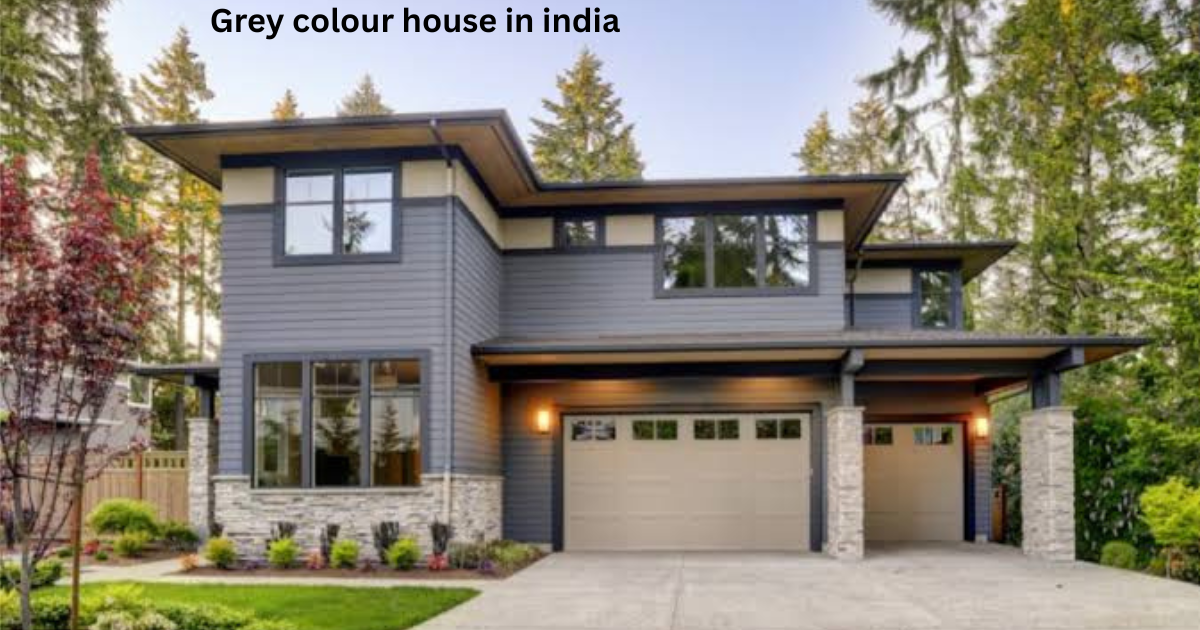 Chinmay Patel and Noopur Shah of Projects3.14 worked alongside Arpan Shah of Modo Designs to build a home centred on nature’s embrace, where the architecture and interiors open an ongoing conversation with the surrounding landscape.
Exposed concrete walls and expansive glass windows overlook lush green fields, creating a harmonious fusion of indoor and outdoor spaces that gives residents a genuinely immersive experience of nature without sacrificing a single comfort of modern living.
The 11,000 square feet contemporary villa in Belgaum designed by architect Rahul Pudale who calls it the Living Ensemble proves that grey thrives equally in a setting that combines board-marked concrete boxes against a backdrop of weathered brick.
The staggered concrete boxes function as sculptural features across the facade, adding both depth and genuine visual interest to the building’s appearance from every angle.
Pudale’s design pushes the concept of versatile architecture further by using that same prominent facade element to carve out terraces, balconies, wardrobes, and toilets internally proving that minimalist thinking and materiality can be simultaneously restrained and endlessly inventive.
Exterior Colour Combination Ideas
Warm Terracotta paired with Cream creates earthy tones that feel completely at home in traditional and semi-modern Indian home designs, particularly when the elevation includes rustic stone-finish tiles or textured elevation slabs on the walls this combination draws directly from regional architecture and never looks out of place.
The Classic Grey and White pairing takes a different route; its clean lines and neutral colours make it one of the most reliable choices for modern Indian homes, especially when matte concrete-look wall tiles or anti-skid tiles handle the entryways flooring and the overall scheme suits duplex elevations across urban neighbourhoods.
Beige and Brown bring a subtle design sensibility that works beautifully alongside wood-look tiles or sandstone-finish cladding perfect for independent houses and spacious villas that want warmth without leaning into bold contrast.
Charcoal Grey against Light Grey creates a sharp monochrome effect that emphasises geometry in the most satisfying way, especially when large-format slabs or textured matte outdoor wall tiles handle the surface work this is a combination built for contemporary elevations and sleek architectural styles that value minimalist exterior colours above everything else.
Olive Green blended with Cream produces an earthy colour combination that pairs naturally with natural stone-look wall tiles, making it the go-to choice for nature-inspired and vastu-friendly homes that want their exterior to feel grounded and calming.
Sky Blue and White bring a freshness that references coastal exterior colours, working in harmony with glossy or matte porcelain outdoor floor tiles on balconies and verandahs a combination genuinely built for hot-climate and seaside regions where the exterior needs to feel as cool as the breeze.
A White and Natural Stone Texture combination adds stone-clad details or stone-finish textured tiles on walls to build a luxury home elevation that suits premium villas and elegant bungalows without ever feeling overdone.
Sand Beige and Off-White lean into neutral exterior paint shades that create a gentle light colour house exterior effect these heat-reflective colours pair well with heat-resistant floor tiles and perform particularly well in hot Indian climates where keeping surface temperatures manageable matters.
The remaining combinations Deep Brown and Sandstone for rustic and luxury-style elevations, Pastel Peach and White for compact houses and row homes with marble-look tiles near entryways, Teal Blue and Grey for bold accent wall moments with concrete-look slabs, and White and Wood.
Finish Brown using wood-textured panels and wood-look tiles for a clean white-and-wood exterior collectively give Indian homeowners 12 colour combinations that genuinely cover every taste, every architectural style, and every curb appeal goal imaginable.
Grey Wall Paint Colours For Your Home
Pale grey sits in that confident space just a step beyond classic white it opens up a room, keeps it bright and inviting, and works with practically every colour combination and design direction you throw at it, making pale grey paint colours the most practical entry point for anyone new to this shade.
Moving slightly lighter, a feather-light grey wall colour does something subtle but powerful: it adds unmistakable character to a bedroom or living space without announcing itself as obviously grey, which is exactly the kind of quiet confidence that experienced designers always chase.
Warm grey shades are having a well-deserved moment in Indian home interiors because they bring genuine light and genuinely soothing tones to a room and when you pair warm grey paint with warm lights and natural textures like wood, the result feels less like a designed space and more like somewhere you genuinely want to spend time.
A single wall painted in warm grey wall paint can completely reframe a dining area; you do not always need to go wall-to-wall with colour to make an impact, and this royally fit approach proves that restraint is its own kind of boldness.
Solid grey wall paint in slightly darker territory creates a beckoning atmosphere in a bedroom when anchored by a white and black combination that stops the space from feeling heavy or closed-in.
For those who want to push further, dark grey paint something in the register of Ralph Lauren’s Artist Grey delivers exactly the right energy for a cool urban interior in a modern apartment, where the sophistication of the shade does all the heavy lifting without any additional decoration.
When a space already carries multiple bright hues, a wall of dark grey wall paint with added texture gives everything else somewhere to rest; it acts as a visual anchor, adding genuine spunk to the overall look without competing with the colours already in the room.
The retro approach takes grey wall paint in a completely different direction, layer it with prints, patterns, a deliberate pop of colour, and classic wooden furniture, and what you get is a living room or bedroom that feels genuinely interesting rather than just designed.
Across every application from pale grey paint colours to two-tone grey combinations that build depth and style in bedrooms, to the darker greys and lighter greys that define contemporary and sophisticated interiors grey remains the most versatile wall paint choice available to Indian homeowners today.
Choosing the Right Outdoor Tiles
Paint defines the colour story of your home’s exterior, but tiles define whether that story holds up five years from now and that distinction matters enormously when you are building or renovating in India.
Vitrified floor tiles and porcelain tiles bring the kind of structural durability that protects a home against the full spectrum of extreme weather this country delivers across twelve months of the year, from scorching harsh sunlight to relentless moisture damage during the monsoon season.
Anti-skid floor tiles specifically address safety on balconies and entryways during the monsoon, where wet surfaces become genuinely dangerous without the right anti-slip surfaces underfoot.
Weather-resistant tiles resist fading under harsh sunlight and push back against moisture damage in ways that standard surfaces simply cannot sustain over time, making them a genuinely practical investment rather than a luxury add-on.
The full range of finishes drawing from stone, concrete, marble, and wood allows homeowners to maintain complete design harmony across the entire elevation without forcing a compromise between aesthetics and performance.
Easy maintenance and real long-lasting strength are what ultimately make tiled exteriors the most sensible choice for modern Indian homes that want their exterior to look as sharp in year ten as it did on day one.
Expert Tips for Your Home’s Exterior Makeover
The single most effective discipline in any exterior makeover is limiting your palette to two shades or three shades maximum more than that and the eye loses its anchor, creating a restless visual experience that undercuts even the most expensive materials.
Every home has architectural lines worth celebrating, and contrasting trims are the simplest way to draw attention to them without adding complexity or cost to the overall scheme.
Before you commit to any large surface, coordinate the roof, gates, railings, and tiles as a single design decision, these elements speak to each other constantly, and when they disagree, the entire exterior suffers.
Always test your colour samples in natural daylight at different times of the day, because the same shade that looks perfect at noon can read entirely differently at dusk, and that gap between sample and reality is where most exterior colour disappointments begin.
Heat-reflective shades are not a design compromise in warmer regions; they are a practical necessity that reduces surface temperature, protects the paint, and keeps interior spaces cooler without adding to your energy bills.
Use textured tiles on surfaces that face the street or collect dust most aggressively, opt for moisture-resistant finishes in coastal zones, maintain consistent design thinking across every balcony and porch area.
And plan your long-term cleaning and repaint cycles before you finalise any material because material compatibility between paint and tile determines how low-maintenance your exterior genuinely becomes with expert guidance factored in from the start.
Conclusion
Every home’s outer walls tell a story before a single word is Grey Colour House in India door and the quality of that story depends entirely on how thoughtfully the colours, texture, tone, and material choice were handled when the home was designed or renovated.
The right exterior home design does not separate paint from surface; it treats durable, weather-resistant surfaces like large-format exterior slabs and stone-look wall tiles as equal partners in a single, unified design intention that delivers both visual appeal and genuine long-term performance.
When climate-friendly shades meet high-quality exterior floor tiles and wall tiles, what started as simple house exterior ideas quietly transforms into timeless architectural statements that define a neighbourhood rather than just occupy a plot within it.
Grey, in particular, sits at the centre of this conversation in India right now and for every good reason. It absorbs the best of every innovative surface solution available, it holds its own against every season’s punishment, and it gives homeowners the foundation they need to build something that feels genuinely elegant and authentically resilient.
When you approach your home’s exterior with this level of intentionality treating every decision about paint, tile, and material as part of one coherent language you do not just build a house that looks good; you build one that is genuinely built to last.
FAQs About Grey colour house in india
Does grey paint make a room look bigger or smaller?
The answer depends entirely on which grey paint you choose and how much natural light your room receives on a typical day. Light grey shades actively reflect light back into a space.
Which accent colours go best with grey walls?
Grey walls carry a rare social quality they get along with almost everything, which makes choosing accent colours more about personal expression than strict design rules.
How do I balance grey walls with wooden furniture?
Grey walls and wooden furniture have a natural chemistry that most other colour-material pairings cannot replicate, but the specific shades matter enormously in making that relationship work.
Can grey wall paint work in traditional as well as modern homes?
Grey wall paint is perhaps the most genuinely versatile colour available to Indian homeowners precisely because it refuses to belong exclusively to any single design era or style.
What lighting works best with grey-painted walls?
Lighting is the variable that grey-painted walls respond to more dramatically than almost any other colour, which makes getting it right a genuine priority rather than an afterthought.
Which grey tones pair well with metallic finishes like gold or copper?
The relationship between grey tones and metallic finishes is one of interior design’s most reliable partnerships, but the specific pairing matters.manageable when climate conditions and building orientation are factored into the design decision carefully.