
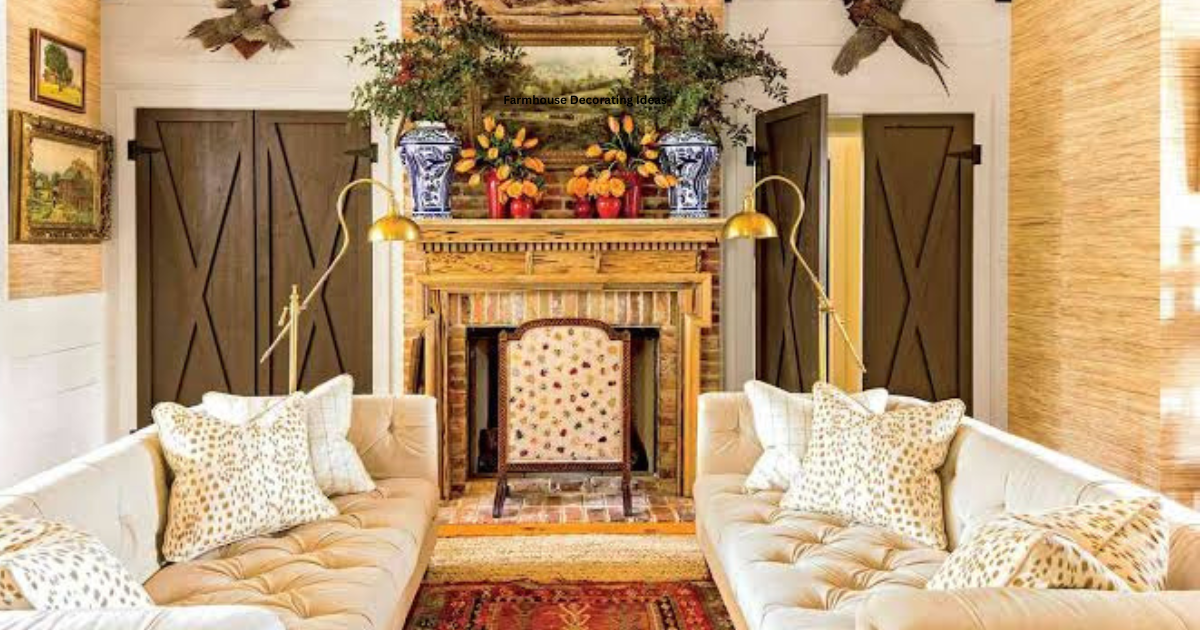
I have redecorated more than one house with farmhouse style, and I still love how it turns a plain home into something full of warmth and personality.
It borrows the ease of country living and pairs it with a clean design and a genuinely livable design, so a space always feels welcoming and never cluttered or dated.
Whether you want to transform a full house or refresh just one room, these decorating ideas stay adaptable to any budget and any skill level, which is exactly why this guide covers color, furniture, and materials with simple room tips for that cozy, lived-in charm and lasting charm.
If you’re starting from the ground up, this collection of farmhouse plans is a great place to see the style applied to full home layouts.
What Is Farmhouse Style?
The first time I really understood farmhouse decor, I was standing in an old rural America home, admiring how practical homes like that one relied on natural materials and simple furniture lines without a hint of fuss.
Nothing was no-frills for the sake of it a piece of reclaimed wood sat comfortably beside a modern light fixture, proving that this old and new mix can work when every item still serves a function instead of sitting there just to be admired.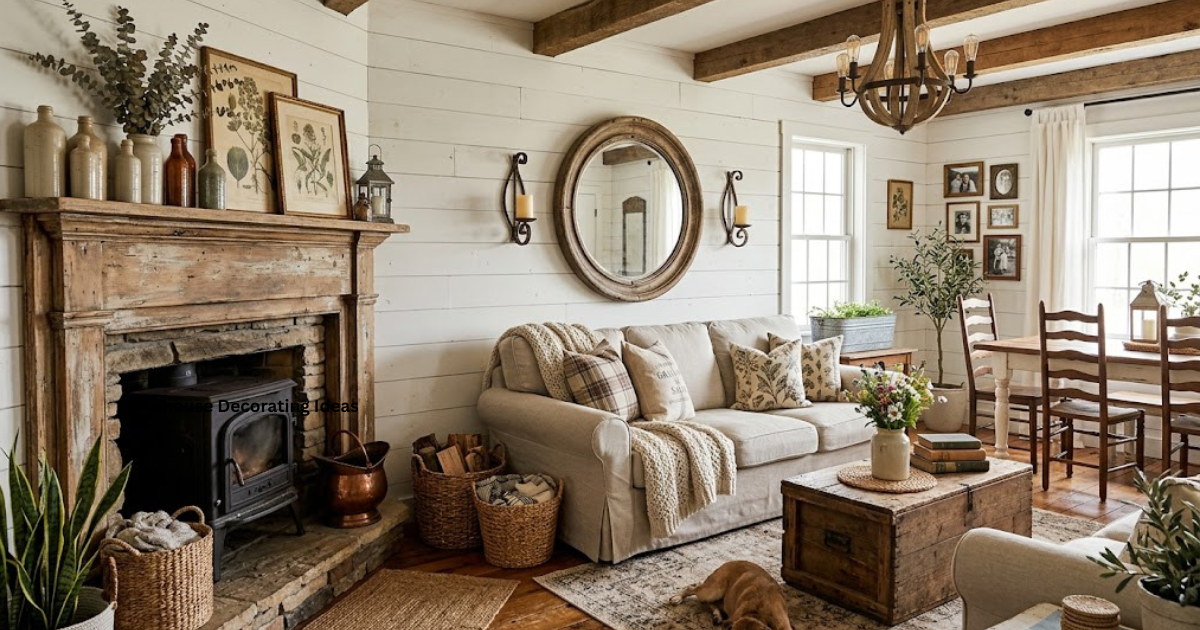 Today, modern farmhouse has grown into a lighter version of that original look, feeling less cluttered than the traditional look.
While keeping rustic textures balanced against contemporary shapes and a soft neutral palette, a style that has quietly emerged as the one homeowners keep coming back to.
Choosing a Farmhouse Color Palette
I always tell friends to start with soft neutral tones whites, warm grays, beiges, and muted greens make the perfect base because these shades bounce natural light around a room and give it that airy feel and calm feel everyone wants.
Once that foundation is set, add depth through darker wood tones or black accents on window frames, light fixtures, or hardware, since a little contrast keeps the palette from feeling flat.
If you’re drawn to a coastal-farmhouse twist, lean into soft blues layered with woven textures like jute and linen for a fresh, breezy version of the same palette.
Furniture and Layout Tips
My rule of thumb is simple: choose simple lines over ornate detailing, and let a mix of textures do the work instead of a mix of colors.
A distressed wood table paired with linen upholstery and a few leather accents brings real warmth and contrast into a room, while open layouts keep everything functional and true to the style’s roots in practicality.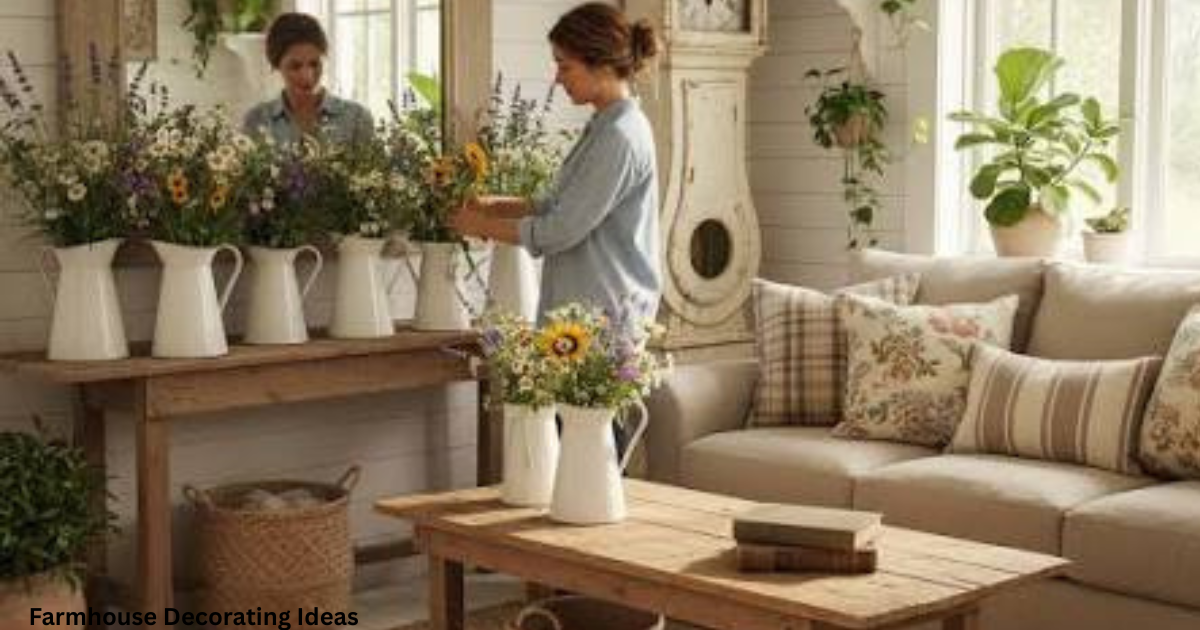 I still treasure a few vintage pieces and repurposed pieces in my own home an old dough bowl here, a repurposed cabinet there because they give authenticity and character that new furniture simply can’t fake.
Materials and Textures That Define the Look
Every good farmhouse room leans on the same handful of honest materials: reclaimed wood and distressed wood for tables, shelving, and beams, plus galvanized metal for trays, baskets, and light fixtures.
Layer in woven textures such as jute rugs, linen curtains, and rattan baskets, then finish with weathered finishes or chalk-paint finishes for a vintage feel and worn-in feel that instantly says.
I learned early on that layering textures this way keeps a room from ever feeling flat or one-note, since these natural materials and tactile materials all work together.
Living Room Farmhouse Ideas
In my own living room, I anchored everything with a large area rug in a soft neutral tone, then mixed upholstered furniture with wood furniture so no single piece competed for attention.
A reclaimed wood coffee table, a small gallery of framed family photos, and open shelving stacked with baskets for storage carry the theme without trying too hard.
Adding living plants I mean real plants, not silk ones brings color and life into what might otherwise be a neutral space.
Kitchen Farmhouse Ideas
Wood bar stools, open shelving, and a classic farmhouse sink are usually where I tell people to start in the kitchen. Add function with a tiered tray or a wood cutting board on the counter, and a chalkboard near the pantry for menus or handwritten notes. A few metal baskets or a display cabinet add extra storage while keeping that rustic feel alive through the whole kitchen.
Bedroom Farmhouse Ideas
For a restful bedroom, I always reach for soft linens and breathable linens in calm neutral tones for the bedding, then build around a simple wood headboard or upholstered headboard with clean, simple lines.
A vintage dresser or nightstand adds instant character, and woven baskets tucked in a corner give extra storage without clutter. Finish with soft textiles throws, pillows in gentle pastel tones and earth tones for a room that feels both calm and lived-in.
Wall Decor and Accents
Wall decor is where personality really shows, and I love using a large clock or a set of framed botanical prints as the starting point.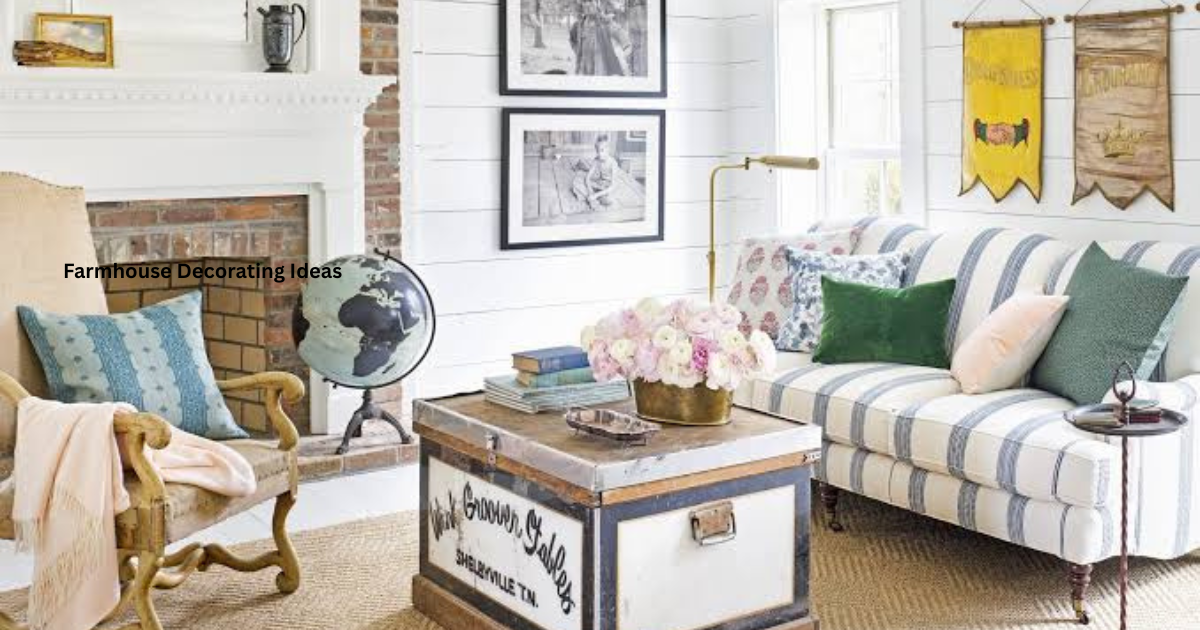 A wood-paneled accent wall or a run of floating shelves built around one focal piece gives the room natural balance, especially once you add smaller accents like frames, jars, or a piece of farm-inspired art. Even a small wall used this way for display can carry an entire room’s style.
Small Budget-Friendly Touches
You don’t need a big budget to get this look right, and I say that from experience I never had to renovate to make a room feel farmhouse-ready.
A fresh coat of paint in a warm neutral, a few new throw pillows, a wood tray centerpiece, or swapping in vintage-style hardware can shift a room’s feel almost overnight.
Pick one color palette to use throughout home, then tackle one room at a time, using a shared moodboard or reference board to keep everything cohesive as you go.
Mixing Farmhouse With Modern Style
People often ask me if farmhouse style and modern style can really coexist, and my honest answer is yes, but only with a light touch. Because modern design tends to be minimalist, over-decorating works against you, so I pick just a few farmhouse accents a wood beam, a woven basket, a distressed cabinet instead of filling a room with rustic pieces.
Let your modern furniture hold onto its clean lines, and let the farmhouse touches bring the warmth and textures that make the whole room feel finished. For more full-scale design inspiration, this farmhouse plans resource is worth a look before you start renovating.
FAQs
What defines farmhouse decorating style?
It comes down to a mix of natural materials and simple furniture lines, paired with a warm palette or neutral palette, where every piece has a clear function as much as good appearance that’s the honest heart of farmhouse decorating style.
What colors work best for farmhouse decor?
I always reach for soft neutrals like white, warm gray, beige, and muted green, then add a little dark wood or black accents for contrast it’s a combination that never lets farmhouse decor feel flat.
Can farmhouse style work with modern decor?
Yes, but it takes restraint a few well-placed rustic accents in a modern space go much further than overwhelming the room with too many textures, and that’s really how farmhouse style and modern decor meet in the middle.
Is farmhouse decorating expensive?
Not at all small changes like fresh paint, soft textiles, and a couple of vintage pieces or repurposed pieces can get you there on a modest budget, which is honestly my favorite thing about farmhouse decorating.
What’s the difference between farmhouse and modern farmhouse?
Traditional farmhouse leans more rustic and vintage, while modern farmhouse brings in cleaner lines, lighter palettes, and more contemporary furniture shapes a small but noticeable difference in feel.
What materials are essential to the farmhouse look?
You really can’t go wrong with reclaimed wood, galvanized metal, woven textiles like jute, linen, and rattan, plus a few weathered finishes or distressed paint finishes to complete the farmhouse look. If you’re planning a full build around this look, check out these farmhouse plans for layout ideas.