
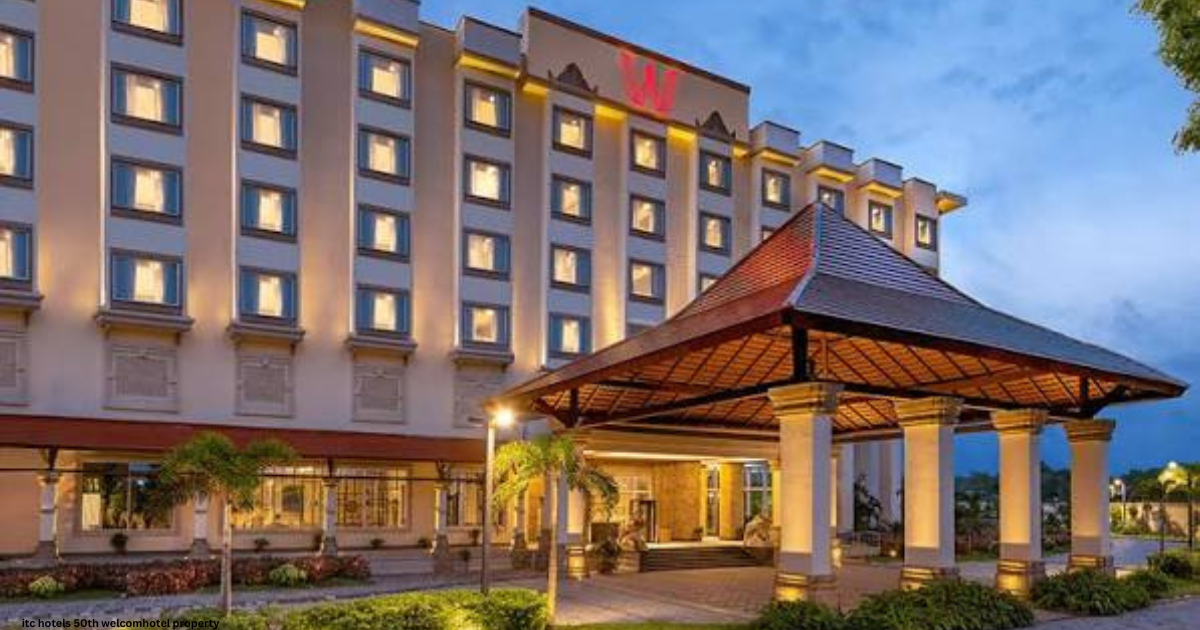
ITC Hotels Limited is writing a fresh chapter in India’s hospitality story, and this time the spotlight falls on tier-II and tier-III cities that rarely made headlines before. In April 2026, ITCHL announced its latest signing, pushing the total number of Welcomhotel properties to 50.
This marks a significant milestone under the brand’s growing midscale portfolio, stretching from Bhopal to Bhubaneswar and from Gwalior to Gangtok. The company’s pipeline of upcoming openings shows no sign of slowing down.
This expansion is not random; it follows an asset-light growth strategy built around partnerships with local owners across Maharashtra, Odisha, and beyond. This lets ITC Hotels expand operations without carrying the full weight of ownership.
Many of these new destinations sit along historic temple routes and near pilgrimage centers such as Shirdi, drawing spiritual travelers and cultural enthusiasts. The properties lean into traditional elements and heritage accommodations blended with contemporary amenities.
By reaching deep into domestic markets and lesser-known tourist destinations, ITC Hotels is quietly building a national presence that larger, city-first chains often overlook.
Every Welcomhotel signed in a smaller city adds another dot on the map, telling a bigger story about where India’s travellers actually want to go next.
Welcomhotel Portfolio Growth
The headline deal in this round of growth is the 50th property signing itself, struck through definitive agreements with M/s Sandy Resort Private Limited.
This covers an 84-room haven in Shirdi, a global pilgrimage hotspot long known as Temple City to devotees who visit the Sai Baba Temple.
Alongside it comes a second property in Bhubaneswar, a 73-room hotel built for business nomads and leisure guests alike. Together these two signings push the brand’s footprint to 51 hotels, spread across 16 locations and 5,500 keys nationwide.
This burst of activity reflects sustained signing activity at ITCHL, with 21 properties in the pipeline for cities including Rajkot, Jaipur, Mysuru, Mohali, and Dehradun. Growth also continues in Maharashtra, with an early foothold already taking shape in Nellore.
Developers and property owners across diverse geographies are lining up for collaboration with the brand, drawn by its guest-centric hospitality and balanced growth strategy. The chain crossed 30 hotels at an earlier stage before racing past 51 hotels in barely 12 months. According to ITC Hotels official updates, the brand now touches spiritual hubs near Sarnath, Bodh Gaya, Ayodhya, and Vrindavan, places tied to 700 ancient shrines. These locations pull in heritage explorers and devoted travellers every season.
The key driver behind all this is a deliberate push into the upper-midscale and mid-scale segments, serving both budget-conscious visitors and those chasing Responsible Luxury.
Leisure destinations and emerging business centers benefit equally from the brand’s sustainable hospitality philosophy.
Leadership Perspectives
Company leadership sounds genuinely excited about this milestone. Anil Chadha, Managing Director at ITC Hotels Limited, called the moment one of special significance in India’s hospitality landscape.
He pointed to a strong pipeline and impressive growth that mark a clear growth trajectory, driven by steady brand commitment to repositioning the brand across every kind of terrain.
He spoke of the privilege of launching two properties in one stroke, adding that partnering with Sandy Resorts Private Limited felt like a natural next step. This collaboration reflects a shared vision of excellence for the Welcomhotel name.
On the ground, Sanjeev Kumar Patra, described as a second-generation hotelier carrying forward family legacies, shared his own enthusiasm about the new Bhubaneswar property. He called it a special moment and a source of real delight.
He noted how the journey so far has strengthened his belief in the Welcomhotel brand and its promise of enriching guest experiences.
For him, the deal carries significance far beyond numbers, tied instead to comfort and heritage that guests can feel the moment they walk in.
Both leaders agree that ITC Hotels is on track to reposition itself as the preferred brand across coastal regions, hills, plains, and other varied terrains.
Their shared vision points toward strategic alliances in fresh business and leisure destinations, built on contemporary and immersive guest experiences.
Explosive Growth Across 16 Destinations in One Year
Zoom out and the numbers get even more striking: in just 12 months, Welcomhotel properties have landed in 16 diverse locations spanning nearly every corner of India’s tourism circuits.
The strategic spread touches Karnataka, Andhra Pradesh, Gujarat, Rajasthan, Madhya Pradesh, Punjab, Uttarakhand, Sikkim, Uttar Pradesh, Bihar, and Maharashtra.
This spread is no accident; it lines up with a clear post-pandemic tourism revival reshaping India’s tourism circuits in real time.
Guests now chase adventure escapes in the hills, wellness retreats across cooler plains, and spiritual gems tucked into central heartlands, coasts, and quiet business hubs.
Every new signing is chosen to serve immersive experiences, whether that means cultural deep dives near ancient shrines or simple bespoke stays close to growing leisure hubs. The result is a brand that no longer feels tied to one region or one type of traveller.
From Rajasthan’s desert forts to Sikkim’s misty peaks, Welcomhotel is proving that thoughtful, well-placed properties across hills, coasts, and plains can capture demand everywhere at once.
Welcomhotel’s Tourism Edge: Immersive and Sustainable Stays
Part of what makes these properties stand out is how they weave local culture into everyday stays. Near Bhubaneswar, guests can explore the Lingaraj Temple and the Udayagiri Caves.
They can then return for farm-to-table dining built around local produce and Odia cuisine with a distinct tourism twist.
Down in Shirdi, the sacred samadhi draws pilgrims all year, and nearby curated tours and artisan crafts markets add texture to a trip that might otherwise be purely devotional. Government data backs up why this timing matters.
India’s domestic tourism climbed from 15 million trips around 2018 to roughly 25 million visitors by 2025. Meanwhile, eased visas and steady aviation growth pushed international arrivals to record highs too.
Welcomhotel’s pipeline for 2026 leans into this momentum with eco-conscious designs, heritage-inspired spa rituals, and rejuvenating wellness programmes. These fit neatly into India’s evolving hospitality scene.
None of this feels accidental it builds directly on ITC’s legacy of pairing affordable luxury with experiential travel. Every Welcomhotel built close to major spiritual sites is designed to turn a simple pilgrimage into something closer to real experiential travel.
Broader Impact on India’s Tourism Renaissance
Zoom out further and the 50th Welcomhotel signing looks like one small piece of a much bigger story about India’s everlasting charm.
Domestic travel alone is projected to generate close to 50 billion USD in tourism revenue by and hotel groups are racing to capture their share of that growth.
ITC Hotels’ diversification plays a clear role here, spanning luxury flagships like ITC Grand Chola and the boutique Storii by ITC Hotels collection down to mid-tier accommodations under the Welcomhotel name. This spread gives the group roughly 140 properties nationwide.
This means Welcomhotel’s ascent now touches everything from Shirdi’s divinity to Bhubaneswar’s beaches to the Nashik wine trails. It offers tourism operators and visitors a genuine opportunity to explore India without switching brands.
Guests today, especially eco-aware millennials, care about more than a nice room; they want sustainability built in through rainwater harvesting and zero-waste kitchens. They also want bundled packages that nod to physical, mental, and spiritual well-being all at once.
That focus, alongside genuine community ties and a dedicated invitation to explore lesser-known corners of the country, keeps the sector’s resilience strong even as new signings keep rolling in.
Some reports suggest 60 percent of recent hotel signings nationwide now tie back to tourism revenue generated by pilgrimage and wellness travel.
Expansion Focused on Emerging Markets
Industry executives tracking this trend describe it as a textbook case of organized hotel operators getting ahead of demand. As improving infrastructure and increased connectivity open up smaller cities, both business and leisure travel demand start rising at the same time.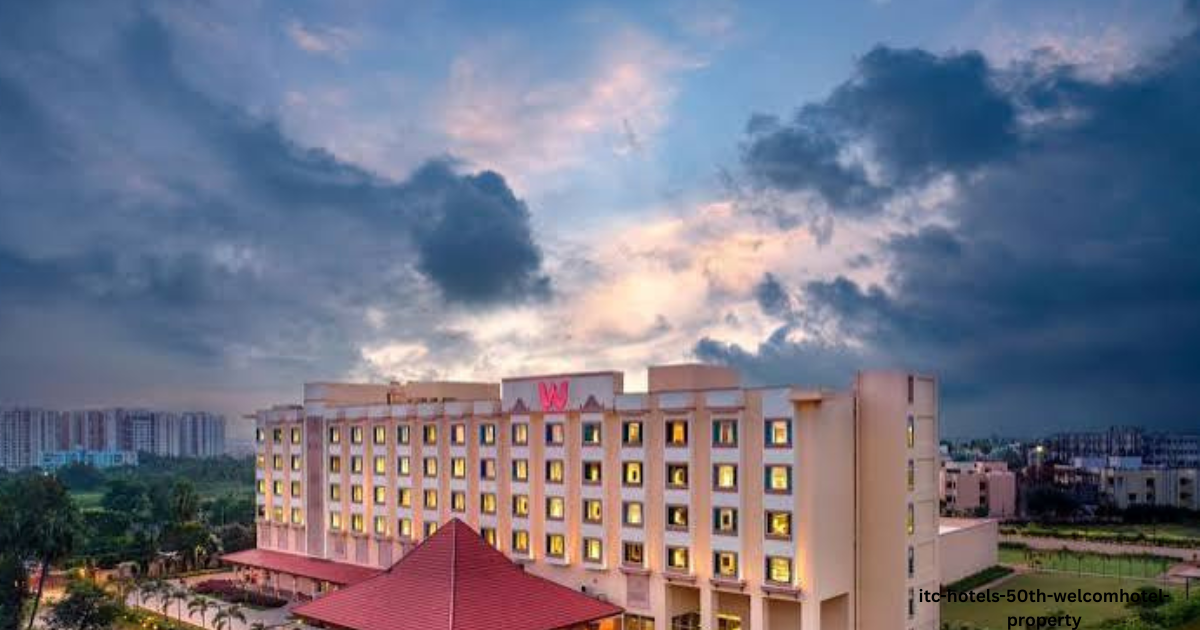 Chains that build early presence there tend to win loyalty for years. ITC Hotels’ broader expansion strategy leans hard into this logic, placing Welcomhotel properties in markets long before rising tourism activity peaks rather than after.
That timing turns ordinary opportunities into lasting advantage, since domestic travelers increasingly plan trips around comfortable, familiar brands rather than unknown local options.
Asset-Light Model Supports Growth
Behind the scenes, much of this growth rides on management contracts and franchise agreements signed with third-party developers rather than ITC Hotels buying land and buildings outright.
This asset-light approach keeps capital investment low for the company while still letting it enforce strict operational standards.
Officials at the company point to development partners who bring real local market expertise to each city, which speeds up faster scaling without sacrificing quality control.
The result is steady portfolio expansion that would be far harder to pull off if every hotel had to be built and owned in-house.
Brand Positioning and Service Model
Whatever city a Welcomhotel opens in, the company insists on brand consistency from the lobby to the last light switch.
ITC Hotels builds every one of its new properties around shared design and operational frameworks, so standardized accommodation feels familiar even when the locations couldn’t be more different.
This alignment covers everything from meeting facilities built for business travelers to relaxed common areas suited to leisure travelers, alongside dependable food and beverage services at every stop.
Sticking to firm brand standards also protects service delivery, since guests checking into any Welcomhotel property can expect the same level of care no matter which state they’re in.
Pipeline and Future Growth
Looking ahead, executives at ITC Hotels describe this milestone as just one step in a much longer long-term domestic growth strategy.
As of April 50 Welcomhotel properties are already operational, but fresh projects keep entering the pipeline across both urban itc hotels 50th welcomhotel property.
The company is clear that further expansion will not stop at existing locations; instead, development teams are scouting multiple regions across India for the next round of high-growth markets.
Every fresh round of signings adds new properties to the map, nudging the brand a little closer to becoming the country’s most recognisable mid-scale name.
FAQs About itc hotels 50th welcomhotel property
What is the significance of ITC Hotels’ 50th Welcomhotel property?
The 50th Welcomhotel signing is a significant milestone for ITC Hotels Limited, showing how far its midscale brand portfolio has come through steady collaboration with local developers and a clear asset-light growth strategy.
Where is the 50th Welcomhotel located?
The 50th property milestone comes through paired signings in Shirdi, a major pilgrimage center, and Bhubaneswar, adding a second property to the brand’s Welcomhotel portfolio in Odisha.
How many Welcomhotel properties does ITC Hotels operate now?
With this round of signings, the brand’s footprint has grown to 51 hotels, spread across 16 locations and offering roughly 5,500 keys nationwide, with more upcoming properties already in the pipeline.
Why is ITC Hotels expanding into tier-II and tier-III cities?
ITC Hotels is chasing domestic markets and emerging destinations where improving infrastructure, increased connectivity, and rising business travel demand create real opportunities for early, lasting national presence.
What role does sustainability play in Welcomhotel’s growth?
Newer properties lean on sustainable hospitality practices such as rainwater harvesting and zero-waste kitchens, reflecting growing demand from eco-aware millennials for experiential travel paired with genuine sustainability.