
Anyone who has walked through Madina Town knows why locals call it one of the most prestigious addresses in Faisalabad.
I have spent time exploring its streets, and the mix of houses, plots, restaurants, hospitals, security, and shopping options genuinely surprised me.
If you are checking the starting price of a house for sale here, you will notice it typically begins around crores, giving buyers a wide range of houses for sale to pick from.
The popular sizes run between 3 marla and 10 marla, and the whole neighborhood stays accessible from different areas of the city thanks to well-planned roads.
You can reach it easily via Jaranwala Road, Susan Road, Imtiaz Shaheed Road, and Abid Sher Road.
This residential neighborhood sits in Punjab, Pakistan, on the east side of the main canal, formed as part of the city’s post-partition urban expansion.
Covering roughly the area works as an administered town committee under a proper local government structure, blending housing, commercial buildings, and essential amenities into a genuinely self-contained community lifestyle.
Location, Accessibility & Connectivity
Living close to the city center changes everything about daily convenience, and Madina Town holds a prime location within the city.
It stays accessible via major roads of Faisalabad, including the Canal Expressway and Susan Road, and sits only 13 minutes’ drive from the iconic Clock Tower.
Located in central-eastern Faisalabad, the town is bordered by several neighborhoods, namely People’s Colony, Khayaban Colony, Naimat Colony, and Officer Colony.
Its strong connectivity comes from major routes such as Jaranwala Road, Imtiaz Shaheed Road, and Abid Sher Road, which give easy access to the broader city and nearby industrial zones.
This strategic positioning has made it a genuinely desirable residential area since the mid-20th century, when urban planning efforts followed the 1947 partition of India.
Sitting within Faisalabad District at coordinates roughly Madina Town occupies the urban core of the district, about 3 kilometers from the historic clock tower landmark.
The neighborhood stays bounded between Canals to the west and east, with Susan Road acting as the key northern access route.
The boundaries stretch across urban residential zones including Madina Town proper, Saeed Colony No. 1, and Saeed Colony No. 2, along with incorporated villages like Bhaiwala, Gatti, Manawala, and Dhuddi Wala.
Getting around is refreshingly simple too. Public transportation mostly runs on buses and auto-rickshaws, giving residents affordable and frequent options for commuting to the city center with travel times of just minutes under normal conditions.
If you fly often, Faisalabad International Airport sits about 20 km away, reachable within 30-35 minutes by road.
House Prices in Madina Town: Price Trends You Should Know
Before I looked into these numbers myself, I had no idea how much variation exists across just a few marla.
A 2 Marla unit typically sells around PKR Lakh to Crore, while a Marla property runs from PKR 1 Crore to 1.5 Crore. A 5 Marla house often lists between PKR 1.45 Crore and 2 Crore.
If renting suits you better, house rent ranges for a 5 Marla unit sit around PKR 30 Thousand to 70 Thousand monthly, making this a genuinely popular choice among posh residential areas of the city.
Looking at price trends more closely, houses for sale vary by sizes, and figures can fluctuate depending on condition and amenities offered.
A 3.5 Marla House usually starts around Rs. 80 lacs and reaches Rs. 1 crore. A 4 Marla House begins near Rs. 1 crore and tops out at Rs. 1.2 crore.
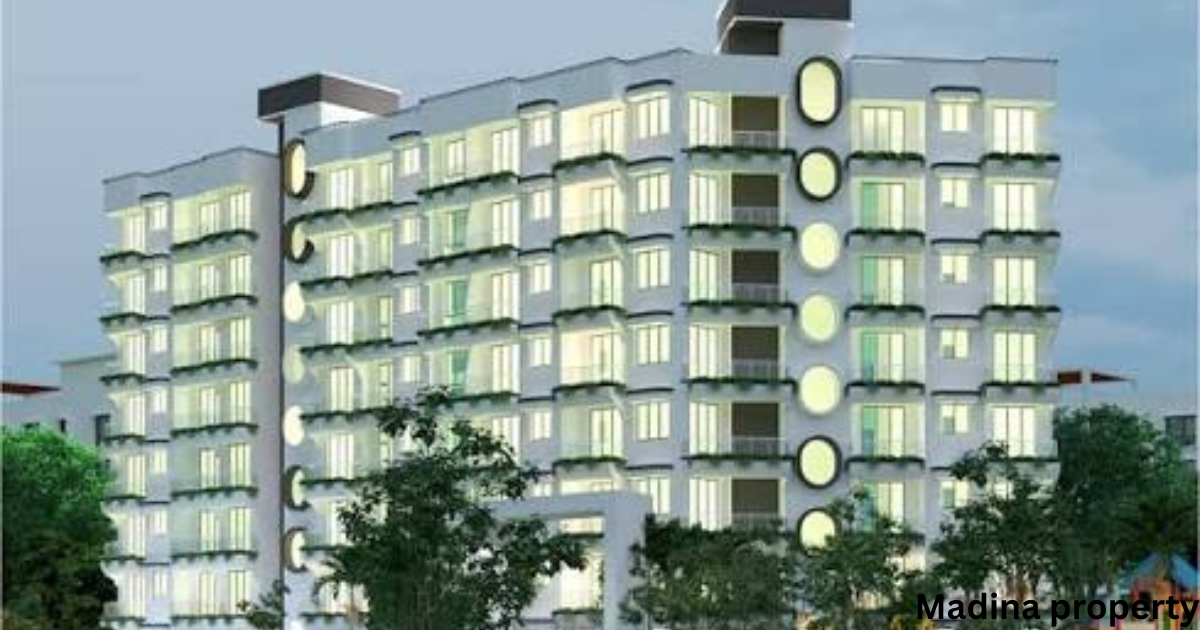 A 5 Marla House typically starts from Rs. 90 lacs and climbs to Rs. 2.5 crore. A 7 Marla House generally starts at Rs. 1.5 crore and reaches Rs. 2.5 crore, while a 10 Marla House commonly runs from Rs. 2.75 crores up to Rs. 5 crores.
These property values reflect how much this suburb has grown in terms of accessibility and overall growth. Even smaller 5 marla plots are averaging around PKR 5-10 million, and similar sizes of built houses show comparable figures based on 2024 listings.
Price Comparison with Nearby Areas and Neighbouring Societies
Prices here stay genuinely market-competitive, which is why so many buyers I have spoken with compare Madina Town against other popular neighbouring residential colonies before deciding.
Areas like Saeed Colony, Eden Valley, Peoples Colony, and Khayaban Colony come up constantly in these comparisons.
The starting price of a house for sale in Saeed Colony Faisalabad hovers around Rs 70 lacs and can reach Rs. 25 crores, while Eden Valley offers options starting at a minimum of Rs.85 lac, going up to Rs. 8.5 crore.
Beyond these direct comparisons, several other well-known localities sit close by, including Gulshan e Madina.
Kohinoor City, Peoples Colony No 1, Al Noor Garden, Mansoorabad, Eden Gardens, Rachna Town, Peoples Colony No 2, Civil Lines, and D Type Colony each offering its own flavor of Faisalabad living.
Types of Property Available
Buyers usually narrow their search down to types of houses, and Madina Town mainly offers a Single Storey House or a Double Storey House.
A Single Storey House comes with just one floor, and its price tends to be lower, making it more affordable and ideal for single families.
A Double Storey House feels far more spacious, suits bigger families comfortably, though it carries higher prices compared to smaller options.
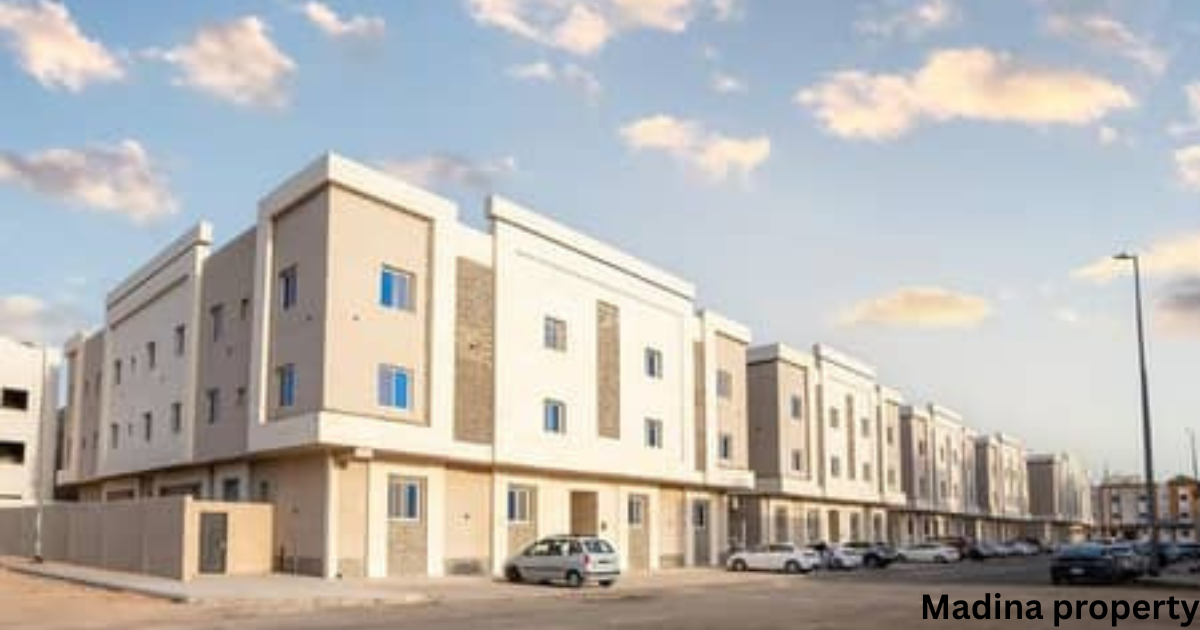
Most of these are independent houses ranging from 2 to 5 marla in size, built in both single-story and double-story configurations that cater well to middle-class families.
Closer to Susan Road, you will find upscale residential areas featuring larger properties, often marketed as prime locations with modern amenities, while more affordable housing options sit in the peripheral blocks.
Amenities and Infrastructure
Convenience matters as much as price when picking a home, and Madina Town delivers on that front. The Clock Tower sits about 5.3 km away via the Faisalabad Jaranwala Khuranwala Bypass, while Alnoor Garden is roughly 2.9km along Imtiaz Shaheed Road.
Kohinoor Plaza stays around 2km via Susan Road, Layallpur Galleria sits 2.6km away, and Khayaban Colony is barely 1.7km from the neighborhood.
Sitting right in the heart of Faisalabad, Madina Town ranks among the poshest residential areas of the city, spread across 4329 kanal of residential properties and hosting more than 300 commercial buildings.
Thanks to its rich network of roads, residents move around town with ease, enjoying basic facilities like healthcare facilities, transport facilities, educational institutes, and restaurants.
Beyond the operational commercial buildings and robust network of roads linking residents to key facilities, you will also find several pharmacies, including Care Pharmacy and Mujahid Pharmacy.
For a breath of fresh air, recreational spaces like Madina Town Central Park, AL Fateh Ground, and D Ground give families room to unwind.
When it comes to dining and social venues, popular eateries such as Chenab Bar B Q & Restaurant and Khyber Shinwari draw crowds, while marriage halls like Hameed Palace and Occasions Marriage Hall add to the vibrant urban suburb feel.
Everyday commercial activity thrives around local markets and shops along the main roads, covering daily essentials such as groceries, plus familiar fast-food outlets including Burger King and KFC.
This tight-knit community meets its routine needs at spots like Sariya’s, adding real character and area’s vibrancy to daily life here.
Geography, History, Demographics, Economy, Infrastructure, Education & Culture
Geography: Madina Town sits in the central part of Faisalabad, Punjab, Pakistan, right within the urban core of the district. Its position fits neatly into the city’s expansive grid-like layout.
A leftover of earlier colonial-era planning. Resting on the flat alluvial plains of Punjab at an elevation of around 185 meters above sea level, the terrain here consists of level agricultural and residential blocks.
Laid out in organized grid patterns of streets and housing societies, allowing for genuinely dense development and accessible development close to the city’s commercial hubs.
Within the wider Faisalabad District, the town experiences a semi-arid climate classified as BSh under the Köppen-Geiger system, bordering on humid subtropical or warm conditions, marked by hot dry summers and mild winters.
From May to September, intense heat pushes average highs up to 40–45°C in June, while winters, spanning December to February, bring lows dipping to 2.9–5°C in January.
Annual precipitation averages 350–450 mm, mostly during the monsoon season, which runs from July to September, supporting limited agricultural activity nearby.
Rapid urban development has reduced local greenery, causing a loss of natural vegetation and green spaces amid ongoing residential expansion and commercial expansion.
Nearby industrial zones add to pollution, raising air contaminants and soil contaminants, though community-driven green belts, parks, and roadside verges continue delivering economic benefits, social benefits.
And environmental benefits by easing urban heat and improving air quality. The town runs on Pakistan Standard Time zone (UTC+5), without any daylight saving time.
Madina Town took shape during the mid-20th century, amid Faisalabad’s rapid urban expansion following the 1947 partition of British India.
As waves of Muslim migrants resettled in the region. The city’s population surged by 155% between 1941 and 1951, growing from roughly 70,000 to 179,000 residents, as temporary refugee camps on the periphery.
Agricultural lands turned into enduring settlements. This land was originally set aside for industrial purposes back in Lyallpur’s foundational planning during the late 19th century. Through the 1970s and 1980s, accelerated residential buildup followed the allocation of plots in new housing schemes, drawing middle-class families who wanted proximity to the city’s core.
Before 2005, the area functioned mostly as scattered informal neighborhoods within Faisalabad’s municipal framework, lacking any formal administrative status until the city’s broader reorganization into eight autonomous towns.
Administratively, Madina Town became a Tehsil Municipal Administration (TMA) in that same city district reorganization, covering urban localities such.
As Saeed Colony (Union Council No. 60) plus rural components made up of eight union councils drawn from the former Sadar tehsil. Following the 2013 Punjab Local Government Act.
TMA status stayed intact; the 2019 Act later dissolved elected local governments, a decision reversed in October 2021 through a Supreme Court ruling that restored elected representatives.
Madina Town has also aligned with Faisalabad Development Authority (FDA) initiatives since the early 2010s.
Because separate enumeration does not exist in official records, demographics here get estimated from broader urban trends.
The population grows at an annual rate near 2.4%, matching the district’s pace from 2017 to 2023, with about 70-80% living in urbanized sections.
Growth accelerated through the post-1980s era alongside rural-to-urban migration, mirroring how the district’s urban proportion climbed from 36% in 1998 to 48% by 2023.
The ethnic composition mirrors the wider district, dominated by Punjabis, who make up 94.13% of the population by mother tongue per the 2023 census.
A notable share includes Urdu-speaking Muhajirs at 4.49%, descendants of migrants from eastern Punjab following the 1947 partition, alongside smaller groups such as Pashtuns (0.64%) and others (0.74%). Religiously, 96.48% follow Islam.
Largely Sunni under the Hanafi school with a Barelvi inclination, while Christians make up 3.40%, and small Ahmadi and Sikh communities also live here.
The local economy here leans heavily on retail and services, which together account for 37.4% of district employment. Strong ties to the textile industry show up clearly.
Textiles alone employ over 200,000 people across 328 units. Unemployment across Faisalabad stood at 5.4% as of 2023.
Average monthly incomes for middle-class residents hover near the national median wage of PKR 39,042 for 2024-25, though city-level estimates suggest closer to PKR 85,000.
Since 2005, administrative reorganization has fueled steady business growth, including the nearby Madina Market for construction materials, which has helped grow local SMEs.
Infrastructure
Water needs run through the Water and Sanitation Agency (WASA), which handles water supply and sanitation sourced mainly from the Chenab River via branch canals, backed up by tubewells.
WASA has also planned a new recharge well and underground storage tank along Susan Road to capture monsoon rainwater.
The sewerage network stretches across roughly 1,711 kilometers citywide. Electricity comes through the Faisalabad Electric Supply Company (FESCO) under the Abdullahpur division, while gas arrives via Sui Northern Gas Pipelines Limited (SNGPL).
For public healthcare, residents rely on the Social Security Hospital, a 300-bed facility, along with Mujahid Hospital, running since 1984.
Nearby University Town houses the Madinah Teaching Hospital, and for advanced care, people head to Allied Hospital (Jinnah Hospital).
Local safety runs through the Madina Town Police Station, handling law enforcement for the area.
Education: Families here have plenty of choice between primary schools, secondary schools, public schools, and private schools, all following the Punjab.
Curriculum and Textbook Board’s standardized curriculum, tied to the Board of Intermediate and Secondary Education.
Notable names include Government Girls Higher Secondary School Comprehensive Madina Town in Y Block, teaching around 1,983 students, and Government Girls High School Municipal Committee Madina Town, serving roughly 2,018 students.
The Divisional Model College opened its Madina Town campus in 2003, while Dar-e-Arqam Schools runs a branch at 37Y, and Oxford Public High School operates in Block X.
Higher up the ladder, Government College Women University Faisalabad (GCWUF) offers bachelor’s programs, master’s programs, and PhD programs across Arts and Humanities.
Science and Technology, and Social Sciences, with total enrollment topping 11,000 students. Shiblee College for Women supports around 2,000 students through FSc Pre-Medical.
 And Pre-Engineering tracks, while nearby in Gatti, Government Islamia Higher Secondary School extends learning to the intermediate level.
Culture: Community spirit runs deep here, anchored by landmarks like Masjid Faizan-e-Madina in Block Z, known for striking architecture and a spacious prayer hall, along with Bilal Masjid nearby.
madina property Park on Street 7 offers expansive lawns, landscaped gardens, and shaded benches, open from 4 a.m. to 10:30 p.m.
With free entry, perfect for family picnics, jogging, and children’s play. This peaceful suburban atmosphere and family-oriented atmosphere really shine during Eid celebrations, filled with communal prayers and festive park gatherings.
Several notable names call Madina Town home too. Rana Atif, an Independent MNA representing NA-101 (Faisalabad-VII), was elected in February 2024 and resides in Officers Colony No. 2.
Mian Abdul Mannan, a former MNA from NA-83 (Faisalabad-IX) representing PML-N during 2013–2018, also lived here. Khalida Mansoor, a longtime political activist, served in the Municipal.
Corporation of Faisalabad before moving to the Punjab Assembly, and Anjum Safdar worked as General Councilor during 2004–2005 and Town Member from 2005–2008, later winning a reserved women’s seat in the Punjab Assembly.
FAQS About Madina property
Is Madina Town a good place to buy property in Faisalabad?
Yes, Madina Town ranks among the most prestigious and posh residential areas of Faisalabad. With strong connectivity, reliable amenities, and steady price trends, it remains a smart pick for families and investors alike.
What is the price range of houses in Madina Town?
House prices here generally start around Rs. 80 lac and can reach Rs. 5 crores, depending on the size, condition, and amenities of the property. Smaller marla units cost less, while larger 10 Marla houses sit at the top end.
How far is Madina Town from Faisalabad’s Clock Tower?
Madina Town sits roughly 5.3 km from the Clock Tower, reachable in about 13 minutes by road via Susan Road and the Canal Expressway.
What schools and hospitals are available in Madina Town?
The area offers well-known educational institutes like Government College Women University Faisalabad and Dar-e-Arqam Schools, plus healthcare facilities such as Social Security Hospital and Mujahid Hospital.
What types of houses can I find in Madina Town?
Buyers typically choose between a Single Storey House or a Double Storey House, with sizes ranging from 2 to 5 marla and upward, suiting both single families and bigger families.