
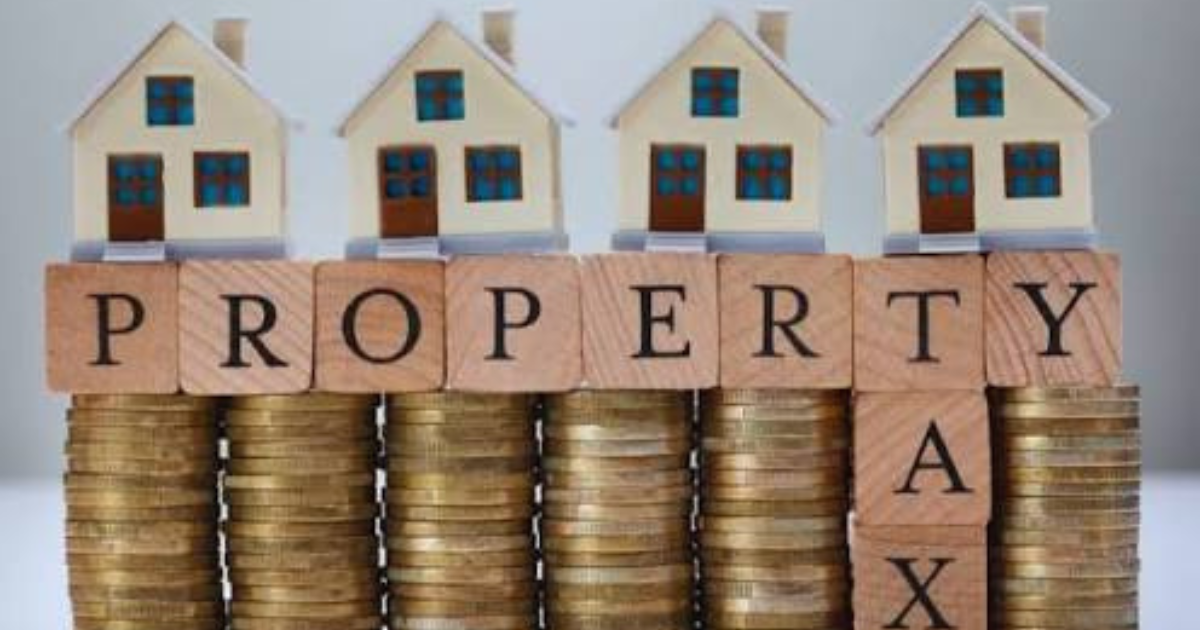
Every homeowner in the capital deals with the Municipal Corporation of Delhi at some point, and understanding your MCD property tax obligations makes life easier.
Across India, urban local bodies and municipalities collect tax to fund civic services such as sanitation, roads, and urban infrastructure, and these funds keep amenities running smoothly for everyone.
Property owners in Delhi pay this tax on an annual basis, and the Delhi municipal corporation was once split into three new bodies back in before later reuniting under one roof.
This comprehensive guide walks taxpayers through the payment procedures, the calculation methods, and the property tax regulations that apply to both occupied homes and vacant properties.
You’ll also learn how the jurisdiction works, why there’s a fixed deadline each year, and how to stay compliant and avoid penalties.
We’ll even cover how to use the online portal to manage your residential property tax from home, no queue required.
What is MCD Property Tax
The Municipal Corporation of Delhi, or MCD, charges a tax on every piece of real estate that falls within its jurisdiction, and that includes both buildings and vacant land.
Whether your home is self-owned, a rented property, or used for commercial purposes, you’re still liable to pay tax on it. In short, property owners of any residential property occupied or emptymust settle their dues with the MCD.
MCD Property Tax Rates
Delhi’s property tax rates aren’t one-size-fits-all; the city is split into eight categories, each with its own House Tax Rate and Value Per Unit Area.
Category A carries the highest unit value at with a 12% residential rate, while Category B sits close behind at. Category C and Category D are valued atrespectively, both taxed at 11%, and Category E follows at with the same rate.
 Lower down the scale, Category F is valued at Rs. 230, Category G at Rs. 200, and Category H at just all three taxed at 7% for residential use.
Commercial Property Tax stays flat at 20% across every category, while industrial property tax ranges between 15% and 10% depending on the zone.
Knowing which category your locality falls under is the first step to estimating your Residential Property Tax bill accurately.
How to Pay MCD Property Tax Online
Paying online starts with your property ID, which you’ll usually find on a previous property tax receipt. Head to the official MCD website, open the Online Services tab, and click Property Tax.
From there, Login using your registered email id or mobile number if you’re a new user, you’ll need to sign up first before you can Submit any details.
If you don’t already have a property ID, choose the option to file your return, which takes you straight to a page for property ownership details.
Fill these in and the system will compute tax automatically, letting you pay by credit card, debit card, or net banking.
Once payment clears, click to generate challan, and the official challan will show up on screen along with any property tax arrears, late fees, or interest amounts owed.
For a smoother path, enter your Registered Mobile Number and hit Generate OTP; once the OTP arrives, use it to log in, or complete SignUp and Registration if you’re new.
After logging in with your UPIC, you’ll see your Property Type, Owner Type, Name, Address, Status, and other Registration Details laid out clearly.
Click the Actions button, choose Pay Tax, and select the correct Financial Year before moving ahead.
A pop-up may ask about any Modification or Change to your details answer honestly, and you’ll land on the Tax Calculator page, which also displays your rebate percentage.
Review everything, download a Download PDF copy, pick your payment mode, and click Pay now. Once the screen shows Success, remember to Download the Receipt for your own records.
Residents under EDMC, NDMC, or SDMC follow the same basic steps, though a First time online taxpayer may need to first click Use this property to pay tax against their listed property.
Paying on time isn’t just convenient it also keeps you clear of penalties down the line.
Offline Payment
Not everyone wants to pay online, and that’s fine Delhi offers offline payment too, through ITZ cash counters scattered across the city.
There are cash counters in total, and once you hand over your house tax amount, you’ll get an instant receipt carrying your property tax ID right away.
For the best savings, pay your dues as a lump sum during the first quarter of the financial year, ideally before June 30.
Paying MCD Property Tax via App
If you’d rather pay from your phone, download the MCD Property Tax Payment App from the Play Store and register using your mobile number and email address.
Select your UPIC under the Unique Payment Identification Option, choose the Pay Tax option, and pick the right one among the listed financial years before you Submit.
The app calculates your tax amount, lets you complete a digital payment, and gives you the chance to Download Receipt copies for your records.
Exemptions
Not every property owner has to pay this tax certain exempt properties are completely off the hook.
Buildings or land used for public worship, public burial, cremation grounds, or heritage lands all qualify, as does land held for a charitable purpose and most agricultural land, though dwelling houses on that land are usually excluded.
Land owned by the corporation itself is also exempt, since the tax liability would otherwise fall on the same body collecting it.
Individuals get relief too. A war widow or a Gallantry Award winner is exempt when the property is used purely for self residence, and a South MCD employee who is fully handicapped while on duty also qualifies.
The same courtesy extends to a sportsperson who has received award winners honours in international sports, and to families of those martyred while on paramilitary or police duty.
Rebates Concessions
MCD also rewards timely, honest taxpayers with a decent concession. Senior citizens, women, physically challenged individuals, and ex-servicemen each get.
A discount on one property, while group housing flats enjoy a rebate if paid before the deadline. DDA and CGHS residential flats get a further off, but only up to 100 sq mts of covered area, and the overall concession caps out at 200 sq mtrs of build-up area.
To actually qualify, the use factor must be residential and the occupancy factor must show self-occupation rented-out flats don’t make the cut.
For joint owners, the discount only applies to each owner’s property share within the eligible rebate category.
And if you pay everything in one go within the first quarter, you can bag an extra rebate; miss the due date, though, and you’ll face penalty charges plus interest for every month of late payment.
MCD Property Tax Calculation Formula
MCD could use the Annual Rental Value method or the Capital Value System, but it sticks with the Unit Area System, the method recommended by the Government of India.
The basic Property Tax formula is simple: Annual Value multiplied by the Rate of tax.
For a Building, the Annual Value comes from the unit area value per sq metre, multiplied together with the age factor, use factor, structure factor, Flat factor, and occupancy factor.
The age factor ranges from 0.5 to 1, so newer homes pay more than older ones, and the structure factor depends on whether construction is RCC or a simpler type.
Covered area counts the entire floor area, including walls, a verandah, courtyard, gangway, garage, common service area, staircase, and balcony, even bits that stick out past the plot boundary.
The unit area value itself depends on your property’s classification and location.For Vacant Land, the formula changes slightly unit area value times land area, use factor, occupancy factor, and a fixed multiplier of.
It sounds complicated at first, but once you understand each factor, the math becomes second nature.
SUNIYO Sumpattikar Niptaan Yojana
MCD’s amnesty scheme, called the Sumpattikar Niptaan Yojana or SUNIYO, gives struggling property owners a genuine second chance.
It offers a full waiver on interest and penalties for unpaid tax dues going back to and the due date to claim this relief has been pushed to.
 Miss that window between 1st April 2026 and the deadline, and a late fee of 5% on the principal tax amount still applies.
Both Residential and Commercial Square Yards Property Management taxpayers can use SUNIYO, but there’s a catch: you must first clear your principal dues for the preceding five years that’s along with the current year’s, meaning tax amount.
As a bonus, MCD has also dropped the garbage collection charges that used to sit on top of the bill.
MCD Property Tax Due Date FY 2025-26
For FY 2025-26, the due date to grab a rebate has been extended to 31st July 2026, a nice cushion beyond the original June cutoff.
Miss it, though, and late payment attracts interest at per month on any outstanding amount, calculated after the deadline of each quarter.
MCD Property Tax Receipt Download
Downloading your property tax receipt is straightforward once you know where to look. Visit the Municipal Corporation of Delhi website, enter your registered mobile number.
Click Generate OTP, and use the OTP through the Login option to sign in. Then pick which body handles your area South Delhi Municipal Corporation (SDMC), North Delhi Municipal Corporation West Delhi Municipal Corporation (WDMC), or East Delhi Municipal Corporation.
Next choose your property type, whether commercial or residential, and enter your property ID or address. Click Submit, select the right financial year, and your receipt appears on screen.
Hit the Download option, then print it if you’d like a hard copy for official purposes.
Features of MCD
MCD isn’t a small operation it spans zones and wards across a total area of the city was carved into three corporations.
East Delhi Municipal Corporation with wards, North Delhi Municipal Corporation with wards, and South Delhi Municipal Corporation .
Years later, on May, these three bodies merged back into a single Municipal Corporation of Delhi.
List of Municipal Corporations in Delhi
Even after the merger, it helps to know the three original zones: the East Delhi Municipal Corporation the South Delhi Municipal Corporation and the North Delhi Municipal Corporation each still visible through their official website.
EDMC covers Shahdara North and Shahdara South, split into six wards and five colonies each, and residents must follow the same deadlines as everywhere else..calculating the exact valuation of your flat is necessary. If you are tracking residential areas to invest in your next home, read our curated list of the best places to live in bangalore for families for top neighborhood reviews.
NDMC residents fall under zones like City-SP Zone, Civil Lines, Karol Bagh, Narela, Rohini, and Keshav Puram. SDMC, meanwhile, is divided into Central.
South, West, and Najafgarh zones, and property owners there can pay through either offline mode or online mode via the official portal.
How to Raise Complaints in Municipal Corporation of Delhi
Got a query? Filing a complaint is simple: go to the official website, look for the Citizen Corner section on the homepage, and click into the grievance section.
 From there, select Complaint MCD 311 and fill in your property id, taxpayer name, contact number, and mode of payment. Hit Submit, and an MCD official will get back to you shortly.
Toll-free Number of the Municipal Corporation of Delhi
For anything urgent, the MCD Toll-free number is 155305, and the Email Id for queries is nic.in. The postal Address is. Civic Centre, Minto Roadin case you need to write in or visit in person.
How to Find Your Jurisdiction for Paying Property Tax in Delhi
Not sure which body your property falls under? Visit the official website, click the Property Tax option on the homepage, and select Know Your Property Tax Jurisdiction.
Enter your property ID or unique identification number, both usually printed on your last property tax bill or receipt if you don’t have either, just type in your address instead. Click Search, and the site pulls up your jurisdiction information instantly.
If the online route doesn’t work for you, walk into your local MCD office and ask for help; officials there know every locality by heart and can offer real assistance in person.
What to do if you can’t find your Property ID
Losing track of your property ID happens more often than you’d think, and it’s not the end of the world. Start by searching the MCD website type in your property address under the property tax.
Search section, and if multiple properties pop up with the same address, compare property type and size to spot the right one. You can also cross-check with the owner’s name.
Dig through any old property tax bills or receipts you’ve kept, since the ID is almost always printed there. As a last resort, a property consultant or lawyer can offer proper guidance and help you avoid penalties or legal issues.
Whatever route you take, always hang onto your final payment receipt for future reference.
Zones of MCD Property Tax
Beyond the three original bodies, MCD further breaks Delhi down into North Delhi Municipal Corporation (NMCD), South Delhi Municipal Corporation (SMCD).
East Delhi Municipal Corporation (EMCD), and West Delhi Municipal Corporation (WMCD) zones, and each of these covers a mix of categories, localities, and colonies that decide your tax slab.
Category A, the priciest bracket, includes posh addresses like Rajendra Place, Basant Lok DDA Complex, Sunder Nagar, Golf Links, Friends Colony, Bhikaji Cama, Anand Niketan.
New Friends Colony, Maharani Bagh, Panchshila Park, Kalindi Colony, Nehru Place, Shanti Niketan, Vasant Vihar, and Lodi Road Industrial Area.
Category B is close behind, covering Hauz Khas, Greater Kailash, Andrews Ganj, Green Park, Anand Lok, Maurice Nagar, Hamdard Nagar, Gulmohar Park.
Pamposh Enclave, Defence Colony, Nizamuddin East, Sarvodaya Enclave, Munirka Vihar, Nehru Enclave, Neeti Bagh, Sarvapriya Vihar, Safdarjang Enclave, and Panchsheel Park.
Moving into Category C, you’ll find Vasant Kunj, Som Vihar, East Patel Nagar, Chittaranjan Park, East of Kailash, Kailash Hill, Civil Lines, Kalkaji.
Alaknanda, Lajpat Nagar, Jhandewalan Area, Malviya Nagar, Masjid Moth, Munirka, Punjabi Bagh, Panchsheel Extension, and Nizamuddin West.
Category D brings together Daryaganj, Dwarka, Hudson Line, Janakpuri, Gagan Vihar, Anand Vihar, Jasola Vihar, Jangpura A, Karol Bagh, Indraprastha.
Extension, Kirti Nagar, Old Rajinder Nagar, Mayur Vihar, Rajouri Garden, New Rajinder Nagar, East End Apartments, and Jangpura Extension.
Category E picks up Moti Nagar, Gagan Vihar Extension, Madhuban Enclave, Khirki Extension, Mahavir Nagar, Pahar Ganj, Hauz Qazi.Jama Masjid, Pandav Nagar, Rohini, Sarai Rihilla, Chandni Chowk, Kashmere Gate, and East End Enclave.
Know Your Property Tax Category F covers Arjun Nagar, Ganesh Nagar, BR Ambedkar Colony, Jangpura B, Daya Basti, Hari Nagar.
Nand Nagri, Majnu Ka Tila, Dilshad Colony, Madhu Vihar, Mukherjee Park Extension, Uttam Nagar, Zakir Nagar Okhla, Anand Parbat, Dilshad Garden, and Govindpuri.
Category G includes Dabri Extension, Amber Vihar, Hari Nagar Extension, Dakshinpuri, Dashrath Puri, Ambedkar Nagar Jahangirpuri.
Tagore Garden, Vivek Vihar Phase I, and Ambedkar Nagar East Delhi. Finally, Category H, the lowest bracket, is home to just Sultanpur Majra. Knowing exactly which category your colony falls under makes budgeting for your annual tax bill a lot less stressful.
FAQs About Know Your Property Tax
What is the UPIC number of MCD?
The UPIC number is a unique code that MCD assigns to every property for tax tracking purposes.
How can I find my MCD booked property online?
You can check your MCD booked property details online by logging into your account and searching under registered listings.
How can I find my property ID number?
Your property ID number is printed on your previous tax receipt, or you can search for it using your address on the MCD portal.
Is there any penalty for delayed payment of property tax to MCD?
Yes, a penalty applies for delayed payment of property tax to MCD, charged as monthly interest on the outstanding amount.
Can I take deduction of property tax paid to MCD from my income-tax payable on my house property income?
Yes, you can claim a deduction for property tax paid to MCD while calculating income-tax on your house property income.
Can I make the payment of property tax through MCD application?
Absolutely payment of property tax is fully supported through the MCD application, right from your phone.
What is the formula for calculating MCD Property Tax?
The formula for calculating MCD Property Tax is Annual Value multiplied by the applicable rate of tax.
What is the last date to pay Delhi property tax?
The last date to pay Delhi property tax is usually 31 July of every year, though rebate windows may close earlier.