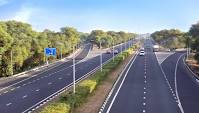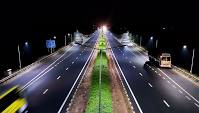
The Mahatma Gandhi Expressway links Ahmedabad and Vadodara across 93 km, and locals often call this motorway the transport corridor that changed how Gujarat moves, stretching 93 end to end.
Anyone who has driven this route knows the old NH 8 journey used to eat up 2.5 hours, but the National Expressway 1 cut that down to just 1 hour, running from the north end in Ahmedabad to the south end in Vadodara.
The first section was inaugurated by the Former Prime Minister Atal Bihari Vajpayee in 2004, and the tender for building this access-controlled expressway went to IRB Developers Pvt. Ltd.
By 2011, IRB Infra picked up the next tender to widen the road to six lanes, though it still runs on four lanes today while the expansion sits in the planning stage.
The National Highways Authority of India, known simply as NHAI, handles the maintenance, and travellers pass through exit points at Nadiad and Anand along the way.
Commuters rely on this stretch daily, and because it ranks among the busiest highways in the country, safety concerns led officials to ban two-wheelers entirely from this infrastructure lifeline.
What makes this road stand apart as India’s first national expressway, also tagged NE-1 or NE 1, is the significant rise in regional trade and regional development it triggered along.
The road brought connectivity and smooth traffic flow between two major cities, and that shift opened doors for real estate growth across Gujarat.
Project Overview
Work on this thruway began in 2003, and the first road infrastructure project delivered by the National Highway Authority of India became functional in 2004 once Atal Bihari Vajpayee, the former PM, formally inaugurated it. IRB Developers Pvt.
Ltd carried out the construction work at a cost of Rs 475 crore, building four lanes that made this national expressway, also called NE 1, one of the busiest expressways in Ahmedabad and Vadodara, two of the biggest cities in Gujarat.
Even though the older Mumbai-Pune expressway came first, this stretch still holds the title of National Expressway 1 because NHAI delivered it before any other project.
In 2009, the Government of Gujarat pushed the Union Government to extend this motorway all the way to Mumbai, and that request kept the road relevant well beyond its original purpose.
The upgradation project to add six lanes went to IRB Infra, carrying a price tag of crore, though the work still sits in the planning stage with no fixed date for expansion.
Starting at Naroda Road and connecting through to NH-64, this corridor will eventually link up with the Delhi-Mumbai Expressway, and NHAI continues routine maintenance to keep traffic flowing smoothly.
Route
If you check the route map, this thruway, known as NE-1 or NE1, starts at Naroda Road in Ahmedabad and terminates at NH-64 in Vadodara, giving drivers seamless access through key cities like Nadiad and Anand.
NHAI designed the layout of the four lanes as its first project, and even though the Mumbai-Pune Expressway was built earlier, this road still carries the historic title because of how it was delivered under original planning.
The road will eventually merge with the Delhi-Mumbai Expressway, extending regional connectivity across several regions of Gujarat.
Ahmedabad stands out as an export hub, while Vadodara is known for its pharmaceuticals, chemicals, and machine tooling industries, and this road ties both commercial hubs together through faster connectivity.
Because of the shorter travel time, trade volumes between these cities have grown steadily, with goods and raw materials moving quicker than ever.
Facilities FeaturesInfrastructure
This road packs in several smart infrastructure elements that make it a reliable transportation option for daily drivers.
The 4-lane divided carriageway comes with service roads at certain stretches, and the access-controlled design keeps entry points and exit points limited and secure, which helps maintain smooth traffic movement and supports high-speed travel throughout the corridor.
Emergency stop zones sit at regular intervals, giving drivers a safe place to pull over if needed, and two-wheelers stay off the road entirely for safety reasons.
Good lighting across the stretch adds clarity and visibility at night, and the well-lit corridors cut down the risk of accidents considerably.
A modern toll plaza system accepts multiple modes of payment, and NHAI carries out regular maintenance to keep the road in line with current safety requirements.
As traffic load keeps rising, planners have already proposed a six-lane expansion, and these combined features and facilities together make the lanes here some of the most dependable in the state.
Safety
Among Gujarat’s roads, this counts as one of the safest expressways, largely because NHAI has set up emergency checkpoints at regular stops along the Ahmedabad-Vadodara Expressway route.
These checkpoints exist so travellers can report challenges quickly whenever something goes wrong.
Due to genuine safety concerns, two-wheelers are simply not allowed on this stretch, and that single rule on NE1 has kept accident numbers lower than many people expect.
Impact on Real Estate
As a pioneering infrastructure project and part of India’s expressway network, this corridor is India’s first national expressway, known also as connecting two important cities, Ahmedabad and Vadodara, and has triggered a full boom in the real estate industry across Gujarat.
Faster freight movement and easier movement of goods between these industrial hubs paved the way for ancillary industries and corporate houses to set up shop nearby, which in turn built strong trade efficiency along the entire stretch.
Because of the shorter travel time and improved connectivity, this road holds real strategic value for anyone tracking regional integration in the state.
Land near this route has seen a genuine real estate development wave, and localities like Gota, Shela, and Chandk hedka in Ahmedabad, along with Channi, Ajwa Road, and Kalali in Vadodara, have recorded price appreciation of roughly percent since the road opened some reports even cite as the standard figure for property prices here.
This demand has pushed up land values and encouraged new residential complexes, townships, and residential properties to come up along the corridor, alongside a rise in corporate housing.
The commercial real estate sector has benefited just as much, with the promised 6-lane expressway and its planned extension toward Mumbai expected to fuel further industrial development and economic growth in the years ahead, keeping this stretch flourishing long after it was first inaugurated, as trade between the two cities keeps growing.
Future Expansion Upcoming Projects
Looking ahead, the Gujarat government has floated the idea of extending this road toward Mumbai, integrating it with wider national expressway networks across the country.
Projects like the Ahmedabad-Tharad Expressway and the Delhi-Mumbai Expressway, also referred to in some reports as the Mumbai-Delhi Expressway, will add fresh connectivity and open up realty prospects across the State of Gujarat.
This kind of strategic positioning should boost commercial trade and support long-term growth in the region.
Strategic Positioning of Ahmedabad-Vadodara Expressway
Real estate developers are already leveraging the strategic positioning of this road, and the real estate impact shows up clearly Mahatma Gandhi Expressway.
Shorter travel time means the daily commute feels easier for residents, opening up more job opportunities as corporate houses expand closer to the region.
Better movement of goods and stronger trade give people real flexibility in how and where they choose to live and work.
Real Estate Sector of Gujarat
Ahmedabad and Vadodara stand as the two major players in Gujarat’s real estate sector, and this stretch has become one of the key areas for real estate investment across India.
Industries along the route have seen a significant rise, which has also pushed up the floating population nearby.
Developers from Mumbai and Pune are showing real interest in properties here, and experts agree this corridor still holds strong growth potential.
How Can Ahmedabad Vadodara Expressway Support Real Estate Development?
This road supports infrastructure development across surrounding areas, bringing utilities like water facilities and new roads to places that once lacked them.
As economic activities in the region pick up, demand for real estate keeps climbing, and the establishment of new projects follows close behind.
More job opportunities mean rising incomes, and that combination strengthens the economic conditions of the whole sector, encouraging fresh residential properties to come up nearby.
Conclusion
Among the region’s prominent infrastructure development projects, this expressway stands out for genuinely improving daily life between the two cities.
Easier travel and added convenience keep boosting local business and trade, and honestly, few roads in Gujarat have done as much for the quality of life of the people who use it every day.
FAQS About Mahatma Gandhi Expressway
What is the toll price on the Mahatma Gandhi Expressway?
The toll price for a passenger car comes to Rs 125, though depending on the vehicle type, the overall toll can range between INR 75-125.
When was the expressway completed and inaugurated?
Construction commenced and was carried out by IRB Developers Pvt. Ltd, and the road, locally called the Baroda Express Highway, was completed in It was inaugurated by the former PM, Atal Bihari Vajpayee.
What is the speed limit on the expressway?
The speed limit on this four-lane expressway ranges between 80 kmph and 100 kmph depending on the stretch, and two-wheelers are simply not allowed on the road.
Are two-wheelers allowed on the expressway?
No two-wheelers are not allowed on this expressway because of genuine safety concerns.
Why is the expressway called NE1?
The name NE1 stuck because this was the first project delivered by the National Highways Authority of India, widely known as NHAI.