

Ask anyone who has moved to a busy city on a tight budget, and they’ll probably mention a studio apartment at some point.
This layout takes the kitchen, bedroom, and living room and folds them into one open space, often alongside a kitchenette and a separate bathroom.
People sometimes call it an efficient apartment, thanks to its space-conscious design, and a few floor plans even squeeze in a small branch-off section, better known as an alcove studio or L-shaped studio, along with a closet for the essentials.
For anyone living alone, this space requirement feels just right, especially in an expensive city where rent adds up fast.
It’s worth running a comparison against a one-bedroom too, since the amenities each one offers can shape your day-to-day comfort in different ways.
What Is a Studio Apartment
At its heart, a studio apartment is built around one open space that lets the kitchen, bedroom, and living room exist side by side, with no separating walls dividing the main rooms.
A dedicated dining area rarely shows up here, since the living area blends naturally into the small kitchen area, while the bathroom remains the one closed room in the home.
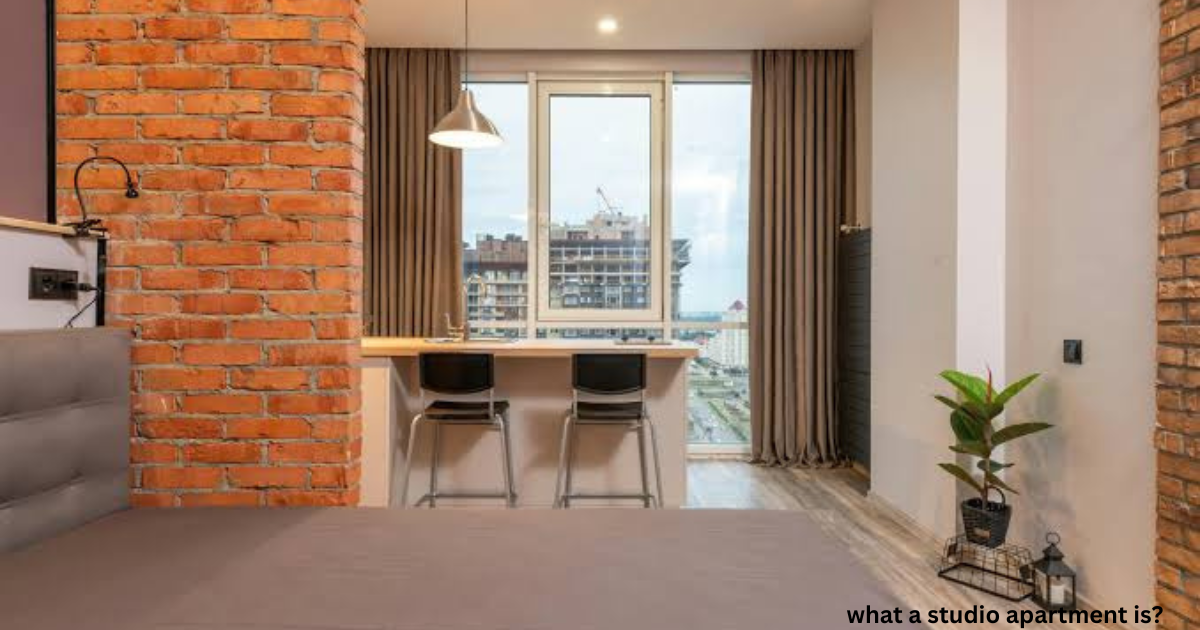 Think of it as a single large room with a closet somewhere along the wall. Across the United States, the average size lands around 600 square feet.
Though that number shrinks fast once you land in New York City, where studios can measure as little as square feet. It’s a good reminder that a US studio changes shape depending on where you plant your roots.
Alcove Shaped Studio
Some studios break away from a plain, boxy shape. A small section keeps branching off from the main living area, forming a sleeping nook or dining nook that you can tuck behind a curtain or a screen.
It still counts as one room overall, since the kitchen area, bedroom, and living room stay linked, but the floor plans shift depending on the building age of the property.
Some come out perfectly square, others lean rectangular, and either way, they create an illusion of separation that makes a small home feel a bit roomier.
Pros of Studio Apartments
From a money standpoint, a studio apartment usually wins. It’s more affordable than a one-bedroom, even when it sits in one of the desirable neighborhoods everyone wants to live in.
Cleaning takes less effort too, since it’s easier to clean and easier to maintain, leaving more time to build credit and grow savings toward a future down payment.
Because rent is typically priced per square foot, a smaller space naturally means cheaper rent, plus lower heating costs and lower cooling costs each month. There’s less clutter to deal with, so it stays quick to clean, sometimes in 20 minutes flat.
Fewer overnight what a studio apartment is?, and there’s an undeniable cool factor attached to loft-style living right in the middle of the city. Add in lower utilities and less temptation to accumulate belongings, and studio life starts looking pretty appealing.
Cons of Studio Apartments
Nothing is flawless, though. Little privacy tops the list of drawbacks, and it gets more obvious the moment overnight guests decide to stay a while.
There’s also no separate area to retreat to when you need quiet work or study time, which means limited privacy becomes part of daily life in a studio.
Loft vs. Studio
People often mix up a studio with a loft, but they’re built differently. Loft apartments bring large open spaces and high ceilings into the picture.
Usually inside converted industrial buildings where exposed beams and pipes remain part of the visual charm.
A loft, unlike a studio, may still hold onto a separate bedroom, which changes the overall feel of the studio experience.
Studio vs. One-Bedroom
When it comes down to a studio versus a one-bedroom, the choice hinges on one factor. A one-bedroom carries a separate designated bedroom, handing you more space and a stronger sense of privacy. That single point ends up being the main difference that steers most people’s final decision.
FAQ About what a studio apartment is?
What is a studio apartment?
A studio apartment combines the living room, bedroom, and kitchen into one open space, with only the bathroom kept as a separate, closed room. It’s a compact, budget-friendly layout loved by renters living alone in busy cities.
How big is a studio apartment?
The average size in the United States is around 600 square feet, though it can shrink to as little as 200 square feet in dense areas like New York City.
What is an alcove studio?
An alcove studio has a small section branching off from the main living area, creating a sleeping nook or dining nook, often separated with a curtain or screen.
Is a studio apartment cheaper than a one-bedroom?
Yes, a studio is generally more affordable than a one-bedroom, with lower heating costs, lower cooling costs, and cheaper rent since it’s priced per square foot.
What’s the difference between a studio and a loft?
A loft apartment has large open spaces and high ceilings, often in converted industrial buildings with exposed beams and pipes, and may still include a separate bedroom unlike a studio.
What’s the differwhat is studio apartmentween a studio and a one-bedroom apartment?
A one-bedroom has a separate designated bedroom, offering more space and better privacy, which is the main difference between the two layouts.
Is a studio apartment good for someone living alone?
Yes, its compact layout and space-conscious design suit renters living alone, especially in an expensive city where budget matters most.