
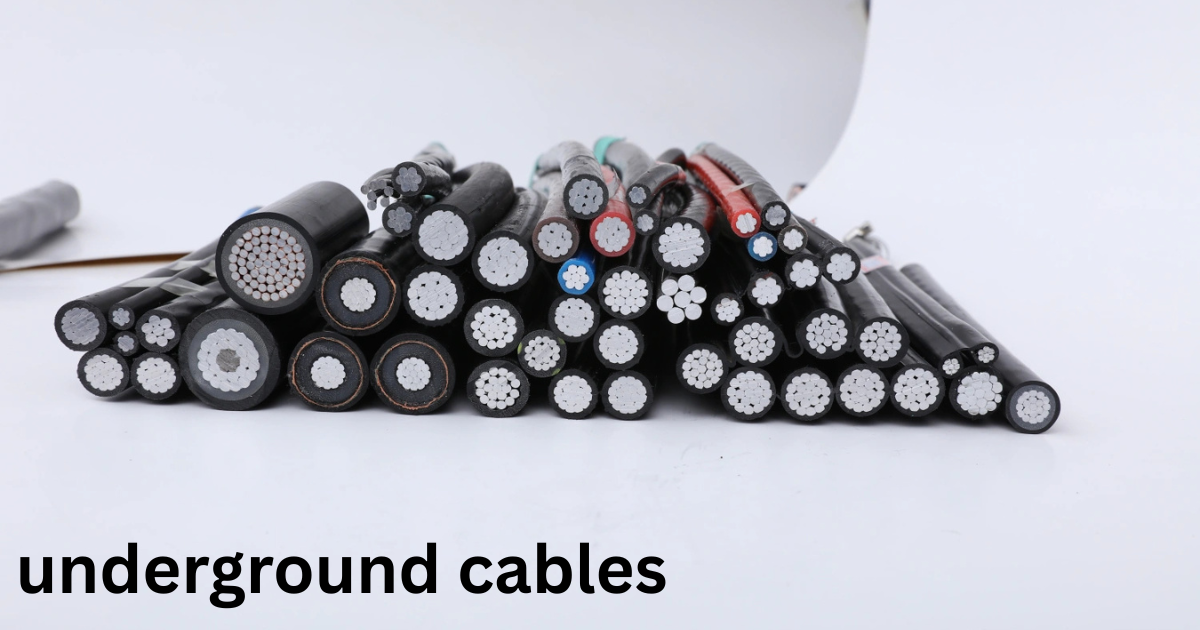
When I first worked on a telecommunications project, I realized an underground cable isn’t just one thing; it covers everything from a fiber optic cable carrying pulses of light for internet and data, to an insulated cable carrying electrical current for power transmission.
If you want to understand underground cables and how they work, you are in the right place. In this guide, we will explain the different types of underground cables, their layered structure, minimum burial depth requirements, and the key advantages of underground cables over overhead lines for safe power transmission.
There are two types worth knowing: a communication cable for phone, cable television, and internet, and a power cable built for power transmission.
Their robust construction shields them from temperature swings, soil pressure, moisture, chemical contact, and general weather exposure, offering a genuinely protected connection below the surface.
Types of Underground Cables by Voltage
Voltage is where things get interesting, and I always start by explaining Low Voltage cables, rated around 1 kV, which handle household electrical supply, residential power, and small commercial power needs with typically PVC insulation and copper conductors, making them cost-effective and offering easy installation.
Step up to Medium Voltage, reaching roughly 36 kV, and you’ll find these serving commercial buildings, industrial buildings.
And rural areas, often using XLPE insulation or ethylene propylene rubber (EPR insulation) for better durability, moisture protection, and minimal signal loss, though they demand more precise installation and can bring mechanical stress during laying.
Finally, High Voltage cables handle long-distance transmission and high-capacity power transfer for power plants, transformers.
Street lighting, and urban areas, using aluminum conductors built for high-power applications is a strong choice, even if costly installation and careful work near substations is part of the deal.
Types of Underground Cables by Structure and Application
Structure matters just as much as voltage, and I’ve seen how armored cables with steel armor or aluminum armor resist crushing, abrasion, and general physical damage in tough spots like construction zones, tunnels, and industrial sites.
On the residential side, UF-B cables are a type of Underground Feeder allowing direct burial without a conduit.
Working well for residential developments, detached garages, and outdoor lighting, while USE-2 cables connect utility power to residential service panels and a utility transformer.
 URD cables, or Underground Residential Distribution, are built for individual homes, resisting mechanical stress near pumps and other equipment.
Meanwhile, fiber optic cables use glass fiber strands or plastic fiber strands, some as thin as a human hair width, wrapped in a protective jacket for conduit use in areas needing careful cable routing.
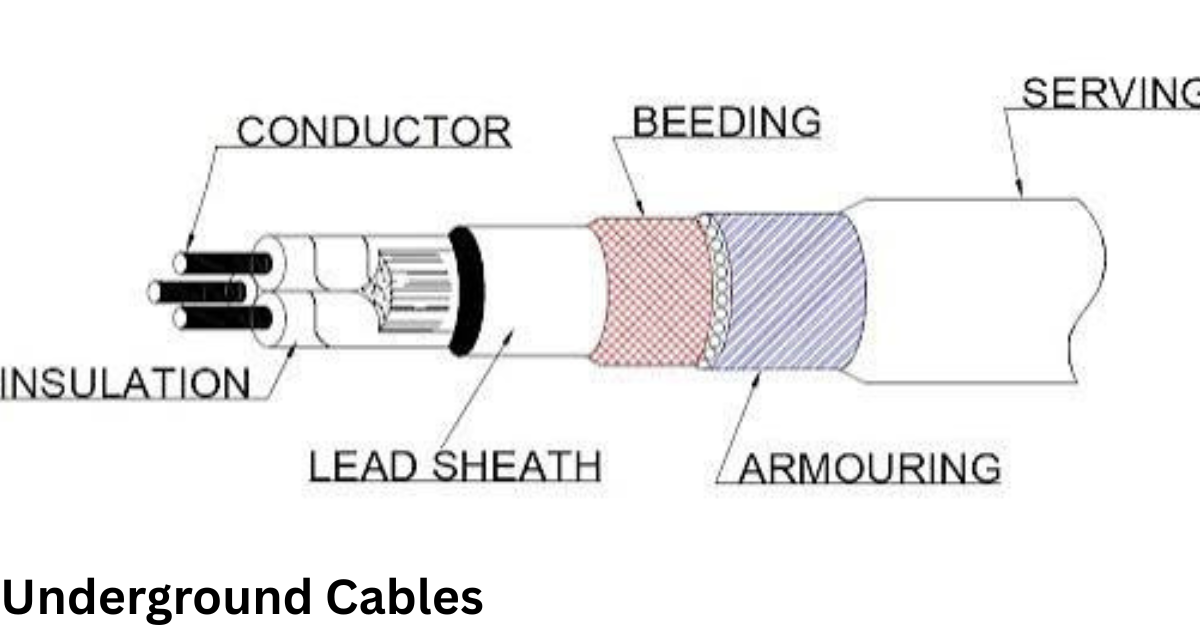
Underground Cable Structure
Cracking open a cable for the first time taught me it isn’t just a wire it’s built from five layers working together.
At the core sits the conductor, usually copper or aluminum, wrapped in insulation made from XLPE, EPR, PVC, or PE to prevent current leakage and guard against electrical faults.
Around that sits a water-blocking layer using gels, yarns, or tapes to keep out moisture and chemicals, followed by mechanical protection in the form of steel wire, aluminum wire, or armor to resist crushing and mechanical stress from the soil.
Even the reinforcing strands of glass fiber and plastic fiber add strength in a tightly wound concentric design, all finished off with a protective layer, or outer sheath, as the final defense.
Advantages of Underground Cables Over Overhead Lines
I always tell clients that burying cables pays off in ways overhead systems simply can’t match. There’s no risk from falling branches, high winds, or storms, and you avoid electric shock hazards from direct contact with aerial lines or overhead wires.
Which means genuinely improved safety for residential neighborhoods and busy urban streets. Underground systems also resist electromagnetic interference, giving better signal quality and stronger reliability, with a longer lifespan and extended service life.
Compared to systems exposed to constant environmental wear and weather resistance challenges. Yes, the upfront cost of trenching, permitting, and road restoration is higher than stringing poles, but over time you gain space efficiency, better uptime.
Fewer service interruptions, lower outage-related costs, reduced power outages, and lower maintenance costs plus the aesthetics and visual character of scenic areas.
Stay untouched, protecting nearby equipment from accidents and cutting down on inspection and repair work near economical long-term operations.
How Underground Cables Are Installed
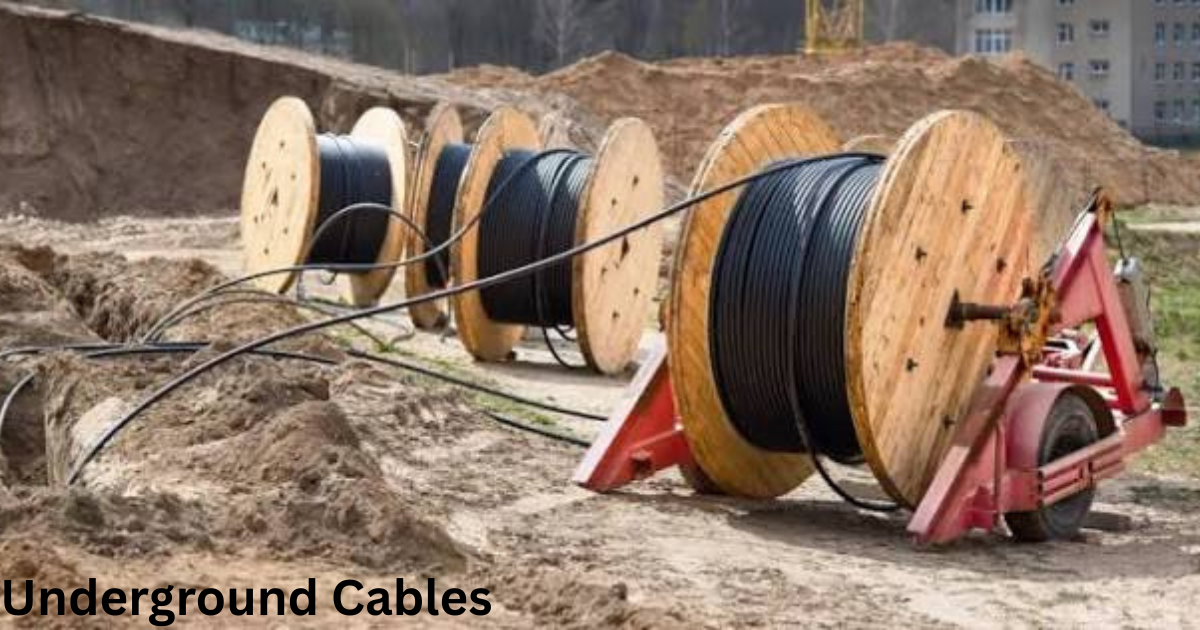
Installation is where theory meets dirt, and it always starts with a proper site assessment, utility location.And the right right-of-way permits and permitting before any digging begins. Crews follow strict depth requirements, often 18 inches to 24 inches for power lines and around 6 inches for landscape wiring.
Using the trenching method or direct burial depending on soil conditions. Cables get laid using cable troughs, PVC conduit, or conduit placement with careful spacing.
And precise alignment, then protected with sand, bricks, and warning tape or colored utility flags to prevent accidental damage.
And avoid mutual heating between nearby lines. For communication lines, splicing and splice enclosures handle the fiber optic connections.
While underground vaults support vault installation in busier areas. The job wraps up with code compliance checks, cable laying verification, protective material placement, and finally site restoration and official sign-off.
Key Considerations Before Choosing an Underground Cable
Before recommending a cable to anyone, I weigh a handful of practical factors. Voltage, load requirements, and whether the project is residential, industrial, or transmission-scale all shape the choice between armored and non-armored designs.
 Soil corrosivity, moisture levels, and temperature extremes affect long-term maintenance savings, while environmental conditions and application determine the right conduit requirements and mechanical protection needs.
Don’t forget local code compliance and the correct minimum burial depth for well-protected settings, since getting the installation cost right upfront avoids expensive surprises later.
FAQ About Underground Cables
What is an underground cable used for?
An underground cable serves as a reliable alternative to aerial telecom cables and overhead power lines, carrying electrical power, phone, internet, and cable television signals safely below ground level, wherever data needs to move without interruption.
How deep should underground cable be buried?
Depth requirements vary by cable type and local code, but direct burial power lines typically sit between 18 inches and 24 inches, while low-voltage landscape wiring run through PVC conduit can sit as shallow as 6 inches.
Are underground cables safer than overhead lines?
Generally, yes underground cables carry a lower risk of electric shock because there’s far less chance of accidental contact involving people, vehicles, or wildlife, unlike exposed overhead lines where direct contact stays a real danger.
Do underground cables cost more than overhead lines?
The initial installation costs for underground cables tend to run higher due to trenching, upfront investment, and site restoration, but they typically bring lower long-term maintenance costs by avoiding the frequent weather-related outages that plague overhead lines.
What materials protect underground cables from water damage?
Protection comes from the cable structure itself, a protective outer sheath made of PVC or PE, combined with water-blocking tapes, gels, and yarns around the core and insulation, all working together to keep moisture out.
Can underground cable be buried without conduit?
Yes, certain cables like UF cable, part of the Underground Feeder family, are rated for direct burial without conduit, though this still depends on the cable rating, required protection, and local code compliance for the specific installation.