
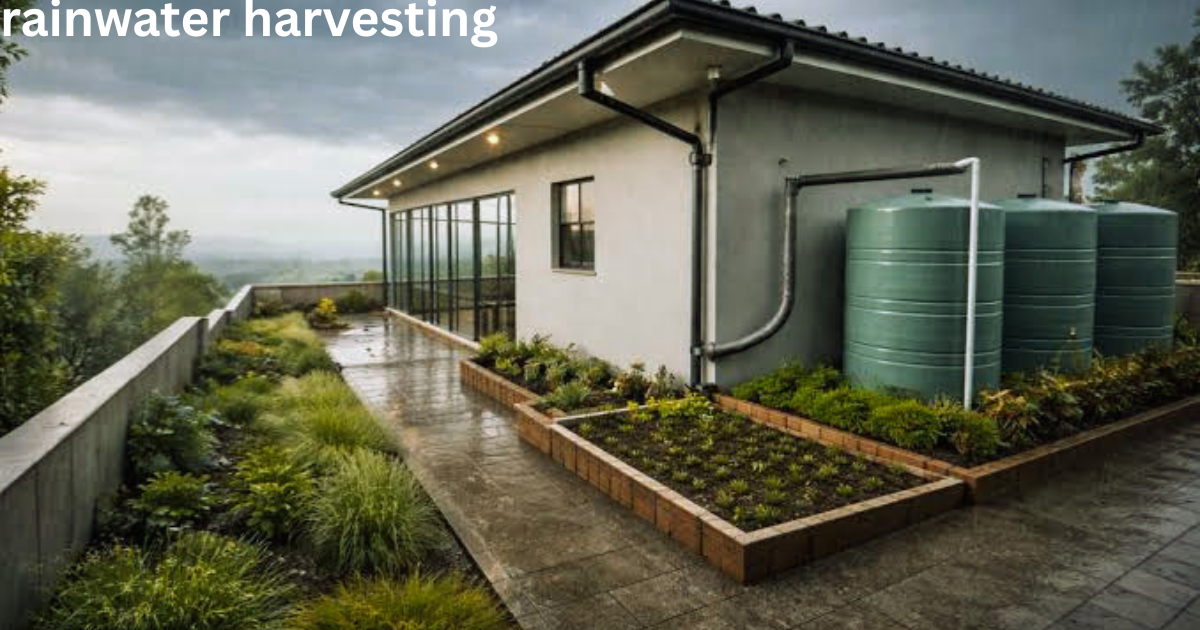
Every time it rains, millions of gallons ofrainwater harvestinghit our roofs, roads, and impervious surfaces and most of it just disappears. I remember standing on my rooftop during.
A heavy downpour, watching perfectly clean rainwater rush into the drain, and thinking: what a waste. That single moment pushed me to explore harvesting seriously, and honestly, it changed the way I think about water supply forever.
Rainwater (RWH) is the process of collection and storage of rainwater rather than letting it run-off into the ground or drainage systems.
Water collected from a roof or any clean surface gets redirected to a tank, cistern, deep pit, well, shaft, borehole, aquifer, or reservoir.
Where it either gets stored directly or goes through percolation to restore ground water levels naturally. Unlike stormwater harvesting, RWH focuses specifically on roofs and controlled area surfaces for storage and reuse, keeping the process cleaner and more manageable for everyday users.
People use harvested rainwater for watering gardens, feeding livestock, supporting irrigation, meeting domestic use needs after basic treatment.
And even for domestic heating in some colder regions. Civilizations figured this out long ago the Romans built entire water collection systems with aqueducts.
And rooftop channels, laying the groundwork for the gutter-based systems we still use today. Whether you live in a busy city or a quiet village.
Rainwater gives households, neighbourhoods, communities, schools, hospitals, and other public facilities a reliable path to water security.
And self-supply and it has done so for thousands of years across South Asia and beyond. The concept works at every scale, from a single rain barrel sitting under a downspout.
To massive cisterns designed to meet entire household demand. Countries like Germany and Australia have already made this a norm, and with the green building movement gaining.
 Momentum across America and globally, more people are waking up to what nature has been offering for free all along.
We just need to collect it, store it, and use it wisely for our domestic, commercial, and agricultural needs, including outdoor cleaning, flushing toilets, and washing clothes.
and yes, even drinking when treated correctly. The goal is simple: conserve water, fight the growing water crisis, and build a system that supports future use for everyone, everywhere.
What is Rainwater Harvesting and How is it Important?
If you ask me what the single most underrated solution to our water crisis is, I will tell you without hesitation harvesting.
Most people do not realize that we are already hitting the ceiling on water conservation gains inside our homes.
Governmental standards and fixture companies have pushed indoor water fixtures to near maximum efficiency gains.
And the law of diminishing returns has set in hard. We cannot keep squeezing savings out of a slightly better toilet or faucet the next revolution in water conservation.
Must happen outdoors, and harvesting services sit right at the center of that shift.A well-designed harvesting system does more than just collect water.
It rescues communities from water shortage, delivers good quality water when managed correctly, and meaningfully lower mains water usage for any property it serves.
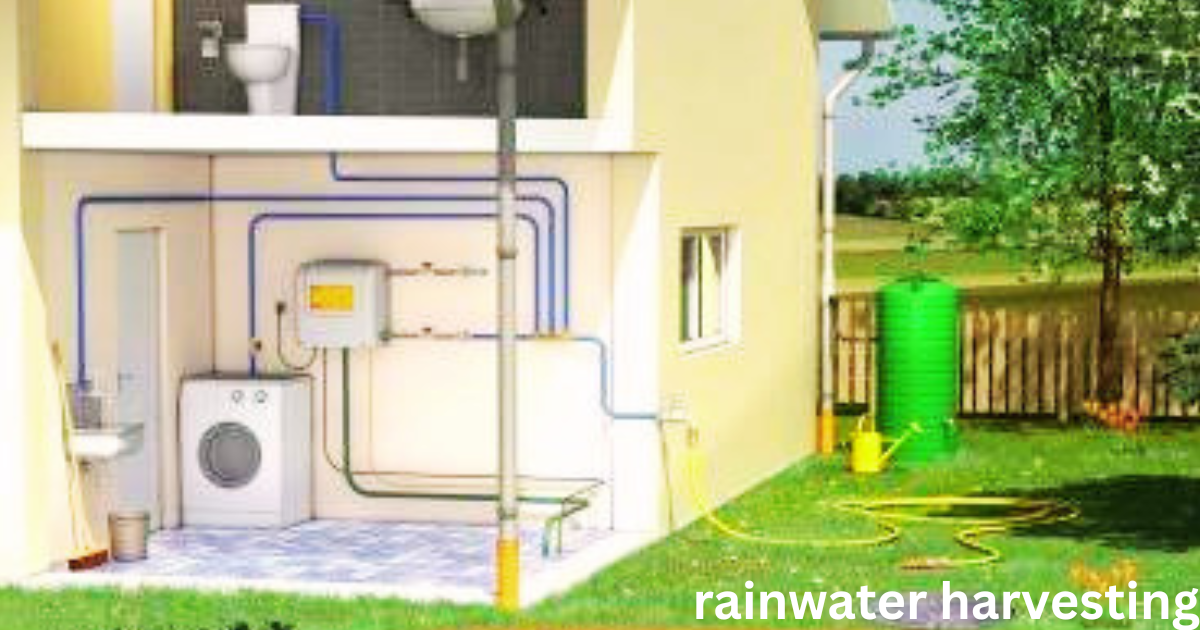
The full system includes a collection surface, gutters, downspouts, pre-filtration systems, first-flush devices, storage tanks, and distribution systems that can include full purification.
Depending on your end use. When you factor in population growth and increasing water restrictions across cities, having this kind of setup at home is not a luxury.
It is a practical act of self-sufficiency that also slashes your water bill by up to 40% and actively promotes both energy conservation and long-term sustainable future planning.
Honestly, the importance of rainwater hits differently when you live in an area facing real drought conditions or tight water restrictions.
Families with these systems enjoy landscape irrigation without guilt, contribute to healthier households and businesses, and genuinely reduce their environmental footprint.
All because they decided to catch what falls freely from the sky. The system supports not just individual water consumption reduction but entire community resilience, making it one of the smartest investments any homeowner or institution can make today.
Uses of Rainwater Harvesting
Rooftop rainwater quietly handles some of the most essential daily needs supplying drinking water, domestic water, water for livestock, supporting small irrigation projects.
And continuously working to restore groundwater levels across properties of all sizes. In Kenya, communities have been successfully using harvested rainwater for toilets.
Laundry, and irrigation long before it became a global trend, and since the 2016 Water Act, the country has pushed even harder to regulate and expand its.
Agriculture industry through smarter water practices. Meanwhile, in Australia, many households rely on harvested rainwater for cooking and drinking.
While research by Stout et al. confirms that RWH proves most beneficial in India for small-scale irrigation generating real income through produce sales and for critical groundwater.
Recharge that sustains communities through dry seasons. The feasibility of scaling these domestic applications continues to grow as more data supports what communities on the ground have known for generations.
Agriculture
Rainwater in urban areas directly tackles two problems at once: it slows down damaging runoff and reduces the risk of flooding.
That disrupts neighborhoods and farmland alike. Research shows that combining green rooftops with rainwater catchments can pull building temperatures.
Down by more than 1.3 degrees Celsius, creating cooler, more livable urban spaces while contributing to Sustainable Development Goal 6 the United Nations target for clean water.
Security, food security, health, and wellbeing in cleaner cities and sustainable cities globally. The technology exists and works well.
But it needs smarter water efficiency planning, especially in dense urban settings where every rooftop and paved surface represents a missed rainwater runoff collection opportunity.
Missions to five Caribbean countries revealed something important: capturing rainwater runoff for storage significantly reduces the risk of losing.
An entire harvest due to soil dryness or water scarcity, and it cuts down flooding and soil erosion during heavy rain seasons. Small farmers.
Especially those working on hillsides, gain the most from water harvesting because they capture runoff that would otherwise tear away their topsoil.
Protecting both their land and their livelihoods season after season. In arid environments, farmers build ridges of soil across hills and slopes to trap water.
Ensuring that even during stretches of low rainfall, enough water reaches the roots to keep crops growing steadily is a technique as old as farming itself.
Water collected from roofs, stored in dams and ponds, stays available even on days with zero rainfall, giving farmers a reliable buffer that removes the anxiety of depending entirely.
On unpredictable weather. Clean water access through RWH transforms arid environments from places of constant agricultural struggle into productiveness.
Sustainable landscapes where communities thrive. The evidence from field missions, research studies, and generations of farmers all points to the same conclusion r harvesting is not optional for food-secure communities, it is essential.
Industry
Frankfurt Airport runs the largest railway system in Germany, and the numbers behind it are genuinely impressive; the system saves roughly 1 million cubic meters.
Meters of water per year, serving the enormous demand of a facility that never sleeps. The initial investment came in at 1.5 million dm (approximately US$63,000) back in 1993.
Covering a collection area spanning the roofs of the new terminal at 26,800 square meters water flows down into the basement where six tanks with a combined 100 cubic meters.
Storage capacity holds it ready for toilet flushing, watering plants, and cleaning the air conditioning system.
That single project proved to the world that large-scale rainwateris not just environmentally responsible, it makes serious financial sense for industry.
The Velodrome at the London Olympic Park took a similar approach to sustainability, adopting harvesting as part of its green credentials and projecting a remarkable 73% reduction.
In potable water demand across the park. While the analysis showed that the park’s blackwater recycling program offered slightly stronger returns on financial resources.
The rainwater initiative still demonstrated real value in reducing pressure on municipal water supply systems.
These two landmark projects, one airport in Germany and one Olympic venue in London show clearly that industry at every scale can and should integrate rainwater into its core operations.
What are the Uses of Collected Rainwater?
Here is something that bothered me early in my research: we use carefully treated drinking water, energy intensive tap water to flush toilets and water lawns.
That is genuinely wasteful and increasingly irresponsible given the reality of population growth and escalating water shortages in cities around the world.
Rainwater collection offers a direct fix to redirect harvested water to the tasks that do not need treated water.
And you immediately green your home while shrinking your environmental footprint without sacrificing any comfort.
There are three core areas where collected rainwater delivers real value: irrigation use, indoor non-potable use, and whole house potable use when properly treated.
For irrigation use, you can hand water your lawn and garden, connect your rainwater collection system directly to an irrigation system or sprinkler system, and top up fountains.
Maintain fish ponds, or even refill a swimming pool all without touching a drop of costly tap water. For indoor non-potable use.
Harvested rainwater flows to toilets, clothes washer units, replaces tap water for washing driveways and sidewalks, and keeps vehicles and pets clean.
Without any guilt about wasting treated water.When you install proper filtration and disinfection equipment, harvested rainwater meets potable needs for showers.
Sinksbaths, and even drinking make it a genuine whole-house solution rather than just a garden tool. Industrial processes that currently pull from municipally treated .
Water supplies can shift to harvested rainwater, saving enormous volumes of treated water for the people who truly need it.
Whether the goal is simply to keep a garden green or to run an entire commercial property on harvested water.
The flexibility of rainwater collection makes it one of the most practical and scalable solutions available today and every drop you use from .
Your tank is a drop that stays in the municipal system for someone else.
Rainwater Harvesting Methods
Surface runoff rainwaterworks by catching rainwater as it flows naturally along the ground during rainfall events, channeling it toward.
A tank positioned below surface level where it waits for irrigation and other practical purposes. One critical factor in making this method.
Work well is managing evaporation aggressively without strong water conservation controls during storage, significant volumes simply disappear back .
The atmosphere before anyone can use them. The method itself is straightforward, making it an easy technology to adopt and genuinely profitable .
When applied correctly, especially in regions facing rising water demand, serious water pollution concerns, accelerating soil erosion, and repeated flooding of roads and agricultural land.
Roof Top Rainwater Harvesting Method
Rooftop rainwatercaptures rain water directly where it lands on the roof catchments of domestic houses and commercial buildings.
Funneling it straight into tanks or diverting it toward an artificial recharge system that replenishes the ground beneath.
This method works equally well for meeting household needs and commercial needs, and it earns its popularity through .
A combination of being genuinely eco-friendly, remarkably less expensive than alternative water sourcing methods, and consistently effective across.
A wide range of climates and building types The core process involves diverting, recharging, and storing rainwater that lands on any roof surface .
Whether it belongs to a small house or a massive building with the twin goals of making water available for future use and actively improving ground.
Water quality across the surrounding area The range of locations where rooftop rainwater systems deliver real value is broader.
Than most people expect. Residential homes, houses, and villas benefit directly, as do schools, colleges, and educational institutions that need reliable housing.
Water without spiking operational budgets. Apartments, flats, and multi storey buildings across dense urban areas install these systems to reduce mains dependency.
While government buildings, industries, factories, and mills use them to cut costs and meet sustainability targets joined by IT parks, hotels.
Restaurants, resorts, swimming pools, and stadiums that collectively represent enormous water consumption potential waiting to be offset by smart harvesting.
On the practical application side, rooftop harvesting covers virtually every daily water touchpoint in a building flushing toilets, running.
Washing machines, washing vehicles, supporting gardening efforts, supplying showers, sinks, and baths with clean non-potable or treated water.
These applications prove that this is not a niche or experimental technology, it is a mature, proven solution ready to deploy across every building type.
The method earns its place at the top of any rainwater strategy because it combines simplicity, effectiveness, and versatility in a way that no other collection approach quite matches.
How to Harvest Rainwater
The most familiar starting point for most people is the humble rain barrel, a single container positioned under a gutter downspout to collect rainwater as it flows off the roof.
You can use a recycled barrel or pick up a purpose-built commercially available unit from local stores, and the setup takes an afternoon at most.
Making it the most accessible entry point into rainwater for homeowners anywhere. The honest downside is capacity.
Most rain barrels hold between 50 gallons and 100 gallons, and during a serious storm that tank overflows fast, wasting valuable collection opportunities.
That a larger system would capture without any trouble.Stepping up in scale brings you to the “Dry” System, a smarter variation.
Where a larger tank replaces the small barrel and the collection pipe empties completely or “dries” after every rain event, draining directly into the top of the storage vessel.
This design works exceptionally well in climates where rainfall arrives in infrequent but larger storm events, because the system captures big volumes quickly and holds .
Them without the complexity of underground plumbing, keeping maintenance simple and the overall setup inexpensive for most residential situations.
The only real constraint is location: the tank must sit close to your house to allow the pipe to drain by gravity.
Which limits flexibility for properties where aesthetics or space make a visible tank awkward.The most capable residential option is the “Wet” System.
Which runs collection pipes underground to connect multiple gutters and downspouts from across the entire property.
Rainwater fills the underground piping, then rises through vertical pipes until it spills into the main tank .
Which can sit well away from the house since the underground network handles the transport. The investment is higher due to the underground piping and the requirement .
That the tank inlet sits below the lowest gutter on the property, but the payoff is full collection surface utilization.
The ability to harvest from multiple gutters simultaneously, and a discreet system that leaves no visible infrastructure cluttering the property exterior.
Complete Rainwater Collection System Components
A complete rainwatersystem can range from something you put together in a weekend.With minimal skills to a sophisticated automated system requiring advanced setup and professional installation but regardless of complexity.
The core logic stays the same. Think of it less as a technical project and more as a smart plumbing job.utlets from the building terrace connect through pipes to an underground tank that holds the collected water.
With additional components layered in based on how clean and how pressurized you need the output to be.The non-negotiable basics include pre-filters drains, gutters, and storage containers then you add pumps, UV lights.
Chlorination devices, and post-filtration equipment as your use case demands.Sizing matters enormously the system must cover.
Water demand through the entire dry season, which means your building roof (the rainfall capturing area) needs to be large enough to feed adequate volumes into.
A water storage tank sized to support daily water consumption without running dry during extended gaps between rain events.
Low-tech systems rely on rooftop systems, surface water capture, and gravity-fed cisterns, while more sophisticated setups use pumps and digital monitoring to optimize every drop.
Starting from the roof surface and working down, a well-specified system flows through gutter protection screening, purpose-built gutters.
A rain head or downspout filter for self-cleaning filtration, and a critical first-flush diverter that redirects the first dirty flush of contaminated rainwater away from the storage vessel.
Water then passes through a tank screen on entry keeping mosquitoes and pests out while catching remaining debris before settling into rainwater tanks.
That comes in a remarkable range of sizes and materials to suit any property. An insect proof flap valve on the overflow pipe provides a secondary pest barrier.
While an auto-fill system keeps a minimum water level in the tank at all times, which matters enormously for properties running automatic irrigation systems .
Where a dry pump causes real damage. Finally, a quality pump system distributes pressurized rainwater through an inline irrigation filter.
That catches any large debris the pump pulls through, and a water level indicator available in simple gauge versions or sophisticated.
wireless digital options keeps you informed about exactly how much water remains in your tank at any given moment.
Rainwater Harvesting by Solar Power Panels
Solar power panels are quietly becoming one of the smartest dual-purpose tools in the rainwater toolkitEspecially as water resources near populated areas grow increasingly scarce and costly for everyday consumers. Rain that falls on solar PV panels stays remarkably clean low in salinity, free of the biological contaminants .
That plague ground-level collection and simple filtration combined with disinfection processes converts it into genuine drinking quality .
Water without the complexity that full municipal treatment requires. Turning that harvested water into bottled drinking water or premium household supply.
Makes solar PV installations profitable even in regions with high rainfall or persistently cloudy areas, because the water revenue supplements.
The energy income keeps the whole project financially attractive year-round, generating meaningful additional income for operators willing to think creatively.
In India specifically, cost-effective rainwater collection in existing wells has proven highly effective at raising groundwater levels across rural districts.
Demonstrating that you do not always need expensive new infrastructure to make a meaningful difference. The Nimbkar Agricultural Research Institute developed a concept combiningharvesting.
With solar energy purification specifically for rural household drinking purposes proving that the technology.Works at the smallest scale just as well as it does for large commercial operations. When you frame rainwater.
Within a sustainable water management strategy, solar panels stop being just an energy tool and start functioning as part of a fully integrated.
water supply system that serves both potable water and non-potable water needs covering everything from toilet flushing and irrigation to laundry and beyond.All powered by the same sun that drives the panels themselves.
So Just How Much Rain Can I Collect?
The math behind rainwater collection potential is simpler than most people expect, and once you run the numbers, the opportunity becomes hard to ignore.
The core formula is straightforward: 1 inch of rain falling on 1 square foot of surface yields 0.623 gallons of collectible.
Water and the easy version to remember is that 1 inch of rainfall across 1,000 square feet of roof area produces 623 gallons of harvestable water.
If you live in central Texas, where the average annual rainfall sits at 32 inches, a modest roof delivers tens of thousands of gallons per year through.
A rainwater collection calculator that quickly reveals just how much free water you have been letting escape.
To get your specific number, start by confirming your local annual average precipitation the NCDC Monthly Precipitation Probabilities database lets you find.
The nearest weather station and read your area’s reliable average from the probability row. Multiply that annual rainfall figure by your collection surface area in square feet.
Apply the gallons per inch-per-square-foot formula, and you have a realistic annual yield estimate that accounts for actual local conditions rather than optimistic assumptions.
Running these numbers before you invest in any system lets you right-size your storage capacity intelligently avoiding both.
the frustration of a tank that overflows constantly and the disappointment of one that runs dry every summer before the next significant rainfall arrives.
Benefits of Rainwater Harvesting
The most compelling thing about harvesting is that it solves multiple problems simultaneously and builds an independent water supply.
Reduces pressure on wells, supports groundwater levels, cuts stormwater volumes entering sewer systems.
Reduces stormwater runoff polluting freshwater bodies, and makes properties genuinely more resilient during drought and flooding events in low-lying areas.
Installing a system actively improves ground quality by diluting salinity in the soil, introduces zero pollution into the local environment.
Stays consistently environmentally friendly, and delivers a solution that is both genuinely cost-effective and affordable across.
A wide range of property types and income levels. When you factor in the reduction in treated municipal water and groundwater dependency.
The contribution to protecting freshwater resources in high-demand areas becomes tangible this is not just a personal saving, it is a community-level water conservation act.
Harvested rainwater is naturally free of chlorinated additives, making it noticeably better for landscape irrigation, gardening, and any plant .
That struggles with treated tap water chemistry. Systems install cleanly onto existing structures or integrate into new builds.
Stay modular enough to expand or retrofit as needs grow, and provide a critical emergency backup during supply disruptions that municipal systems cannot always prevent.
Every property that installs a rainwater system contributes to a sustainable future while cutting its own water bill and research consistently shows.
Water consumption reduces by up to 40% when these systems replace mains water across toilets, washing machines, irrigation, and outdoor use.
A rigorous life cycle assessment of rainwatersystems developed by researchers including Devkota et al.
Confirms that environmental impacts stay genuinely low across the full cradle-to-grave lifetime of a well-designed system.
With building design, dimensions, and intended function (whether educational, residential, or commercial) playing the biggest role in determining overall environmental performance.
The demand to supply ratio (D/S) metric helps identify the ideal match between a building’s supply capacity and demand profile.
Particularly for toilet flushing applications where the savings in potable water compound when buildings connect to a combined sewer network .
Reducing both environmental emissions and the volume of stormwater requiring treatment compared to a separate sewer network..
On the cost side, governmental aid and NGOs actively support RWH systems deployment in developing regions facing poverty, providing materials and education to communities.
That needs sustainable water source access most, making harvesting not just an individual choice but a genuine tool for flood protection..
Water runoff control, and long-term community self-sufficiency even in the world’s most impoverished communities.
Independent Water Supply
Nothing demonstrates the value of an independent water supply quite like living through a period of severe water restrictions .
When neighbors line up for bottled water, a properly sized rainwater system keeps your household running normally.
In areas where clean water is either costly or physically difficult to access, rainwatergraduates from a convenience to an absolute necessity.
Filling the gap that municipal infrastructure cannot always bridge reliably. Even in well-served urban areas.
The system functions beautifully as a supplemental source that quietly reduces household water costs and overall usage levels.
When you add boiling water as a simple treatment step or install a first flush diverter to reduce contaminants.
The harvested water becomes genuinely safe to drink, protecting your family from the germs that surface-collected water can occasionally carry without proper handling.
Supplemental in Drought
When drought arrives and rainfall turns scarce and unpredictable, a well-maintainedharvesting system becomes.
The most valuable piece of infrastructure on any property because it captures every drop when rain does fall and holds it for the long dry stretches that follow.
In arid environments, the practical response is building ridges of soil across hills and slopes to slow and concentrate.
What little rainwater does arrive, ensuring that even stretches of persistent low rainfall still deliver enough moisture to crops and irrigation channels to prevent total loss.
Water stored in roof-fed tanks reduces simultaneous pressure on wells, actively preventing groundwater levels from becoming so depleted that recovery takes years rather.
Then months a compounding benefit that grows more important with every dry season a community survives.
Life-Cycle Assessment
A true life-cycle assessment evaluates the full environmental impacts of a rainwatersystem from its first component manufactured to its final decommissioning.
A genuine cradle-to-grave view of its entire lifetime that most shorter analyses miss entirely. Devkota et al.
Developed a specific methodology for this assessment and found that building design choices including dimensions and intended function.
whether educational, residential, or commercial shape environmental performance more powerfully than almost any other variable.
The demand to supply ratio (D/S) metric they introduced identifies the sweet spot between a building’s supply capacity and actual demand.
Particularly for toilet flushing applications where buildings connected to a combined sewer network show significantly higher savings in environmental emissions.
Then those on a separate sewer network because every liter of harvested water offsets both potable water treatment and stormwater processing costs simultaneously.
Cost-Effectiveness
RWH systems deliver genuine cost-effectiveness across the income spectrum, but the upfront investment does vary significantly with the technology chosen .
A reality that makes governmental aid and active NGOs support absolutely critical for communities in developing regions facing poverty.
who need access to clean water but cannot fund infrastructure independently. Unlike large centralized water supply systems like dams .
Which damage local ecosystems, generate heavy external social costs, and offer limited usages particularly in developing countries and impoverished communities .
harvesting delivers a sustainable water source with built-in flood protection and water runoff control .
That scales down to serve individuals as effectively as it serves institutions. Systems that communities can install and maintain.
Using local knowledge and in-situ technologies require less investment costs, work well in rural areas where less materials are needed for construction.
Eliminate the need for periodic maintenance by outside professionals, and expand agricultural outputs while keeping above-ground tanks accessible and practical for domestic use even in resource-constrained settings.
Limitations of Rainwater Harvesting
harvesting is not a plug-and-play solution for every location; selecting the right sites requires careful analysis, and researchers have developed sophisticated models.
Including tools built in ArcMap 10.4.1, to evaluate where systems and dams will actually perform well.
These models combine variables including slope, runoff potential, land cover, stream order, soil quality, and local hydrology to generate.
A suitability score for each potential location removing the guesswork that historically caused many systems to underperform or fail entirely.
In arid urban regions like the Middle East, harvested water volumes can fall dramatically during periods of below-average precipitation.
which means systems designed for irrigation and domestic purposes must include contingency planning for dry years, and all stored water must be thoroughly filtered before anyone treats it as safe drinking water without verification.
Quality of Water
Rainwater itself starts out genuinely clean, often cleaner than groundwater, rivers, or lakes but the moment it contacts.
Roof surface and travels through collection infrastructure, the contamination story begins. Roofs accumulate human feces, animal feces, and bird feces alongside mosses, lichens.
Windblown dust, particulates from urban pollution, pesticides, and inorganic ions from the sea including .
While dissolved gases like CO2, NOx, and SOx dissolve directly into the falling droplets before they even hit the surface. In Europe, rainwater is tested during.
The first rain after an extended dry spell shows the highest pesticide concentrations of any collection period meaning .
The first flush diverter that redirects that initial contaminated rainwater to waste is not optional, it is one of the most important components in any responsible system.
Beyond chemical contamination, stored rainwater creates habitat opportunities for mosquitoes if the cistern lacks proper sealing and female mosquitoes actively seek standing .
Water to lay eggs, and larvae that hatch inside an unsealed tank introduce biological risk into your supply.
Adding larvae-eating fish to open storage, applying approved chemical treatments, or simply sealing every entry point .
With proper tank screens and insect proof flap valves eliminates this risk before it starts. For communities in Gansu province, solar.
Water disinfection using parabolic solar cookers provides a low-cost disinfection pathway that makes stored rainwater genuinely safe for drinking.
A model that the Nimbkar Agricultural Research Institute refined further into a full concept combining solar energy purification with rural household rainwaterfor drinking purposes, demonstrating that even the most resource-limited communities can achieve clean water from rain with the right appropriate technology approach.
Improving water quality from a harvesting system does not always require expensive equipment .
A floating draw-off mechanism instead of pulling from the base of the tank reduces sediment uptake dramatically, and running water through a series of tanks.
Where you withdraw only from the last in the sequence allows natural settling to do much of the purification work passively.
Prefiltration at the point of entry catches large sediments before they ever enter the tank, protecting the storage vessel and reducing the burden on downstream filtration equipment.
The goal of matching water supply system output quality to the end-user’s actual needs means that with the right combination of appropriate technology.
And design choices, harvested rainwater can safely meet non-potable water needs like toilet flushing, irrigation, and laundry without any treatment at all.
While additional steps unlock potable water quality for showers, sinks, baths, and drinking in a complete sustainable water management framework.
Country Examples
Canada presents one of the more interesting adoption stories: Canadians are quietly integrating rainwaterinto daily routines for stormwater reduction, irrigation, and laundry.
And portable toilets, even as exact implementation figures remain difficult to pin down from available data.
Provincial legislation and municipal legislation govern how captured rainwater can be used, and substantial reform to Canadian law since the mid-2000s has opened doors for agricultural use.
Industrial use, and residential use that earlier regulations kept firmly closed. Organizations like CANARM (the Canadian Association for Rainwater Management).
The Canadian Mortgage and Housing Corporation (CMHC), and CleanFlo Water Technologies drive the sector forward through education, training, and growth.
Awareness of what smart landscape irrigation and stormwater reduction can achieve at the residential and commercial level.
India moved decisively in the early 21st century, investing heavily in rainwaterinfrastructure as a direct policy response to worsening groundwater.
Depletion and water scarcity across the subcontinent. Tamil Nadu led the way in 2001, becoming the first state to make rainwater compulsory for every building.
A bold policy that other states and cities followed, with Rajasthan drawing on deep traditions practiced by people of the Thar Desert and reviving ancient systems like.
The system is from the Jaipur district. Cities including Pune, Mumbai, and Bangalore all enacted mandatory rainwater rules for new buildings Mumbai requiring systems in structures.
Over 1,000 square metres in 2002 through the Municipal Corporation of Greater Mumbai, later expanding the mandate to 300 square metres in 2007 to ensure buildings.
Carried enough water through non-monsoon seasons using a full catchment system, initial flush, and layered filtering with the Brihanmumbai Municipal Corporation (BMC).
Reporting over 3,000 buildings with compliant infrastructure by 2021, though contamination complaints about saline and brackish stored water.
Persist alongside questions about BMC enforcement.The United Kingdom treats rainwater as both a traditional practice and a rapidly reviving modern solution.
Using harvested water primarily for domestic uses watering gardens, flushing toilets, washing clothes while supermarkets and commercial premises install systems holding.
Between 1,000 litres and 7,500 litres for large-scale toilet flushing applications. The South East of England faces water stress comparable to many Mediterranean countries.
Which gives harvesting genuine strategic importance rather than purely environmental symbolism and UK homes with active systems reduce mains water.
Usage by 20% to 30% in typical installations, with some achieving 50% or more. Every cubic meter of harvested water also reduces sewerage and sewage disposal costs by an equivalent.
Amount since water companies charge approximately £2 per cubic metre for both supply and disposal meaning the savings compound across down pipe collection.
Basket filter processing, and self-cleaning filters in underground tank installations.In the United States, Colorado stood as an example of how water law could paradoxically make rainwater.
Harvesting was illegal until 2009 property owners who captured rainwater were legally considered to be stealing it from downstream water rights holders.
A pivotal 2007 study in Douglas County, in the southern suburbs of Denver, changed everything by demonstrating that 97% of local precipitation never reached a stream it fed plants.
Evaporated on the ground making the old water rights argument scientifically indefensible. Today, rooftop precipitation collection system permits exist under SB 09-080.
Pilot studies operate under HB 09-1129, Santa Fe, New Mexico makes rainwater catchment mandatory for new dwellings.
Texas offers a sales tax exemption on harvesting equipment, Ohio permits the practice for potable purposes, and Oklahoma passed the Water for 2060 Act in 2012 to promote rainwater and graywater use as part of a broader water-saving agenda.
Uganda has used rainwaterfor household water security and community scale water access for years, though maintenance of existing installations remains.
A persistent challengemany systems fail not from design flaws but from inadequate upkeep after initial setup.
Thailand carries the distinction of having the largest proportion of its rural area population depending on rainwate approximately 40% .
After the government ran major promotion campaigns through the 1980s and the private sector stepped in during the 1990s to supply millions of tanks to private households.
Creating one of the largest examples of community self-supply of water anywhere in the world. Bermuda mandates that all new construction include.
Adequate rainwater for residents, New Zealand directs rainfall from rural roofs through spouting into covered 1,000 litre storage tanks with strong.
With support from local councils, Sri Lanka leverages the Lanka Rainwater Forum and the ancient tank cascade system to support both agriculture and drinking purposes in rural areas.
Homes under the Urban Development Authority Amendment Act No. 36 of 2007, and Bolivia has introduced rooftop collection systems in rural schools.
And suburban schools around Cochabamba are led by local NGOs and community members to grow school-based agriculture gardens that provide meals for students.
Facing persistent water scarcity, with a harvesting tank in Rwanda representing the same practical commitment to water access that runs through every country example on this list.
History
harvesting reaches back further than most people imagine all the way to the Neolithic Age, when early builders in the Levant.
Constructed waterproof lime plaster cisterns directly into the floors of their houses. By the late 4000 BC, these cisterns had become essential elements of serious water.
Management strategies in dry-land farming communities, demonstrating that the impulse to capture and store rainwater is as old as settled human civilization itself.
Excavations across Jerusalem and throughout Israel and Palestine uncovered numerous ancient cisterns, including one at the site believed to be the biblical city.
Carved from solid rock, lined with large stones, sealed with clay to prevent leaking, and built to hold nearly 1,700 m³ (60,000 cu ft) of stored water.
The Greek island of Crete used large cisterns for rainwater collection and storage throughout the Minoan period from 2,600 BC to 1,100 BC, with four major examples discovered.
At Myrtos-Pyrgos, Archanes, and Zakroeach the one at Myrtos-Pyrgos alone holds more than 80 m³ (2,800 cu ft) and dates back to 1700 BC. Around 300 BC, farming.
Communities in Balochistan (spanning modern Pakistan, Afghanistan, and Iran) and Kutch, India, relied on harvesting for agriculture and everyday needs.
While Chola kings harvested rainwater from the Brihadeeswarar temple in Balaganapathy Nagar, Thanjavur, collecting it in the Shivaganga tank and later constructing.
The massive Vīrānam tank between 1011 AD and 1037 AD in the Cuddalore district of Tamil Nadu is a 16 km long structure with a storage capacity of 1,465,000,000 cu ft (41,500,000 m³).
Designed to serve both drinking and irrigation needs across the region. The Roman Empire expanded cistern construction alongside its famous aqueducts .
Pompeii relied on rooftop water storage before its aqueduct arrived in the 1st century BC and the Byzantine Empire continued the tradition with landmarks like.
the Basilica Cistern in Istanbul that still stands as a testament to how seriously ancient civilizations took harvesting infrastructure.
Venice offers perhaps the most surprising chapter in this history: a city surrounded by a brackish water lagoon entirely unsuitable for drinking, which responded by building .
An elaborate rainwater collection system of man-made insulated collection wells spread across its islands. Rainwater percolated down through specially designed stone flooring, passed.
Through a layer of sand that acted as a natural filter, and collected at the bottom of each well in a form clean enough to drink a genuinely elegant engineering solution.
That served the city for centuries before it began importing rivers water by boat from the mainland, even then keeping the wells operational as critical backup during times of war when enemies could cut off mainland access entirely.
Urban Implementation
Cities are increasingly recognizing that harvesting systems deserve a permanent place in building designs rather than remaining an optional add-on for that individual.
Melbourne, Singapore, and Hyderabad have all adopted active policies encouraging rainwater collection across both residential buildings and commercial buildings treating rainwater.
Harvesting as a genuine component of urban water supply strategy rather than a fringe environmental initiative.
Every rooftop in a dense city represents a potential collection surface that can reduce runoff, ease pressure on stormwater infrastructure, and supplement municipal water supply .
And the cities leading this charge are proving that smart urban areas policy combined with committed building designs can make rainwater as standard as any other utility connection.
FAQS About Rainwater Harvesting
What is Rainwater Harvesting?
Rainwater is the process of collecting, storing, and reusing rainwater that falls on rooftops, land surfaces, and other catchment areas for later use.
How does Rainwater Harvesting work?
A basic harvesting system works by directing rainwater from a rooftop through gutters and downpipes into a storage tank or collection barrel. The collected water passes through a filter to remove debris.
What are the benefits of Rainwater Harvesting?
harvesting delivers real benefits on multiple levels; it reduces your water bill, eases pressure on municipal water supply, and lowers the risk of flooding and stormwater runoff in urban areas. It provides reliable water.
Is Rainwater safe to drink?
Rainwater is naturally soft water and generally clean when it first falls, but it can pick up contaminants, pollutants, dust, bacteria, and debris as it travels across rooftops and through gutters. For drinking water .
What are the types of Rainwater Harvesting systems?
There are two main types of systems: surface runoff harvesting and rooftop rainwater . Rooftop systems use the roof as a catchment area, directing rainwater through gutters .
How much water can Rainwater Harvesting save?
The amount of water you can harvest depends on three key factors the size of your catchment area, the rainfall patterns in your region, and the capacity of your storage tank. As a general rule.
Which states in India make it compulsory?
Several Indian states have made rooftop rainwater legally compulsory for new buildings and residential properties. Tamil Nadu was the pioneer, making it mandatory.