
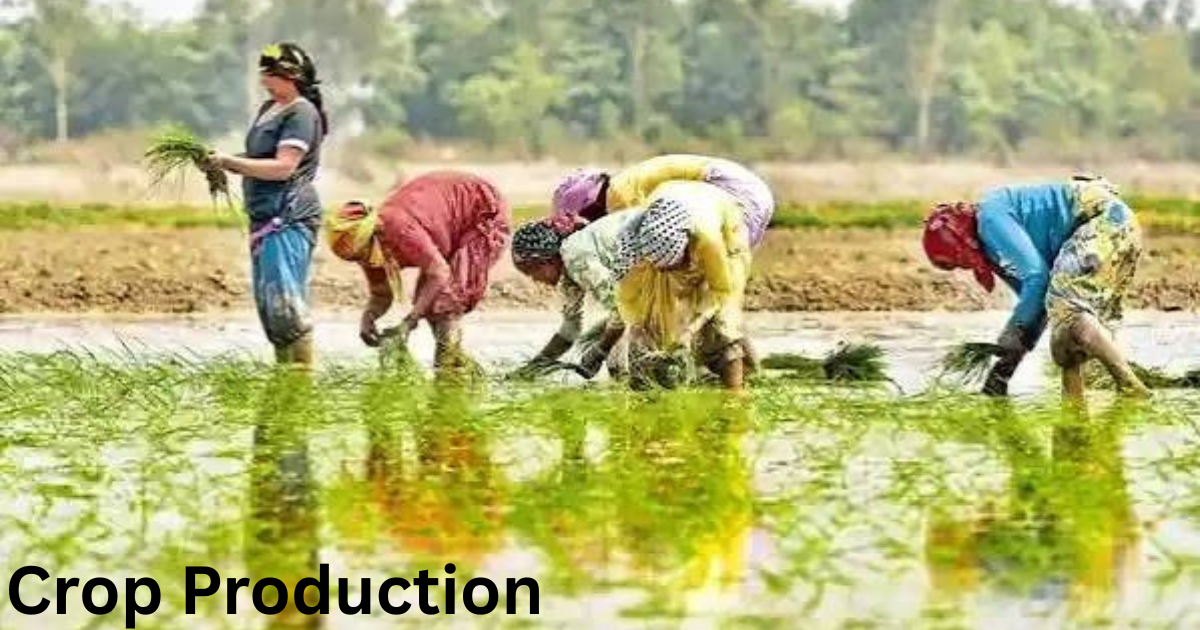
Every time I walk through a well-managed farm, I am reminded that crop production is not just about growing a plant or a plant product .
It is about feeding families, building sustainable livelihoods, and keeping entire economies moving. A crop is anything cultivated for profit or subsistence.
And the range is wider than most people realise: food crops that fill our plates, feed for livestock, fiber for textiles, oil for consumption or industrial use, ornamental plants for landscaping.
And industrial crops and secondary crops serve countless other purposes. Understanding this diversity is the first step toward appreciating.
Why crop production sits at the foundation of human civilization itself.The science behind growing crops goes by a specific name agronomy.
And it is a dedicated branch of agriculture that focuses entirely on field crop production and soil management.
Agronomists spend their careers studying yield, disease, cultivation methods, pest control, weed control, and crop sensitivity to both climates.
And soil conditions, and many go deeper into plant breeding or biotechnology to make crops stronger, more resilient, and more productive.
What I find most impressive about modern agronomy is how it weaves ecological principles into every decision, keeping environmental protection at the centre of progress rather than treating it as an afterthought.
Technology has fundamentally changed what is possible in crop production today. Vertical farming where crops grow in stacked layers saves enormous amounts of space.
And opens up entirely new growing areas that traditional farming could never reach. Beyond the farm structure itself, every serious grower must account for site factors like.
Temperature, moisture, daylight, and wind, because these forces yield as powerfully as any seed or fertilizer. In India specifically, Crop Production like S M Sehgal Foundation are driving.
This transformation by equipping small-holder farmers and marginal farmers in both rain-fed areas and irrigated areas with improved agricultural practices, new technologies.
And complete crop production management systems that address soil health management, input-use efficiency, small farm mechanization.
Water-efficient irrigation, horticultural development, livestock management, and the use of ICT information and communication technology to connect farmers, including women farmers, to the resources they need most.
Why Do We Need Agriculture
India carries a staggering responsibility with roughly one-seventh of the entire world population living within its borders, the country’s economic stability depends.
Directly on the sustained growth of agriculture and its allied activities. The Government of India has set an ambitious target of doubling farmers’ income.
But that goal runs straight into one of the hardest challenges in rural development: making sure that small farmers and marginal farmers earn genuine remuneration from farming.
While also meeting the country’s rapidly growing food demand. Closing that gap requires more than good intentions; it demands systematic investment in agriculture.
The honest reality I have seen on the ground is that traditional farming practices remain deeply entrenched, and they quietly hold back landholding potential across millions of acres.
Climate change has made this worse by disrupting rainfall patterns, shifting changing temperatures, affecting the efficiency and availability of inputs,.
And ultimately hitting crop yield, the quality of produce, and overall output in ways that were simply not happening a generation ago. Small farmers and marginal.
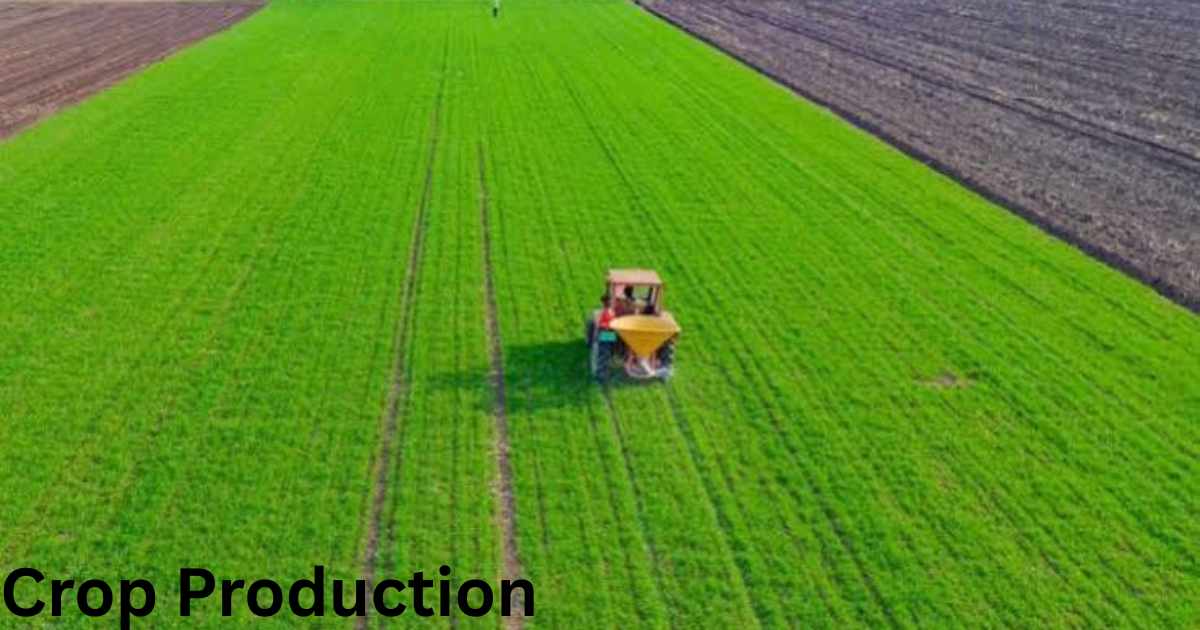 Farmers carry these burdens with the fewest resources to absorb them, which is why targeted agricultural development is not a luxury, it is a necessity.
Beneath the feet of every farmer, another crisis is quietly unfolding. Cultivable soils across India are becoming harder to farm due to excessive cropping intensity.
The inappropriate application of fertilizers, and the inadequate use of manure all of which drive severe nutrient deficiencies in the soils that future crops will depend on.
These compounding risks push small and marginal-scale agriculture steadily toward being non-remunerative, threatening rural livelihoods, deepening poverty.
And undermining food security for millions. Addressing resource scarcity, hunger, and malnutrition through smart farm productivity improvements is not a development programme.
Talking point it is the lived reality that farmers wake up to every single day.
Crop Demonstrations
One of the most effective tools in the Agriculture Development playbook is surprisingly simple: show farmers the results on their own land.
The S M Sehgal Foundation built its entire crop demonstration model on a learning-by-doing approach that builds the knowledge and capabilities of farmers directly.
Helping them maximise crop productivity while learning to better manage soil health through hands-on capacity building and real on-field demonstrations of sustainability.
The Agriculture Development team runs structured training sessions that cover everything from soil testing and correct seed rates to selecting quality seeds.
Mastering seed-sowing methods, and applying the right plant protection chemicals in the right quantities.
Beyond the basics, these sessions go deep into weed management, pest management, the smart use of compost, and a range of advanced techniques that most small farmers.
Never access through conventional channels. The promotion of bio-fertilizers, micronutrients, and macronutrients plays a central role.
Because improving soil microbial activity directly increases organic matter in the soil, and that chain reaction leads to measurable gains in agricultural productivity.
And real growth in farmers’ income. I have personally seen how this shift from chemical dependency to biologically enriched soil transforms not just yields but the entire confidence level of a farming family.
What makes the crop demonstration model so powerful is the side-by-side setup control fields and experimental fields sit right next to each other on the farmers’ own land.
Turning abstract advice into visible, undeniable proof. This seeing-is-believing approach gives farmers the firsthand experience of the practical application of sustainability.
Techniques without asking them to risk their entire harvest on something unfamiliar. The results speak for themselves, motivating farmers to adopt and scale improved farming practices.
Farm Mechanization
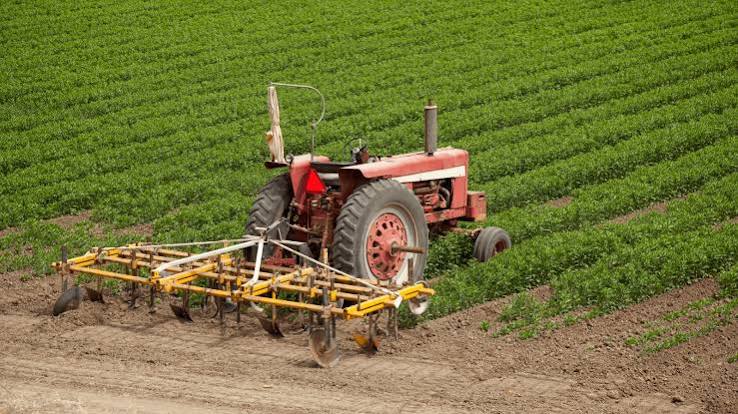
From my experience working alongside rural farming communities, I can say with confidence that farm mechanization is one of the single biggest levers available.
To lift small farmers and marginal farmers out of the cycle of low returns and exhausting manual labor. The introduction of appropriate machines and modern technology into agriculture.
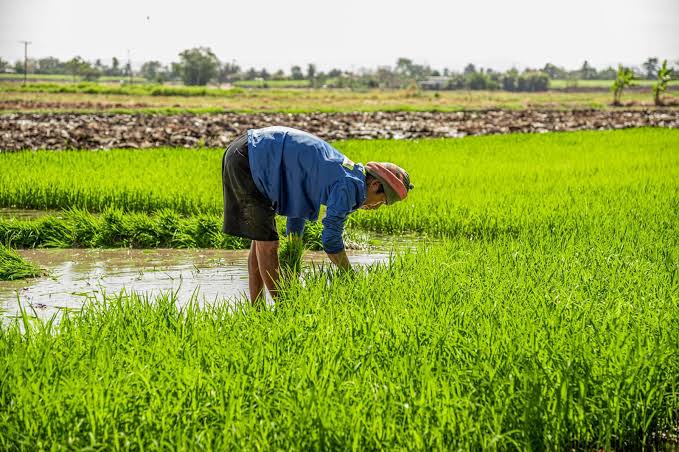 Directly addresses some of the sector’s deepest problems: poverty, resource scarcity, climate change impacts, hunger, and malnutrition by making the entire production process faster.
Smarter, and more reliable. Farm mechanization saves time, cuts labor costs, lowers input cost, reduces the constant risk of weather uncertainties and labor uncertainties.
Improves both quality and quantity of produce, and ultimately delivers better return over investment and stronger farm income over time.
The challenge has always been that access to farm machines is expensive, and small farmers and marginal farmers operating on tight margins rarely have the capital to invest.
The Agriculture Development Program tackles this directly by providing farm machines to enterprising farmers at subsidized rates, structured in a way.
That asks farmers to contribute toward the cost of the machinery, a deliberate design choice that builds a genuine sense of ownership and plants the seed of entrepreneurship in the process.
Farmers who go through this programme do not just get a machine; they gain a business asset that earns them an extra livelihood by renting machines to neighbouring farmers who need them.
The ripple effects of mechanization on productivity are real and well-documented. Every hour saved by a machine is an hour a farmer can redirect toward better farming decisions.
Family life, or additional income-generating activity. When mechanization reaches marginal farmers through subsidized rates and proper training to operate and maintain the machines.
It does not just improve individual farm income, it begins to shift the economic character of entire villages, reducing dependence on petroleum products as farming transitions toward smarter, more sustainable farming approaches.
Entrepreneurship Development
One thing that strikes me every time I sit with a group of small-holders and marginal farmers is how much practical farming knowledge they carry.
And how rarely that knowledge connects to the business opportunities sitting right next to it. The gap between knowing how to grow a crop and knowing how to build .
A sustainable income from it is where agri-entrepreneurship lives, and filling that gap requires building capacity for calculated risks.
Stronger profits, and genuine financial sustainability at the farm level. The Agriculture Development Program targets this gap directly, especially for landless women.
By supplementing existing sources of income, reducing farmer risk, protecting biodiversity, and advancing food security all at once.
The programme does not just hand out advice, it educates farmers about real enterprises, workable business models, and the critical importance of both backward linkages.
And forward linkages that connect production to markets efficiently. Entrepreneurship in agriculture takes many forms, and the programme actively promotes high-value crop cultivation.
Horticulture development, goatery management, and farm machinery enterprises as concrete pathways to supplementing income and reducing risk mitigation dependence.
On a single crop or season. Helping a landless woman build a functioning goatery management operation or a marginal farmer enter high-value crop cultivation is not just an economic intervention.
The capacity building work that supports entrepreneurship development is what makes the difference between a one-time activity and a lasting change.
When small-holders understand business models, manage backward linkages to input suppliers, and develop forward linkages to buyers and processors.
They stop being passive participants in the agricultural economy and start driving it. Financial sustainability at the farm level is the ultimate goal.
And every enterprise the Agriculture Development team promotes is chosen because it delivers real, scalable profits while keeping biodiversity and food security firmly in view.
Water Conservation
Anyone who has spent time working in India’s agricultural regions understands very quickly that water is not just a resource it is everything.
India is a water-stressed country where agriculture consumes more than 80 percent of the total available water, making water use efficiency not just a best practice.
But an absolute necessity for the survival of food security and the entire farming sector. The Agriculture Development Program tackles this head-on by promoting micro irrigation.
Mulching, laser leveling, direct seeded rice, and the use of water absorbents that help maintain soil moisture across a range of crop types and growing conditions.
The numbers behind these water-saving irrigation practices are genuinely striking. Adopting these methods reduces water consumption by anywhere between 25 percent and 85 percent.
Depending on the crop and context, while simultaneously improving farm productivity, cutting labor cost, and reducing the occurrence of weeds and diseases in crops.
For farmers already stretched thin by unpredictable rainfall, falling groundwater levels, and increasing droughts, these reductions are not just efficiency gains .
They are lifelines that keep farming viable through seasons that would otherwise wipe out an entire harvest.
The broader message the Agriculture Development Program drives home is that efficient use of water is the foundation of sustainable agriculture not an optional upgrade.
Water stress in rural areas is worsening, and the pressure on groundwater is intensifying with every passing season. Teaching farmers to manage irrigation water-use efficiency.
Through micro irrigation, smart mulching, and water management practices is one of the highest-impact investments the agricultural sector can make right now.
Because every drop saved today protects the water conservation capacity that future crops and future communities will depend on.
Capacity Building of Farmers
No agricultural programme delivers lasting results without investing deeply in the people who actually do the farming.
The Agriculture Development Program focuses on sharing modern agricultural practices and sustainable agricultural practices with farmers across multiple formats.
Building capacity that strengthens and adapts to changing circumstances rather than becoming outdated the moment conditions shift.
The Agriculture Development team runs classroom training sessions that introduce modern techniques and best practices, pairs them with on-farm training for the practical.
Application of those techniques, organises field days and exposure visits to connect farmers with new innovations, and hosts workshops for valuable peer to peer interaction that lets farmers learn from each other’s real experiences.
Digital technologies and ICT have opened up a new dimension in capacity building that simply did not exist a decade ago. Small farmers and marginal farmers now access.
Critical information and services through mobile platforms, improving agricultural productivity, strengthening climate change adaptation.
Driving resource efficiency, and unlocking new market opportunities that were previously invisible to them.
The Agriculture Development team also brings in external expertise, inviting specialists from Krishi Vigyan Kendras, state universities, and district-level departments to share knowledge.
About government schemes relevant to agriculture and allied activities, ensuring that farmers know exactly what support is available to them and how to access it.
The cumulative effect of sustained capacity building is a farming community that does not just follow instructions but genuinely understands why certain practices work.
When a farmer can read their soil, interpret climate change signals, use ICT tools to check market opportunities, and connect with Krishi Vigyan Kendras for technical support.
They stop being vulnerable and start being resilient. That shift from dependency to informed capacity is what separates communities that thrive.
Through agricultural challenges from those that are repeatedly knocked down by them.
Farmer Producer Organizations
There is a reason why collectivization keeps emerging as one of the most powerful answers to the challenges facing small farmers and marginal farmers because it works.
When producers come together into farmer producer organizations, they gain access to investments, technology, inputs, and markets.
That no individual farmer could reach alone, and they develop the collective bargaining power to negotiate terms that actually reflect.
The value of what they grow The Agriculture Development Program strengthens the institutional capacities of these farmer producer organizations alongside.
Targeted training on better agronomic practices and technologies to lift both the quantity and quality of produce across the board.
Building strong farmer producer organizations requires more than just bringing people together; it demands careful development of backwardness.
Market linkages to input suppliers and forward market linkages to buyers, processors, and export channels. The Agriculture Development team does exactly this, while also facilitating access to credit and building robust supply chain management capabilities .
Within each organisation every step is oriented toward the overarching goal: strengthening the operational sustainability and financial sustainability of farmer producer organizations.
So they can continue serving their members through good seasons and difficult ones alike.The agriculture challenges..
That farmer producer organizations help address are both structural and practical. Small farmers acting alone face impossible odds when negotiating with large buyers.
Accessing technology, or managing supply chain management complexity. Farmer collectives change those odds fundamentally.
They create economies of scale, reduce individual risk, and build the kind of institutional strength.
That allows marginal farmers to participate in mainstream markets on terms that finally make farming worth doing.
When collectivization works well, it does not just improve income it transforms the entire economic identity of a rural community.
Climate Smart Agriculture
India is a populous nation facing consequences from climate change that are already visible in disrupted growing seasons.
Unpredictable rainfall, and increasing stress on climate-sensitive sectors like agriculture, fisheries, and forestry.The sectors that the vast majority of the country’s villages depend on for their livelihood. The vulnerability this creates puts Indian farmers in urgent need of real adaptation strategies.
That works in the face of accelerating climate variability, not theoretical frameworks that take years to reach the field.Climate-smart agriculture is the Agriculture Development Program’s direct response a practical, on-the-ground approach.
That builds resilience into agriculture systems while keeping food security firmly at the centre of every decision.The specific interventions the Agriculture Development team promotes under climate-smart agriculture are chosen because.
They deliver measurable results across multiple dimensions simultaneously. Promoting water use efficiency in agriculture.
Improving soil health, and advancing nutrient management reduce input costs while protecting productivity. Introducing renewable energy and appropriate machines reduces.
The carbon footprint of farming while making operations more cost-efficient, and protected cultivation methods shield crops from.
The worst weather extremes that climate change keeps delivering. The adoption of salt-tolerant varieties of cereal crops and vegetable crops gives farmers.
Tools to keep producing even as soil and water conditions shift in ways that traditional varieties simply cannot handle.
The deeper purpose of climate-smart agriculture is building the kind of resilience that outlasts any single programme or funding cycle.
When farmers in villages across India understand climate variability, know how to adjust nutrient management practices, and access renewable energy solutions.
That cuts their dependence on petroleum products, and grows salt-tolerant varieties that perform when other crops fail.
They stop being victims of climate change and start being people who can navigate it. That transition from vulnerability to genuine resilience is exactly.
Climate-smart agriculture exists to create, and it is the most important investment the agriculture sector can make for the population that depends on it.
Animal Health and Nutrition
Animal health is an area that farming communities often underinvest in until a problem becomes a crisis, but the connection between healthy animals and profitable dairy.
Farming is direct and unambiguousThe Agriculture Development Program promotes animal health as a core pillar of farm income, because milk productivity depends entirely on.
 Three things done well: choosing the right breed, applying sound management practices, and getting feeding practices right every single day.
When feeding practices fall short, nutrition imbalances develop in milch animals they fail to reach the desired body weight, remain unhealthy, and produce significantly less milk.
Which hits farm productivity and income simultaneously.The programme’s practical response centres on two straightforward but high-impact interventions.
Farmers are encouraged to regularly deworm their dairy animals, a basic step that dramatically improves nutrient absorption and overall animals.
Health and to include high-quality mineral additives and green fodder in their animals’ daily diet. The beauty of this approach is its sustainability.
The dietary supplements the programme promotes are locally available, which means farmers can maintain.
These practices without depending on expensive or hard-to-source inputs, and proper training ensures they know exactly how to administer them correctly and consistently.
The gains from investing in animal health extend well beyond individual farms. When milk animals reach their proper body.
Weight and receive balanced nutrition through green fodder and mineral additives, milk productivity rises.
livestock income becomes more stable, and dairy farming contributes meaningfully to the household economy rather than sitting on the edge of viability.
Strong livestock management built on consistent deworm schedules, proper feeding practices, and smart use of dietary supplements is as important.
To overall agriculture and farm productivity as any crop intervention, and the Agriculture Development Program treats it exactly that way.
Energy Efficiency
Renewable energy is changing what is possible on Indian farms, and the Agriculture Development Program actively champions its adoption.
Without ever compromising on productivity. The shift away from petroleum products as the primary energy source for farming practices reduces input costs in a direct way.
Measurable way and because it simultaneously cuts the carbon footprint of agriculture, it delivers environmental benefits that compound over time.
Practical tools like solar water pumps and solar sprays are at the centre of this transition, giving farmers reliable, low-cost energy options.
That frees them from the price volatility and supply unpredictability that petroleum products bring.Energy efficiency in agriculture is not just about saving money it is about building.
A model of sustainable farming that can survive the pressures of climate change, rising input prices, and shrinking margins.
When a farmer installs a solar water pump, they are not just replacing a diesel engine; they are locking in a predictable energy cost for years ahead.
While reducing dependence on a resource that is both expensive and environmentally damaging.
The Agriculture Development Program recognises that alternative energy adoption at the farm level is one of the most durable investments in long-term farm productivity and climate action available today.
The broader shift toward energy efficiency and renewable energy in agriculture also aligns directly with India’s commitments under climate action frameworks, making every solar water pump and solar spray installation part of a much larger national story.
Sustainable farming powered by renewable energy reduces the carbon footprint of food production, protects the environment, and demonstrates that farming can be both economically viable and environmentally responsible at the same time.
That combination of productivity without environmental cost is precisely what the future of crop production in India needs to look like.
FAQS About Crop Production
What is the importance of agriculture development in India?
Agriculture development in India carries weight that most sectors simply cannot match; it directly employs over half the population, contributes significantly to GDP, and underpins the country’s food security in ways that no import strategy could fully replace.
What are some government schemes supporting agricultural development in India?
India has built a meaningful portfolio of government schemes that directly support agricultural development at the farm level. PM-KISAN delivers direct financial support to eligible farmers, while PMFBY provides genuine crop insurance protection against the production losses that have historically devastated small farm households
How can technology improve agriculture development in India?
Technology is rewriting the rules of Indian agriculture in real time. Drones now monitor crop health across large fields in minutes, advanced irrigation systems deliver water with precision that hand-watering could never match.
What is agricultural development and why is it important?
Agricultural development covers the full spectrum of improvement in a farming system increasing farm productivity, strengthening resource use efficiency across both input use efficiency and water management.